

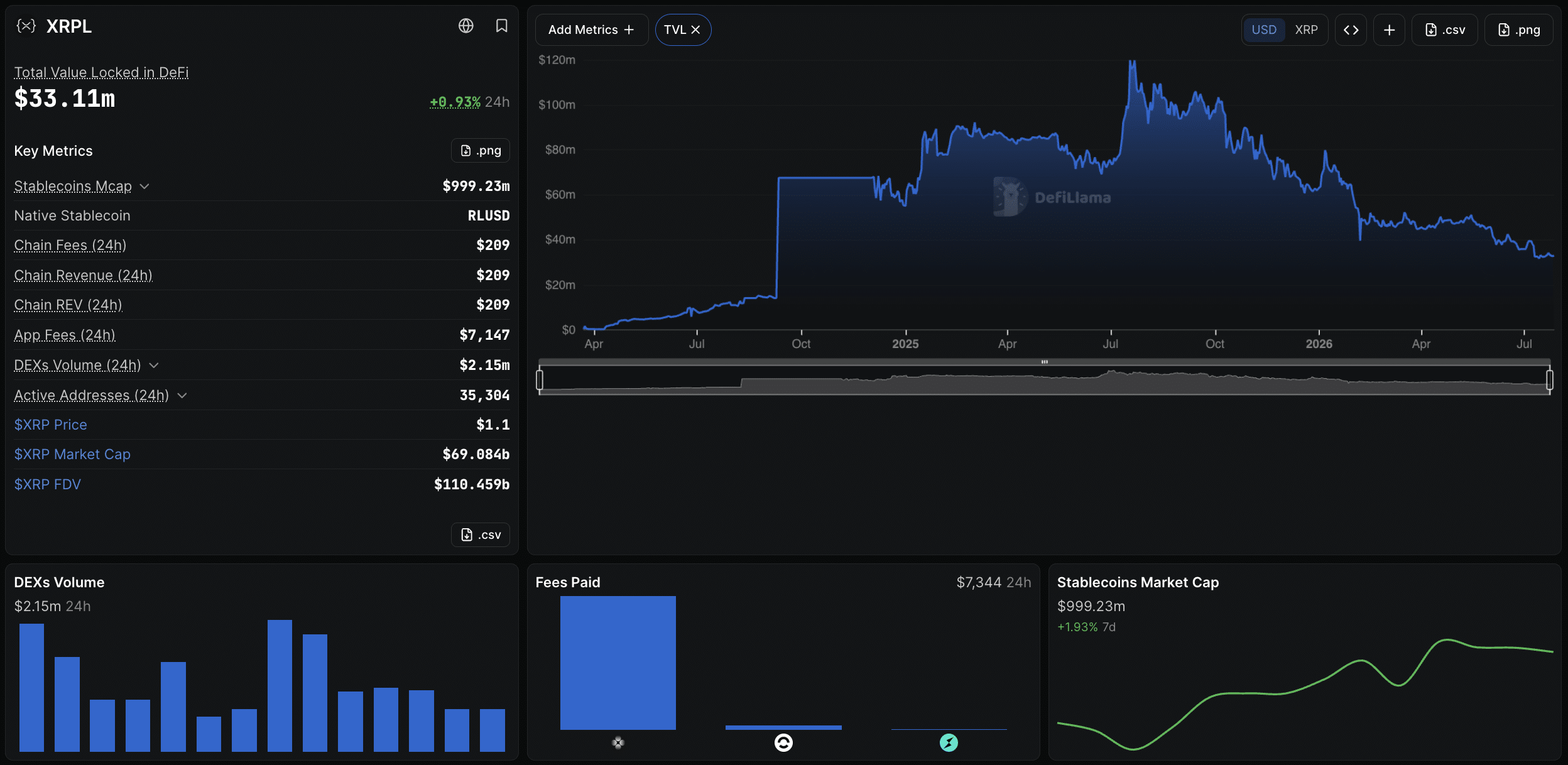
The value of the XRP Ledger surpassed $3 billion in tokenized real assets on May 3, 2026, an increase of 59% in 30 days. For context, Ripple’s ledger fell below $1.9 billion in early April, driven by a small group of institutional players mentioned.
These include a Dubai government-backed real estate tokenization program, the UK’s Financial Conduct Authority-regulated Archax program with a committed $1 billion issuance pipeline, and a rapidly expanding base of tokenized US Treasuries, according to on-chain data confirmed by issuance tracking services.
This isn’t just a headline number that takes advantage of broad market momentum. It reflects a structural convergence: protocol upgrades that removed the last technical arguments for publishing private chains arrived precisely as institutional pipelines moved from fiat review to direct issuance, concentrating a disproportionate share of the real-world cross-chain asset boom on a single native compliance-compliant public ledger.
RWA tokenization on XRPL: What’s actually on the Ripple Ledger
The composition of XRPL’s asset base has changed materially over the course of six months. The Dubai Land Department (DLD), which oversees all real estate transactions in the emirate, chose XRPL as the settlement layer for real estate tokens denominated in UAE dirhams, not Ethereum, not a consortium chain, and not a certified private ledger.
This decision, TokenForge HQ reports, reflects a deliberate evaluation of the ledger compliance architecture and settlement finality rather than a bet on speculative infrastructure.
Archax, the UK’s first FCA-regulated digital stock exchange, migrated institutional-grade assets to XRPL over the past year. Its announced $1 billion pipeline of tokenized securities, targeted for mid-2026, represents a committed institutional flow across multiple asset classes, including funds and stocks.
When an FCA-regulated firm chooses a public ledger to issue securities, a compliance review has already been conducted – Archax’s presence on XRPL acts as much as a regulatory signal as a market signal.
Token US Treasuries represent the fastest growing sector. Data tracked by Evernorth shows the category expanded from about $50 million in early 2025 to a much larger position by the first quarter of 2026, with a sharp acceleration occurring after the adjustment to permitted ranges took effect.
$XRP The push for a breakout of the yearly downtrend continues, but there is no confirmation yet pic.twitter.com/ZO6xC6mdv7
— Rand Group (@randgroup) July 27, 2026
explores: Best Meme Coins You Can Buy for August
Protocol Upgrades: The technical state of the mainnet across private chains
Three development projects converged in April 2026 to achieve a 59% increase. The adjustment to the permitted ranges on Ripple went into effect on April 2, 2026, after passing the 80% verification threshold required for XRPL protocol changes.
It enables issuers to create KYC gateway token environments directly on the public mainnet, removing what used to be a legitimate institutional argument for publishing private chain.
The permissioned DEX platform (XLS-81), which went live in February 2026, allows regulated institutions to run members-only secondary markets for tokenized securities within XRPL’s native decentralized exchange, which is limited to verified participants.
A concrete example of this compliance infrastructure demonstrates how the protocol handles regulated flows without routing them outside the mainnet.
Underlying both features are the structural advantages of XRPL over Ethereum for institutional issuers: lines of trust that relay token transfers at the protocol level without the maintenance of custom smart contracts.
Transaction fees in fractions of a cent; 3 to 5 second finality with no potential compromise risk; And native ISO 20022 alignment that reduces integration friction with global correspondent banking infrastructure.
Market share and infrastructure gap
The US$3 billion value of XRPL represents approximately 10% of the total cross-chain RWA market, which exceeded US$30 billion in April 2026 according to CoinGecko Ripple data.
The analytical question is no longer whether the ledger is capable of hosting regulated institutional assets; Rather, it is whether the infrastructure layer, issuance tools, KYC-to-line of trust onboarding flows, compatible secondary market interfaces, and portfolio reporting can be built to the quality that the institutional market demands.
We believe the documented release growth through May 2026 will serve as a benchmark for companies evaluating whether to deploy RWA codecs on public versus private infrastructure. The basics of the protocol are in place. The Build window for the Application layer is now open.
discovers: Best coins to buy in 2026
Disclaimer: Coinspeaker is committed to providing unbiased and transparent reporting. This article aims to provide accurate and timely information but should not be considered financial or investment advice. Since market conditions can change rapidly, we encourage you to verify the information yourself and consult with a professional before making any decisions based on this content.

Daniel Francis is a technical writer and Web3 educator specializing in macroeconomics and DeFi mechanics. A crypto native since 2017, Daniel brings his background in cross-chain analytics to author evidence-based reports and detailed guides. It holds certifications from the Blockchain Council and is dedicated to providing “information gain” that cuts through the market noise to find blockchain’s real-world utility.



