


TLDR
- The Treasury Department considers the Clarity Act necessary to clearly regulate the cryptocurrency market
- The United States seeks to retain leadership as cryptocurrency adoption expands globally
- The lack of rules has prompted companies to move to Singapore and Abu Dhabi
- The Clarity Code defines asset classification and platform requirements
- The law on stablecoins sets a basic rule but there is still a need for a broader framework for cryptocurrencies
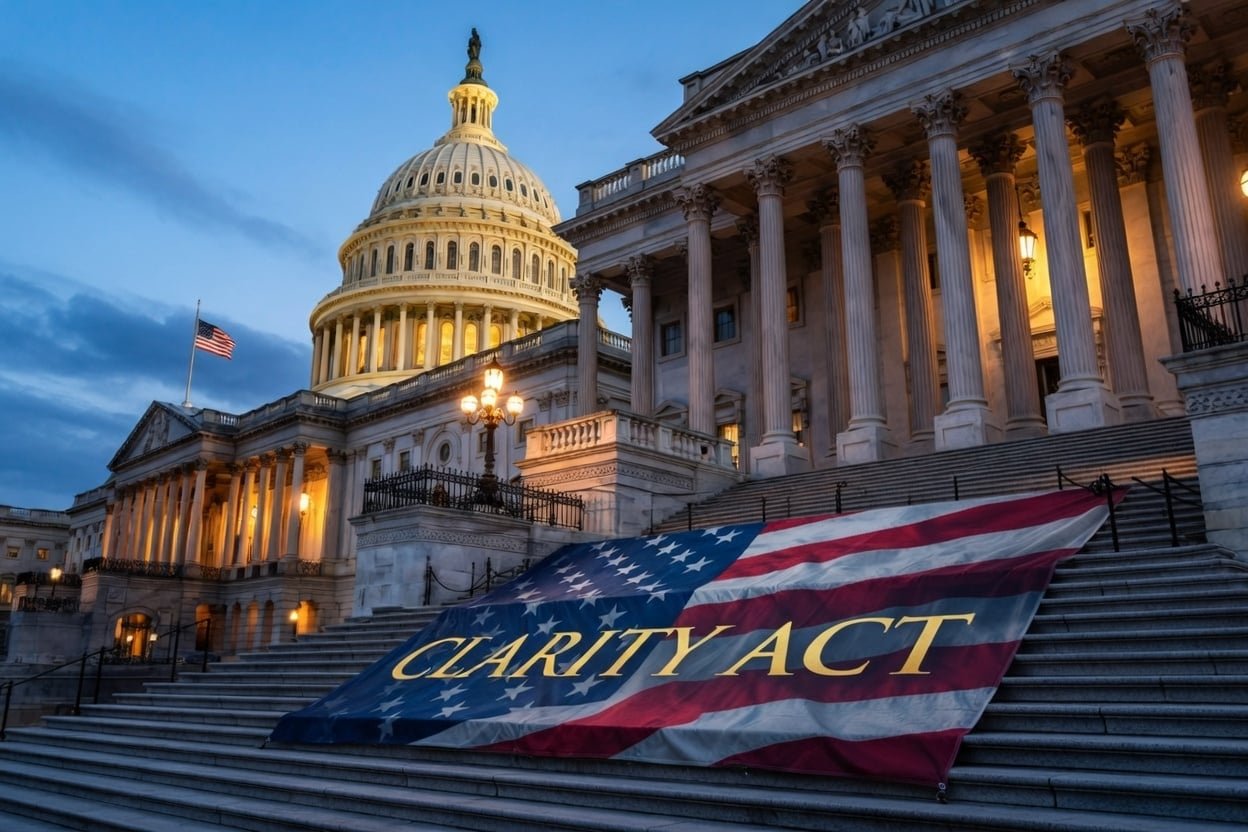
The US Treasury has established the Clarity Act as a key element in shaping the regulation of the cryptocurrency market. Treasurer Scott Besent described the bill as a national priority. He linked economic security to national security and stressed the need for clear rules for digital assets.
In his statements, Besant said: “The time available for the Senate session is scarce, and now is the time to act.” He added that the Clarity Act will support previous progress made under the Genius Act. This law created a framework for dollar-backed stablecoins and strengthened the role of the dollar in digital finance.
The need for clear rules for expanding the cryptocurrency market
Digital assets have grown rapidly in recent years. The market value ranged between $2 trillion and $3 trillion. One in six Americans now own some form of digital asset, demonstrating its broader adoption. Financial institutions have also increased their participation. Many companies have launched or applied for cryptocurrency-related products.
Blockchain technology now supports payments, settlements and asset exchanges. These trends show that cryptocurrencies have transcended the niche sector. However, regulatory uncertainty has created challenges. Previous actions before Securities and Exchange Commission The Commodity Futures Trading Commission often overlaps. This has confused developers, exchanges and investors.
As a result, some companies moved their operations abroad. Countries such as Singapore and Abu Dhabi have offered clearer rules. These areas introduced specific registration processes and compliance standards, reducing the risks faced by businesses.
The law of clarity aims to define the market structure
The Clarity Act seeks to address these gaps. It defines regulatory roles and determines when digital assets qualify as securities. It also sets registration paths for trading platforms and brokers. The draft law includes measures to protect the investor. These cover disclosure requirements and custody rules. It also offers tools to address illicit finance and abuse within digital markets.
Besant stated that progress in stablecoins alone is not enough. “The Genius promise couldn’t be realized without Clarity’s support,” he said. He noted that stablecoins are just one part of a broader financial system that includes tokenized assets and decentralized platforms.

The US Treasury Secretary is considering a push to pass new cryptocurrency market structure legislation @Wall Street Journal Editorial.@SecScottBessent He framed it as a national priority, saying that “economic security is national security,” and argued that the Clarity Act is the cornerstone of achieving…
– Eleanor Terret (@EleanorTerrett) April 9, 2026
The legislation also supports software developers. It aims to ensure that innovation stays within the United States. Clear legal standards would help developers understand their responsibilities and reduce uncertainty.
Urgency with increasing global competition
The Treasury Department warned that time is limited. Lawmakers face a tight schedule in the Senate, and delays could affect U.S. competitiveness. Other countries continue to develop their own regulatory frameworks and attract cryptocurrency companies. Bessent He stressed Strong domestic bases could bring activity back to the United States. Clear laws would improve oversight and enhance compliance with anti-money laundering standards.
It will also reduce dependence on foreign markets. The Treasury Department stresses that American leadership depends on timely action. The country has historically set fiscal standards, but this position could change without updating policies. Clarity represents It is seen as a move to maintain this role in digital finance.
Congress has already passed it The law of geniusWhich shows that progress is possible. The Treasury Department is now urging lawmakers to complete the broader framework. The outcome will shape where and how future crypto innovations develop regulates.



