
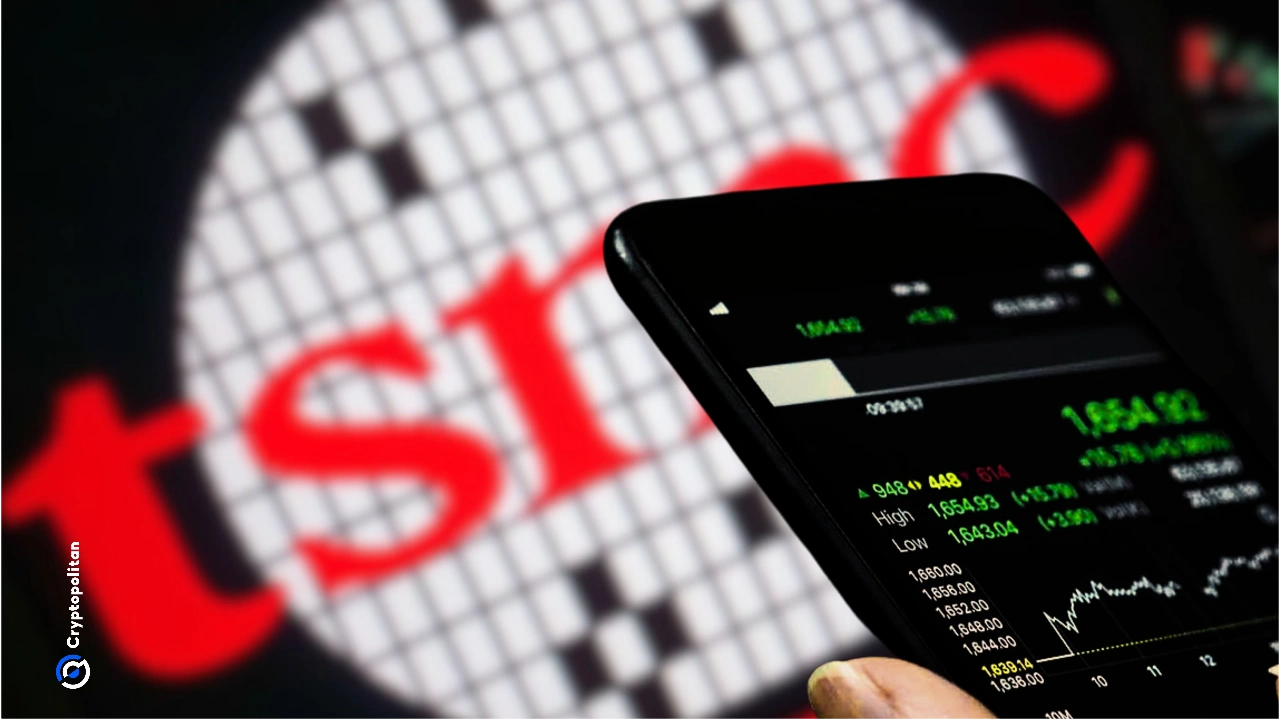
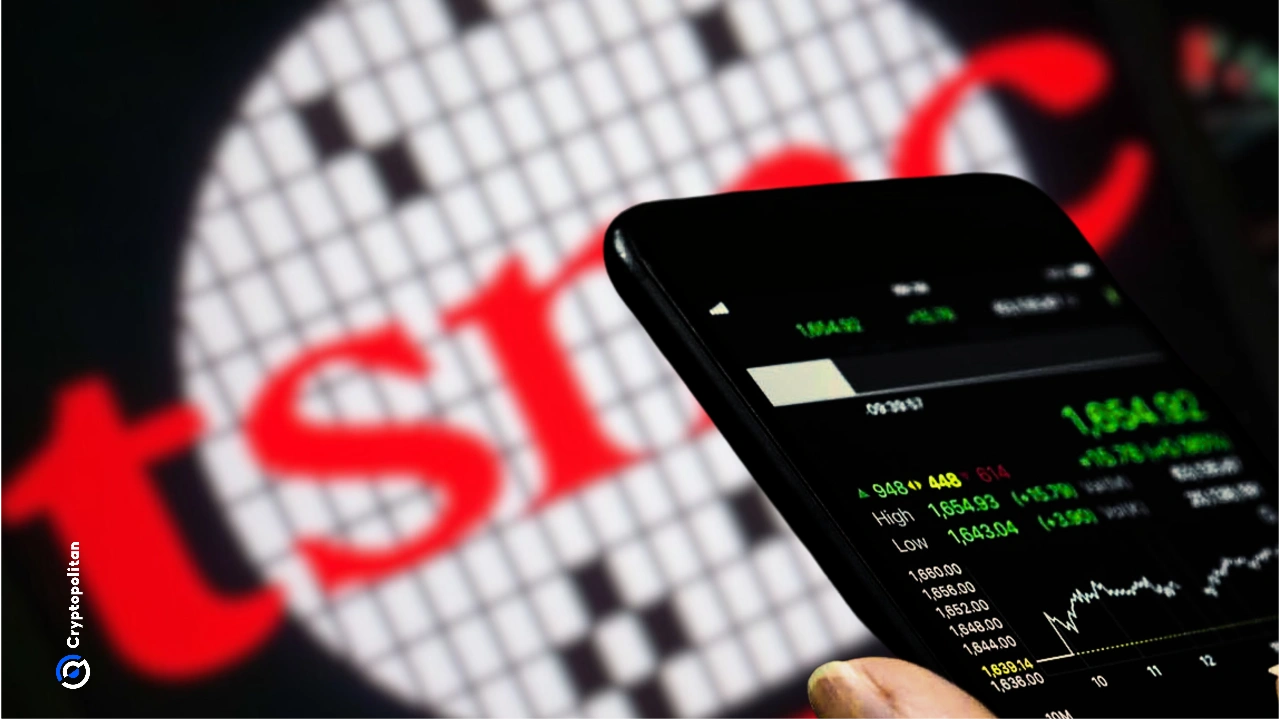
Taiwan Semiconductor Manufacturing Co. (TSMC) stock hit a new all-time high today because investors have two reasons to buy more of the world’s largest chipmaker.
First, Taiwan’s regulator said it plans to ease restrictions on how much local money can be put into a single stock. Second, TSMC continues to deliver strong earnings growth while demand for advanced chips remains strong. Shares rose 5% on Friday, after the stock had already reached a record high on Thursday.
The planned rule change is important because it affects how much money local funds can put into TSMC. Under the revised framework, domestic equity funds and actively managed ETFs focused on Taiwanese stocks will be allowed to float up to 25% of assets in any listed company with a weighting greater than 10% on the Taiwan Stock Exchange.
The old rule was to limit one company to 10% of the net asset value of the portfolio. Since TSMC dominates this market, traders are reading the proposal as a path to more buying.
Taiwan eases fund rules and gives TSMC another boost
The regulatory news arrived after another strong earnings report. Last week, TSMC said first-quarter profits jumped 58%, beating estimates as the artificial intelligence boom kept demand for chips high. Net income was NT$572.48 billion for the three months ended in March.
This was the fourth straight quarter of record profits. TSMC is Asia’s most valuable technology company, and its chips are used in products ranging from consumer devices to large data centers.
Customer demand remained strong across the market. TSMC continues to provide advanced chips to major customers such as… apple. It is also benefiting from the rapid growth of artificial intelligence, manufacturing advanced processors designed by Nvidia, which is now its largest customer.
This keeps TSMC tied to demand in artificial intelligence, high-performance computing, and mobile devices, three areas that still need more powerful and efficient chips.
TSMC is expanding its chip design work and adding newer contract plans
Aside from the rise in stocks, TSMC Also added business and product updates. First, the company and Siemens expanded their partnership to drive AI-powered automation into semiconductor design.
The deal builds on previous work aimed at scaling automation via electronic design automation, or EDA, for workflows. As part of this effort, Siemens will integrate Fuse EDA AI, an artificial intelligence platform designed to automate many chip design steps and improve productivity.
The collaboration also covers advanced chip designs, including 3D IC architectures using TSMC’s 3DFabric technology. Siemens instruments are used for verification, contact inspection and thermal analysis.
The two companies also support TSMC’s 3nm, 2nm, A16 and A14 process technologies. The work also includes silicon photonics and TSMC’s Compact Universal Photonic Engine, or COUPE, supported by Siemens’ design and validation tools for next-generation chip development.
At TSMC’s 2026 North America Technology Symposium in Santa Clara on April 22, the company introduced the A13, its latest advancement in its most advanced process technology.
The A13 is a direct downgrade of the A14, which was announced in 2025. It is intended for the next generation of AI, HPC and mobile applications, with more compact and more efficient designs.
The A13 offers 6% space savings over the A14, keeps the design rules fully in line with the A14, and is scheduled for production in 2029, one year after the A14, TSMC said.
At the event, TSMC Chairman and CEO Dr. CC Wei said customers continue to look forward to their next product cycle and need a reliable flow of new silicon technologies.
Held under the theme “Scaling AI with Leading Silicon,” the symposium is the first stop in a series of global events and serves as TSMC’s largest annual customer gathering.
TSMC too Previewed The A12, an improvement to the A14 with Super Power Rail for back-end power delivery in AI and HPC chips, is also scheduled for release in 2029. It also introduced N2U, a new 2nm option scheduled for 2028, with a 3% to 4% speed increase or 8% to 10% lower power usage, as well as a 1.02x to 1.03x logic density improvement over N2P.



