
The Federal Reserve is likely to keep interest rates steady at its next meeting of the Federal Open Market Committee (FOMC). These tough expectations come despite Trump’s candidate, Kevin Warsh, assuming power. Markets are pricing in a slow and steady approach from policymakers with no interest rate cuts expected until late 2027.
FOMC Meeting (April 28, 2026): What to Expect?
the CME FedWatch Group The data shows a 99% probability that the federal funds rate will pause at the current range of 3.50%-3.75%. Moreover, the chances of an increase are pegged at only 1%.
The data indicates that market participants expect the Fed to keep interest rates in a range of 3.50%-3.75% until the FOMC meeting in September 2027. The chart reveals a 38.7% probability of rates remaining in the current range.
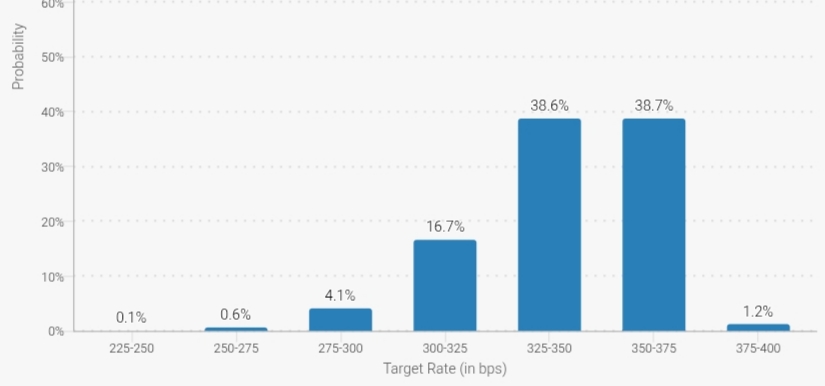
At the same time, the possibility is slight Interest rate cuts About 3.25% – 3.50% equals 38.6%. In contrast, the probability of raising interest rates does not exceed 1.2%, which indicates that expectations of easing are still far away.
The expected pause comes as Jerome Powell chairs his latest meeting of the Federal Open Market Committee. His term ends in May, and the committee will meet next June.
Although Powell is eligible to remain on the Board of Governors until 2028, history suggests he may choose to retire. This would open the door for Kevin Warsh, who has been named Powell’s successor. Meanwhile, the Department of Justice (DOJ) The investigation against Powell was droppedWhich enhances the chances of Warsh being confirmed.
Fed policymakers are not expected to change their tune at the next FOMC meeting. “We expect Powell’s overall tone to be consistent with a Fed that expects to remain on hold for some time,” Matthew Luzetti, chief economist at Deutsche Bank, and his team said in a note.
Geopolitical tensions influence the Fed’s decision
Amid the FOMC meeting, the central bank is also being cautious in responding to geopolitical events. Federal Reserve officials are monitoring the effects of the Iranian crisis on the economy, which has created mixed signals. The conflict has caused energy prices to rise, which has increased inflation, but has also created uncertainty, affecting business confidence and investment.
These competing forces make it difficult for the Fed to achieve its two-pronged goal of price stability and full employment. Higher interest rates for a longer period may keep inflation under control, but it may also slow growth. However, lowering interest rates can boost growth and the labor market, but may also increase inflation.
now, Warsh is awaiting a Senate vote On April 29th. If confirmed, Lorsch would likely have a different view. Previously, he has been critical of the Fed’s balance sheet policy in the past. These include its large holdings of Treasuries and mortgage-backed securities in the wake of the global financial crisis.
If you are looking for a site to borrow cryptocurrencies, check out our page at DeFi lending platforms.



