
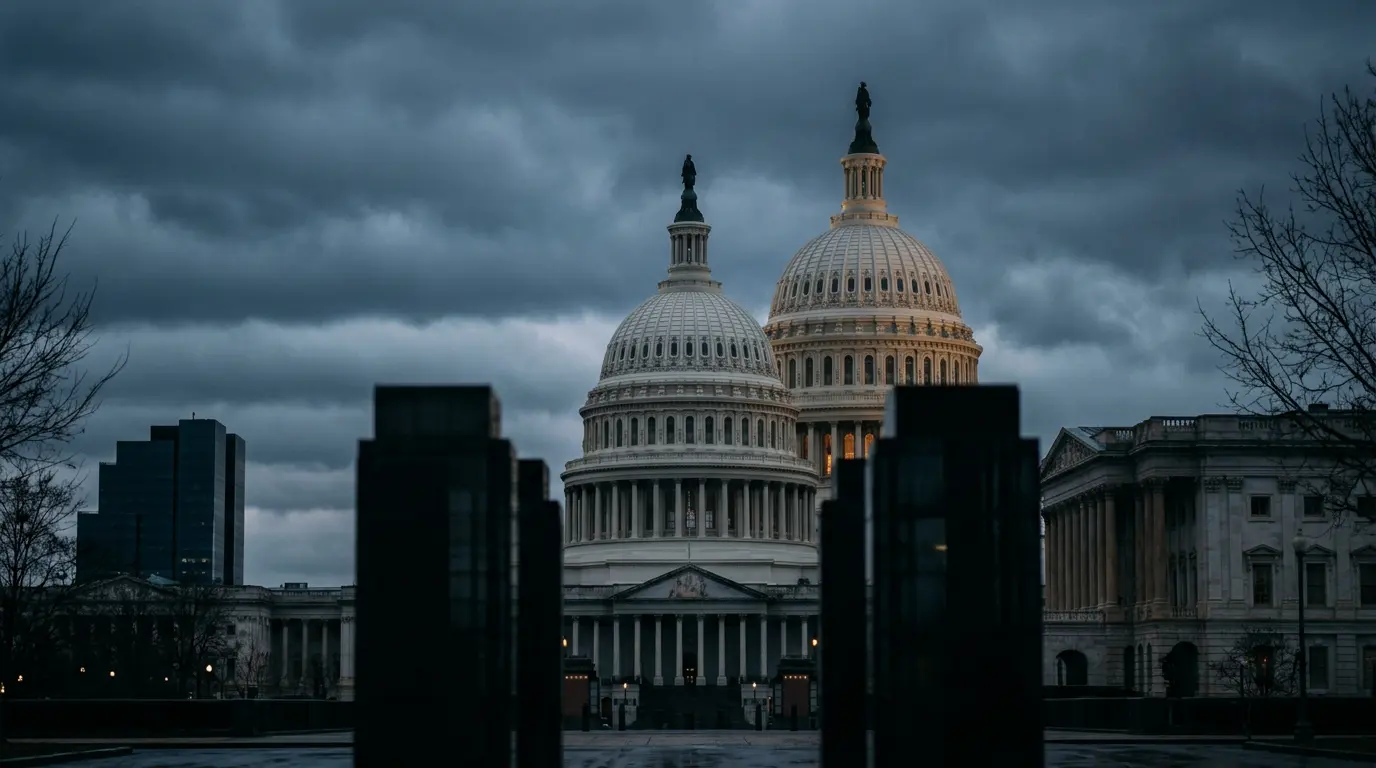
Anthony Scaramucci, founder of SkyBridge Capital, warned at the Solana Policy Summit that the Digital Asset Market Clarity Act (CLARITY Act) may not pass the Senate for another two to three years due to resistance from the banking lobby and political gridlock.
This highlights the significant institutional opposition to cryptocurrency legislation in the Senate, where banking interests are strong. While the Clarity Act appeared on track to pass after the House of Representatives passed it in late 2025, Scaramucci’s assessment points to a more uncertain future.
He may be making this prediction to adjust expectations within the institutional investor community, which had been anticipating regulatory clarity as a near-term catalyst, in line with SkyBridge Capital’s interests as a long-term holder of digital assets.
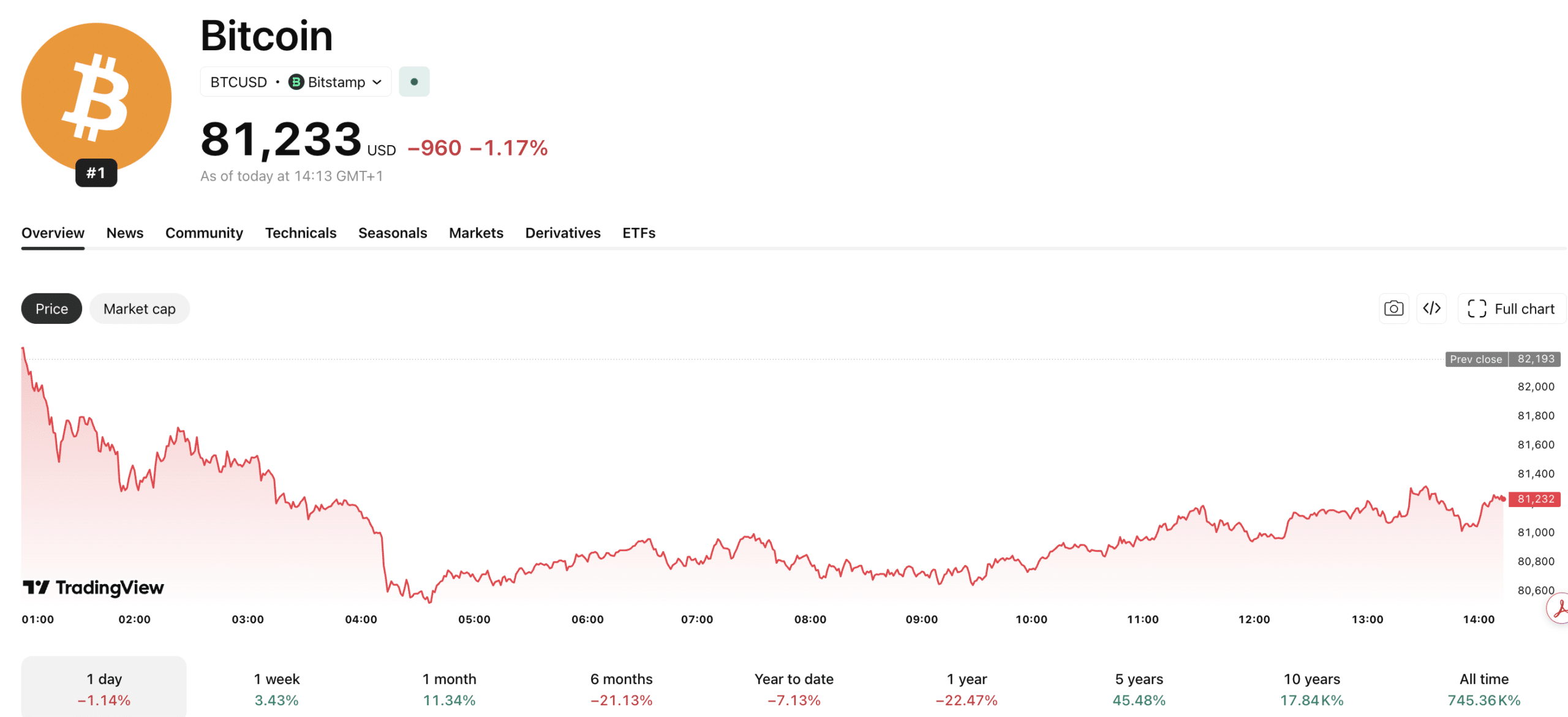
Scaramucci’s warning comes as the broader cryptocurrency market suffered a slight decline overnight, with Bitcoin falling against the dollar from $82,400 to its current level of $81,200.
Legislative Status Clarity Act: Senate gridlock, banking objections, and the math of the filibuster
The US House of Representatives passed the CLARITY Act in July 2025 by a bipartisan 294-134 vote during “Crypto Week,” sparking optimism about Senate approval.
However, on January 14, 2026, support collapsed in the Senate Banking Committee after major industry groups withdrew their support due to concerns over stablecoin yield provisions and litigation matters between the SEC and CFTC, leaving no specific date for an increase.
Passage of the bill in the Senate requires 60 votes to overcome a filibuster, a difficult threshold amid competing priorities such as military engagements and diplomatic tensions.
The Telles-Alsobrooks draft has faced criticism from major banking groups, including the American Bankers Association, over its provisions on stablecoin returns and lack of safeguards for traditional financial systems.
The banking groups plan to submit amendment recommendations, indicating that the legislative text remains unstable, reminiscent of the stalled FIT21 law in 2024.
DISCOVER: CLARITY ACT NEWS – HOW BANKING GROUPS PUSH BACK ON STABLECOIN PROVISIONS
Law of Clarity News: Why delay risks are structurally real
🚨 This is one of the most important weeks for cryptocurrency regulation in years.
The Clarity Act officially heads to a Senate Banking Committee preliminary vote on Thursday (8:00 p.m. EST).
This will be the first committee vote ever on a full bill to structure the cryptocurrency market in the United States.What is it… pic.twitter.com/OXEXa6GqUb
— Wise Advice (@wiseadvicesumit) May 11, 2026
The banking sector’s opposition to the Clarity Act reflects competitive anxiety over the issuance of stablecoins and concerns about systemic risk. This distinction is crucial for anticipating how the adjustment process will proceed. Banks that lose market share to yielding stablecoins are likely to manipulate the regulatory framework to their advantage.
The midterm election schedule adds more pressure; Failure to introduce the bill before November 2026 could result in a reset of legislative efforts. Baker McKenzie analysts point out that the current impasse points to political and structural challenges that favor traditional institutions and create uncertainty for crypto-native companies.
The impact on Tier 1 ecosystems like Solana and Avalanche is significant, as they face continued regulatory uncertainty without the clarity that the Clarity Act can provide, making their assessments unlikely to improve through implementation guidance alone.
Bitcoin Price Analysis: Scaramucci’s Cyclical Thesis and the $79,000 Support Question
Scaramucci recently provided an authored analysis of Bitcoin’s price situation, noting that the current drawdown to around $79,000, down about 43% from its October 2025 peak of over $126,000, represents a cyclical market correction in line with Bitcoin’s specific four-year halving cycle.
He views this price action as a retest of a key support area, rather than a breakdown of the overall uptrend, which is crucial for institutional allocators deciding whether to increase or reduce exposure. Technical analysts see $78,920 as the crucial support level to maintain this constructive outlook.
Scaramucci appears to be on a bearish regulatory timeline while maintaining a bullish outlook on Bitcoin, suggesting that while the multi-year delay in stablecoin regulation poses challenges to the cryptocurrency ecosystem, it does not undermine Bitcoin’s value as a non-sovereign store of value driven by halving cycle dynamics and institutional flows.
$ Bitcoin It is finally coming out of its long term downtrend.
We have just reclaimed the $81K level and momentum is starting to build again. The chart now looks set to move towards $92K and possibly a six-figure range if this breakout continues.
The main resistance has turned to… pic.twitter.com/UsgVAiWivV
– Crypto King (@CryptoKing4Ever) May 11, 2026
discovers: Meme Coin Supercycle: Best performing this week
Congress and industry response: What stablecoin regulatory gridlock reveals about the fragility of consensus
The collapse of momentum around the CLARITY Act in January 2026 has revealed what it is Baker McKenzie Analysts have publicly described it as a fragile industry consensus, one in which domestic cryptocurrency stakeholders and bankers have not, in fact, reached a lasting agreement on the most economically significant provisions for each side, although bipartisan progress appeared after the House vote.
Stablecoin regulation, and specifically the question of whether yield-generating instruments issued outside the traditional banking environment should receive the same supervisory treatment as bank deposits, remains a central fault line.
The conditions under which the bill could be introduced before the midterm deadline are definable, if not easily achievable: banking groups would need to either withdraw their amendment demands or secure textual changes acceptable to cryptocurrency industry stakeholders, including Circle and Coinbase, without provoking a similar withdrawal from support for the cryptocurrency sector, a narrow negotiating corridor that had already collapsed once upon a time.
Whether the Senate Banking Committee reschedules the increase, under any revised legislative text, will be the most reliable key indicator for determining whether Scaramucci’s two- to three-year forecasts are accurate or exaggerated.
discovers: Best coins to buy in 2026
Disclaimer: Coinspeaker is committed to providing unbiased and transparent reporting. This article aims to provide accurate and timely information but should not be considered financial or investment advice. Since market conditions can change rapidly, we encourage you to verify the information yourself and consult with a professional before making any decisions based on this content.

Daniel Francis is a technical writer and Web3 educator specializing in macroeconomics and DeFi mechanics. A crypto native since 2017, Daniel brings his background in cross-chain analytics to author evidence-based reports and detailed guides. It is certified by the Blockchain Council and is dedicated to providing “information gain” that cuts through the market noise to find blockchain’s real-world utility.



