
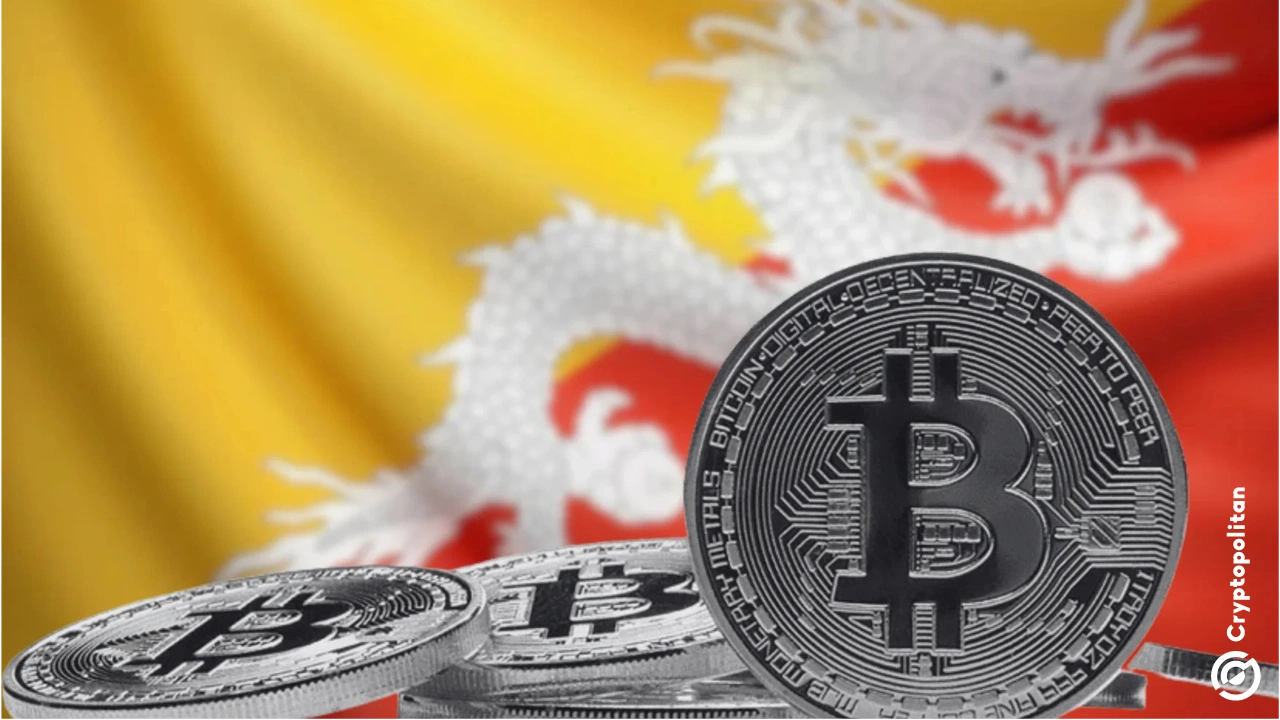
The government has transferred ownership to Bhutan Close to $37 million worth of bitcoin is state property, raising speculation about the small Himalayan kingdom’s cryptocurrency strategy.
Blockchain records showed that the government of Bhutan transferred a significant portion of its cryptocurrency holdings, sending nearly $37 million worth of bitcoin to various accounts.
Data Arkham Intelligence revealed that the Asian country transferred 519.7 bitcoins, totaling about $36.75 million, to two wallets. One of these accounts is linked to QCP Capital, a trading company.

After this latest move, the Bhutan government still owns 4,453 Bitcoins, which are currently worth around $315.89 million. The country’s sovereign wealth fund, Druk Holding and Investments Ltd, oversees these digital assets.
Officials did not explain why they made this transfer. However, when governments send cryptocurrencies to commercial companies or exchange wallets, it usually indicates that they may sell some of their holdings.
Recent transactions total more than $120 million
This is not the first time in Bhutan The last deal.
The fund moved $72 million worth last week and about $12 million earlier this month. Bhutan has built its Bitcoin stock through mining operations that rely on the country’s abundant hydroelectric power. The country held more than 13,000 bitcoins at its highest point in October 2024.
Questions have arisen as to whether mining is ongoing, as the last deposit exceeding $100,000 occurred over twelve months ago.
Bitcoin is currently trading at $71,094, which represents a 1.3% daily increase but remains 40% below its October 2025 peak of $124,900.
The early government took advantage of surplus hydroelectric power
Bhutan It entered the field of cryptocurrency mining in 2018, making it an early adopter among national governments. Ujwal Deb Dahal, who leads Druk Holdings as CEO, said the investment in Bitcoin was tactical. The goal was to spread investments outside traditional markets and traditional industries.
The country’s approach took advantage of rivers fed by melting Himalayan glaciers, which supply power to Bhutan’s electrical grid. Hydropower is the country’s largest export and drives much of its economy. Production varies depending on the season, creating a surplus of electricity during the summer months when the snow melts and a shortage during the winter.
Dahal explained this Bitcoin mining It was a solution to this seasonal imbalance. He said that cryptocurrency could work like a battery. Bitcoin generated during the summer months with surplus energy can protect the country’s energy needs in the winter while building foreign exchange reserves.
The cryptocurrency push came during Bhutan’s tough economic times. The COVID-19 pandemic has hard hit the tourism sector, which provides the second-largest share of government revenue. On the other hand, unemployment rates among youth have increased, which has prompted many Bhutanese to leave the country in search of better opportunities abroad.
Of Bhutan’s population of 750,000, about 10% of them moved abroad as of last year. Even those working in government jobs, traditionally seen as safe, are leaving in droves. Entire villages now consist mainly of elderly people with the departure of younger generations.



