


Binance, the world’s largest cryptocurrency exchange by trading volume, on May 26 announced a formal partnership with BlockShoals Technologies — a Philippines-based fintech infrastructure company — that positions the exchange to re-enter one of Southeast Asia’s most active cryptocurrency markets through the Philippine Securities and Exchange Commission’s StratBox regulatory sandbox, after more than two years of intense scrutiny that led to it being effectively shut out of the country.
partnership, Announce Via Binance’s official blog, it follows BlockShoals’ in-principle approval in November 2025 from the Philippine Securities and Exchange Commission to participate in the StratBox program — a regulated testing framework created under SEC Memorandum Circular No. 9, Series of 2024, which allows fintech companies to trial innovative financial products in a live but supervised environment before any broader public offering. The testing period is scheduled to last 24 months, and is subject to annual review, according to the original SEC approval statement.
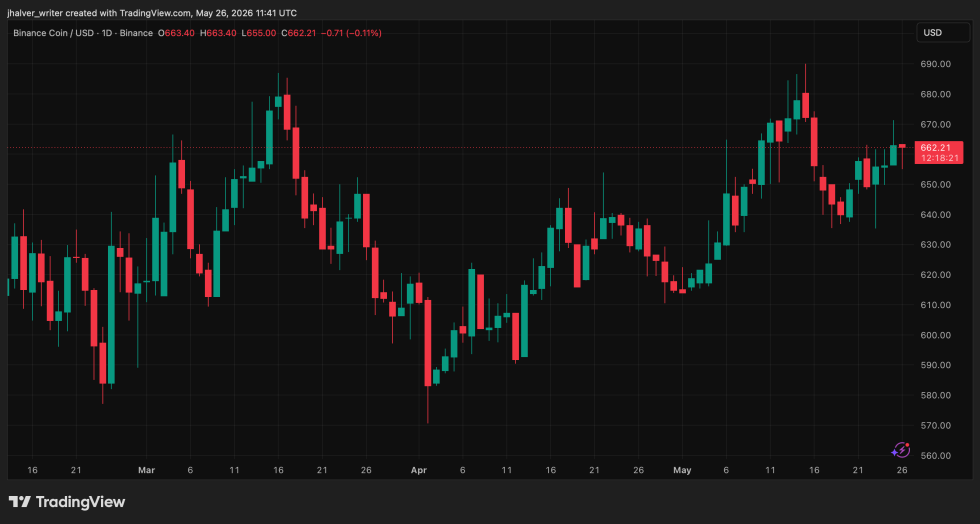
BNB's price moving sideways as seen on the daily chart. Source: BNBUSD on Tradingview
What BlockShoals brings to the table
BlockShoals is not a retail facing platform. It acts as a technology and infrastructure broker for virtual asset services — meaning it handles the regulatory, compliance and operational plumbing that allows the global exchange to interact with Filipino users and regulators within a locally established structure, according to a Manila Bulletin report on the SEC’s original approval. This partnership gives Binance a locally licensed and SEC-supervised instrument through which it can operate in the Philippines without needing its own direct exchange license during the sandbox period.
Because BlockShoals already reports to the Philippine Securities and Exchange Commission on its beta tests, this arrangement gives regulators a direct view of how global exchange systems interact with local users and market rules – a structural transparency that being in the gray zone cannot provide.
Organizational context
The Philippines represents a huge market opportunity. The country has one of the highest rates of cryptocurrency ownership in Southeast Asia and remittance-based demand for digital asset services, with a regulatory environment that is actively building its virtual asset framework under the Bangko Sentral ng Pilipinas alongside SEC sandbox initiatives. StratBox from BlockShoals entrance It makes it the fourth entity approved under the program — joining two companies testing U.S. equity services and one focused on tokenized real estate, according to the original statement from the SEC in November.
A Binance blog post described the collaboration as supporting responsible sharing of digital assets, user protection, and responsible innovation in the Philippines — language that reflects its broader post-2023 settlement compliance stance, as it continues to rebuild its regulatory relationships across multiple jurisdictions simultaneously.
This development represents a pivotal moment for Binance’s strategy in the Asia-Pacific region and for the emerging sector’s broader relationship with regulators in Southeast Asia. Re-entering the sandbox through a locally licensed broker is a structurally different offering from the direct market presence that Binance previously maintained — more restrictive in the short term, but considerably more sustainable if the 24-month pilot program delivers the compliance results the Philippine Securities and Exchange Commission is looking for.
Cover image by Grok, BTCUSD chart by Tradingview
Editing process Bitcoinist focuses on providing well-researched, accurate, and unbiased content. We adhere to strict sourcing standards, and every page is carefully reviewed by our team of senior technology experts and experienced editors. This process ensures the integrity, relevance, and value of our content to our readers.



