

The price of XRP has been trading near multi-month lows, touching around $1.15 in recent sessions, a level roughly 20% below the $1.50-$1.60 range where it was repeatedly stalled during the first quarter, even as social media accounts circulated claims that Japan’s institutional alignment with Ripple is on the verge of sparking a parabolic move.
The viral frame refers to SBI Holdings“Deep integration With Ripple’s payment infrastructure, the Financial Services Authority having long treated XRP as a digital asset rather than a security, and a draft amendment to Japan’s Financial Instruments and Exchange Act as if these constitute newly emerging incentives.
This is not just a bullish thesis with legitimate fundamentals behind it. It is a structural misreading of old information presented as new price discovery. The analytical question this article addresses is not whether crypto regulation in Japan is real, but rather whether that regulatory environment represents unpriced information capable of driving a sustainable rise for XRP from current levels.
explores: The next crypto to explode in Q2
Japan’s regulatory history with XRP: What the record actually shows, and what it can’t prove
The mechanism works as follows: Japan’s Financial Services Agency classified XRP under the framework of the Payment Services Act years before the current social media cycle began, treating it as a crypto-asset for payment purposes rather than subjecting it to the securities-equivalent scrutiny that the US Securities and Exchange Commission applied through its litigation with Ripple.
SBI Holdings set up SBI Ripple Asia as a joint venture in 2016, and a consortium of Japanese regional banks that later explored Ripple’s technology for domestic and cross-border settlement has been operating in various forms for the better part of a decade. These are verified and documented facts. They are also, by definition, already reflected in the market prices of any participant who follows XRP with even moderate effort.
🚨Japan’s SBI asked Washington to pass the Clarity Act (so it can deploy billions in… $XRP) + Ripple is building the Amazon of global finance🏦
Includes: @xrpmickle @iamkamstevenson pic.twitter.com/l0PRtejTUC
– Jacob Metzger (@MasterHuzzah) June 1, 2026
The most recent regulatory development, a government-approved draft amendment that would reclassify 105 major crypto assets under the Financial Instruments and Exchange Act, introduce restrictions on insider trading, annual disclosures to issuers, and penalties of up to 10 years in prison and 10 million yen for unregistered operations, represents a tightening and formalization of Japan’s cryptocurrency framework, and not a sudden pivot toward permitting.
A parallel policy track that explores lowering Japan’s top cryptocurrency tax rate from 55% to a flat 20% would, if enacted, materially change the after-tax economics for local merchants and institutions; This remains a legislative proposal, not a definite change. It is necessary to point out the state of knowledge in further detail: one market report claiming that Japanese central exchange Yen purchases amounted to approximately $21.7 billion in XRP between July 2024 and June 2025, versus approximately $4.7 billion in Bitcoin, reflects aggregated exchange flow data whose methodology has not been independently verified by Coinspeaker.
What this record proves is that Japan is a structurally favorable jurisdiction for XRP and that SBI Holdings’ relationship with Ripple gives the asset unusual visibility in Japanese retail and payments discussions. What it does not prove is that any development announced in 2025 constitutes new information not available to the market when XRP was already trading above $2.00 earlier this year.
discovers: Best coins to buy in 2026
What Could Actually Move XRP: Unpriced Catalysts vs. Recycled Japanese Narratives
Truly unpriced developments that could justify a rerating at current levels would need to include at least one of the following: a US regulatory decision paving the way for domestic approval of an XRP exchange-traded fund, materially expanded ODL corridor data showing transaction volume growth not yet absorbed by secondary markets, or large-scale new institutional flow data from European or North American custodians entering XRP positions for the first time.
In contrast, Japan’s regulatory framework is well-known. The parliamentary steps required to advance the FDI Bill and the proposed tax reform are items worth monitoring, but even those, if enacted, represent a formalization of existing conditions rather than a structural shock to global demand.
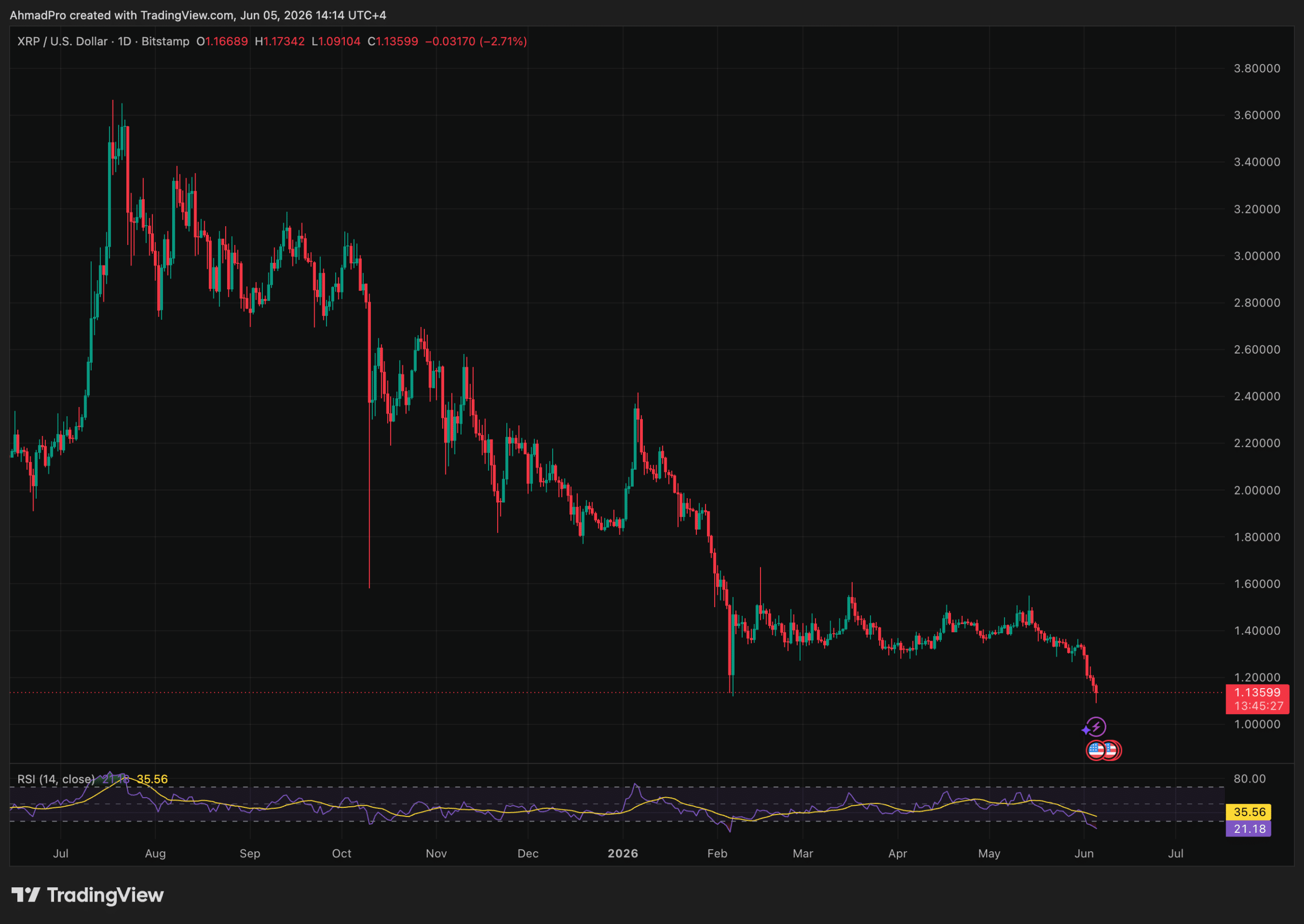
Source: XRPUSD / Tradingview
The prospect of allowing subsidiaries of the Japanese banking group to offer cryptocurrency trading services directly, which has been referenced in policy discussion in recent reports, would represent a more significant incentive for adoption than anything currently circulating on social media, precisely because it would open up an institutional distribution channel that does not yet officially exist.
This development is still in the discussion stage. It’s not priced because it doesn’t happen. As it progresses through the parliamentary process, it will call for re-evaluation.
explores: The next crypto to explode in Q2
Disclaimer: Coinspeaker is committed to providing unbiased and transparent reporting. This article aims to provide accurate and timely information but should not be considered financial or investment advice. Since market conditions can change rapidly, we encourage you to verify the information yourself and consult with a professional before making any decisions based on this content.

Daniel Francis is a technical writer and Web3 educator specializing in macroeconomics and DeFi mechanics. A crypto native since 2017, Daniel brings his background in cross-chain analytics to author evidence-based reports and detailed guides. It is certified by the Blockchain Council and is dedicated to providing “information gain” that cuts through the market noise to find blockchain’s real-world utility.



