

Arthur Hayes doesn’t go out quietly. The BitMEX co-founder liquidated his entire positions in Hyperliquid’s HYPE token and NEAR protocol, unloading nearly $18 million worth of cryptocurrencies in one move and then telling everyone exactly why he did it.
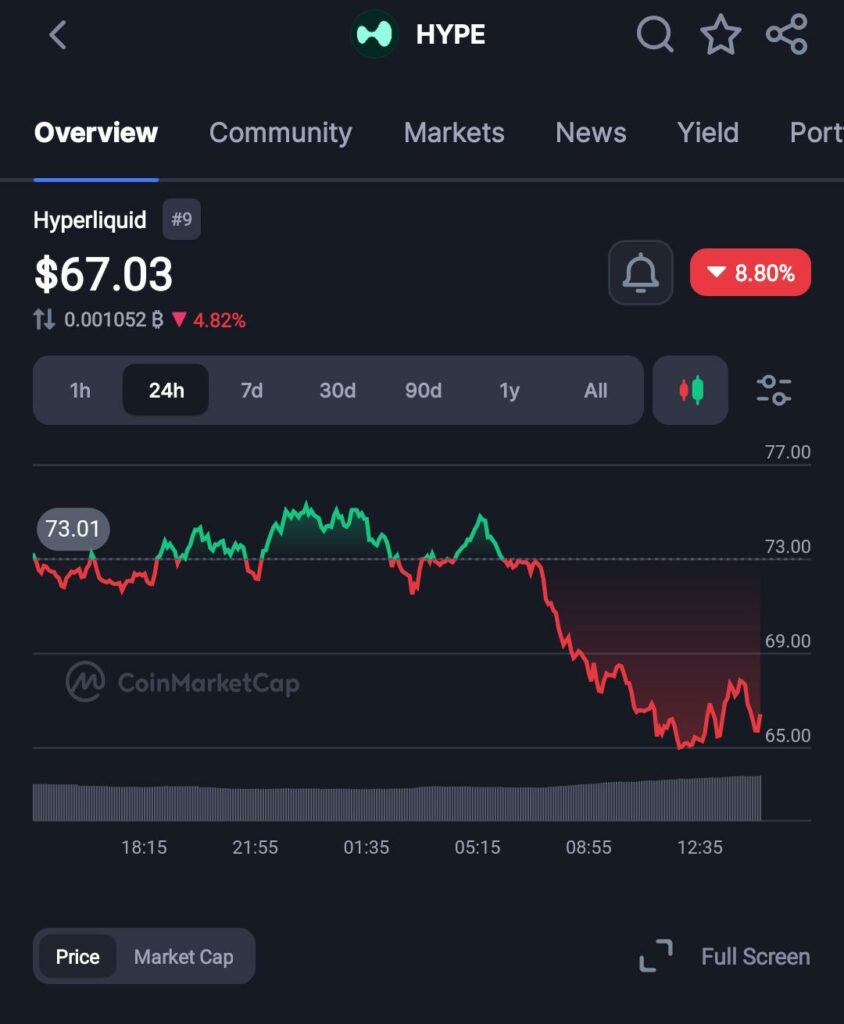
The market heard it loud and clear. HYPE decreased by 5.8% NEAR collapsed 19.5% in the immediate aftermath, with on-chain data confirming the volume of what had just hit the order books. 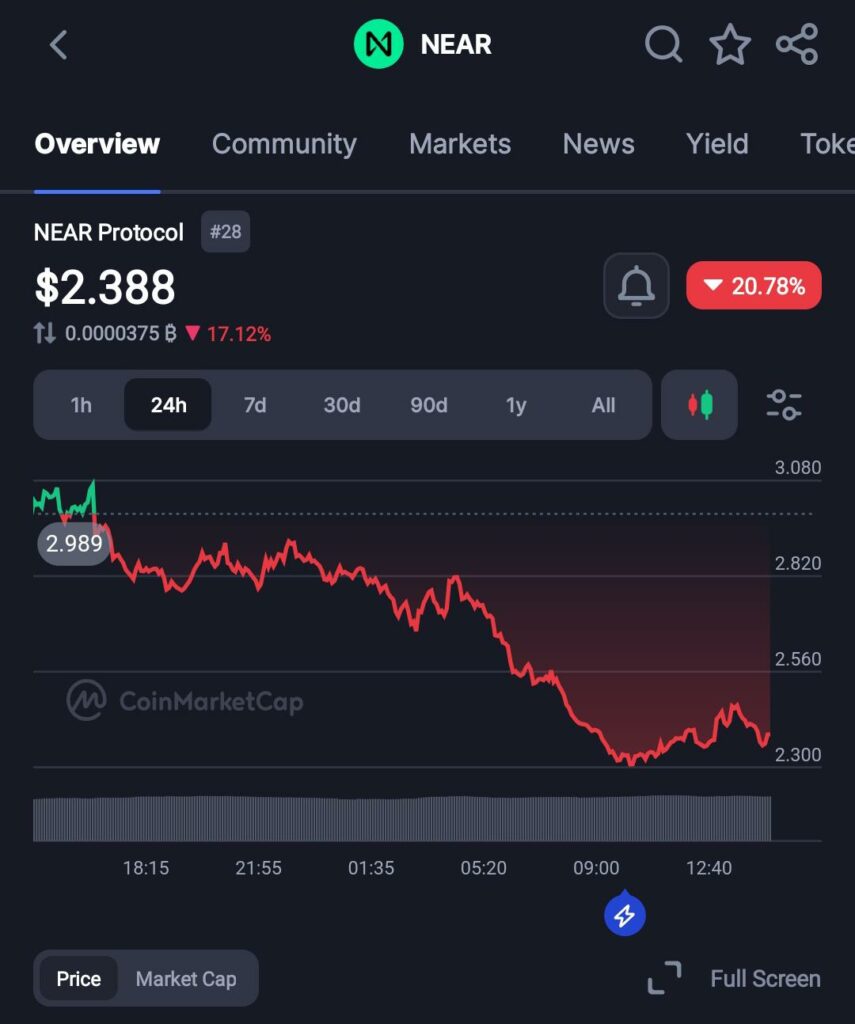
This is not a routine portfolio rebalancing. Hayes makes a comprehensive call, and he’s putting his trading history behind it.
Sale: 247,000 HYPE tokens and an unknown amount of NEAR
On-chain monitoring from Onchain Lens certain Hayes sold 247,334 HYPE tokens worth approximately $18.02 million, along with an undisclosed amount of NEAR. The exact NEAR number has not been published, but the price action tells its own story, as the 19.5% one-day drop in the token is not caused by a normal sell-off. Something important has come out of the books.
CoinGecko data tracking The implications show that both assets move sharply lower from the moment the news broke. HYPE, which had been one of the strongest-performing assets in the derivatives infrastructure space, gave up weeks of gains within hours. NEAR, already under pressure in a weak altcoin environment, has accelerated its decline into a much deeper hole.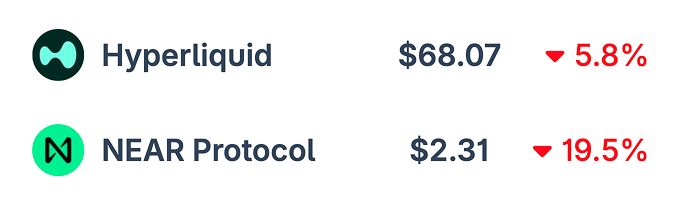
The timing adds an extra layer of embarrassment. Just days before these sales were executed, Hayes had publicly challenged Kyle Samani of Multicoin Capital to a $100,000 charitable bet, his argument being that HYPE would outperform all top 10 market cap cryptocurrencies by the end of the year. Samani accepted and supported Solana. Hayes then sold his position in HYPE. It’s not clear if the bet still stands, but the idea of challenging someone on an asset you’re unloading at the same time is hard to ignore.
Hayes promises a full explanation in “Reality Test” next Tuesday
In a Posted on X, Hayes confirmed the liquidations and told his followers that a full analysis of his reasoning would appear in an article titled “Reality Test” scheduled to be published next Tuesday. He portrays the current moment as a time for profit-taking and risk-off, not a permanent exit from cryptocurrencies, but a deliberate reduction in exposure ahead of what he sees as a turbulent period.
The main rationale he shared previously focuses on three interwoven themes: rising energy prices due to the Iran War and inventory restocking cycles, a raft of major AI company IPOs expected between now and the start of the third quarter, and his prediction that Donald Trump will focus on an anti-AI policy stance in order to help Republicans perform in the midterm elections.
These are not standard crypto concerns. Hayes thinks about this through a macro lens that most retail participants in the HYPE and NEAR ecosystems don’t use. He links the geopolitical conflict, stock market supply, and the US political situation into a single thesis that comes to one conclusion: that the market peak appears somewhere around September, and the window to sell aggressively is narrowing.
Why did the Iran war and AI IPOs lead to his exit?
The energy prices argument is the most traditional of Hayes’ three pillars. The war in the Middle East constantly creates volatility in the oil and gas markets. When this volatility reaches the top of current inventory restocking cycles, as industrial buyers are already rebuilding depleted reserves, the result tends to be continued upward pressure on energy costs. Rising energy prices increase inflation, complicate central bank policy, and create historically significant headwinds for risky assets including cryptocurrencies.
The AI IPO angle is more interesting and arguably more specific to this moment. Hayes appears to believe that a wave of major AI company listings hitting the public markets between now and the third quarter will pull significant capital out of cryptocurrencies and into traditional stock markets. When large, well-known companies go public, institutional money rolls around. Money that may be in digital assets is reallocated in IPO allocations. The impact on cryptocurrency liquidity is real, even if indirect.
Trump’s central anti-AI thesis is the most speculative of the three, but it is also the most politically specific. Hayes argues that the current administration will find it useful to take a tougher stance on AI, especially as a talking point that resonates well in some Republican constituencies as the midterms approach. If this shift occurs and dampens the AI-driven market enthusiasm that has been building since late last year, the broader risk rally that has driven cryptocurrencies higher will lose one of its most important narratives.
What does a $100,000 bet with Kyle Samani mean now?
The charitable bet with Samani deserves its own examination because it touches on the heart of how Hayes communicates about the markets. He made a loud, public and financially committed claim that HYPE would be the top ten performing assets of the year. The claim attracted attention, attracted a counter-bet from one of the crypto space’s most respected fund managers, and was widely reported.
Then he sold his position.
There are several ways to read this. The first is that Hayes truly believes HYPE will outperform by the end of the year even from current levels, and has simply decided to take profits now with the intention of buying back at a lower level after the September peak he is calling for. The other reason is that betting and selling are split, and betting is about the outcome of the price, not about whether he personally holds the token or not. The third reading, already expressed by his critics, is that the sequence of events looks like a man talking about an asset publicly while secretly preparing to sell it.
Hayes did not address the apparent contradiction directly. Next Tuesday’s “Reality Check” article should provide more context, and the cryptocurrency community is already anticipating this article with far more interest than it might otherwise generate.
Disclosure: This is not trading or investment advice. Always do your research before purchasing any cryptocurrency or investing in any services.
Follow us on Twitter @themerklehash To stay up to date on the latest Crypto, NFT, AI, Cybersecurity, and Metaverse news!



