

BlackRock listed the iShares Bitcoin Premium Income ETF (BITA) on the Nasdaq on June 16, 2026, targeting an annualized return of 15-25% while aiming to capture at least 70% of Bitcoin’s price upside through overlaying actively managed covered calls.
The asset manager filed its Form 8-A on June 11 and landed on the exchange about two weeks earlier than Goldman Sachs, whose structurally similar Bitcoin ETF income product is expected to launch around early July under the SEC’s standard 75-day filing clock.
It’s all set: the iShares Bitcoin Premium Income ETF $ review It will be launched tomorrow (Tuesday). It has been confirmed by Nasdaq. Also, the ETF will target an annualized return of 15-25% while trying to capture at least 70% of Bitcoin’s upside in the process. pic.twitter.com/BK0M4cO4mj
– Eric Balchunas (@EricBalchunas) June 15, 2026
This is not just another shell of Bitcoin. It is the opening step in the second generation product cycle, as institutional crypto issuers shift from answering “how do investors hold bitcoin” to “how do they design a return profile for it.”
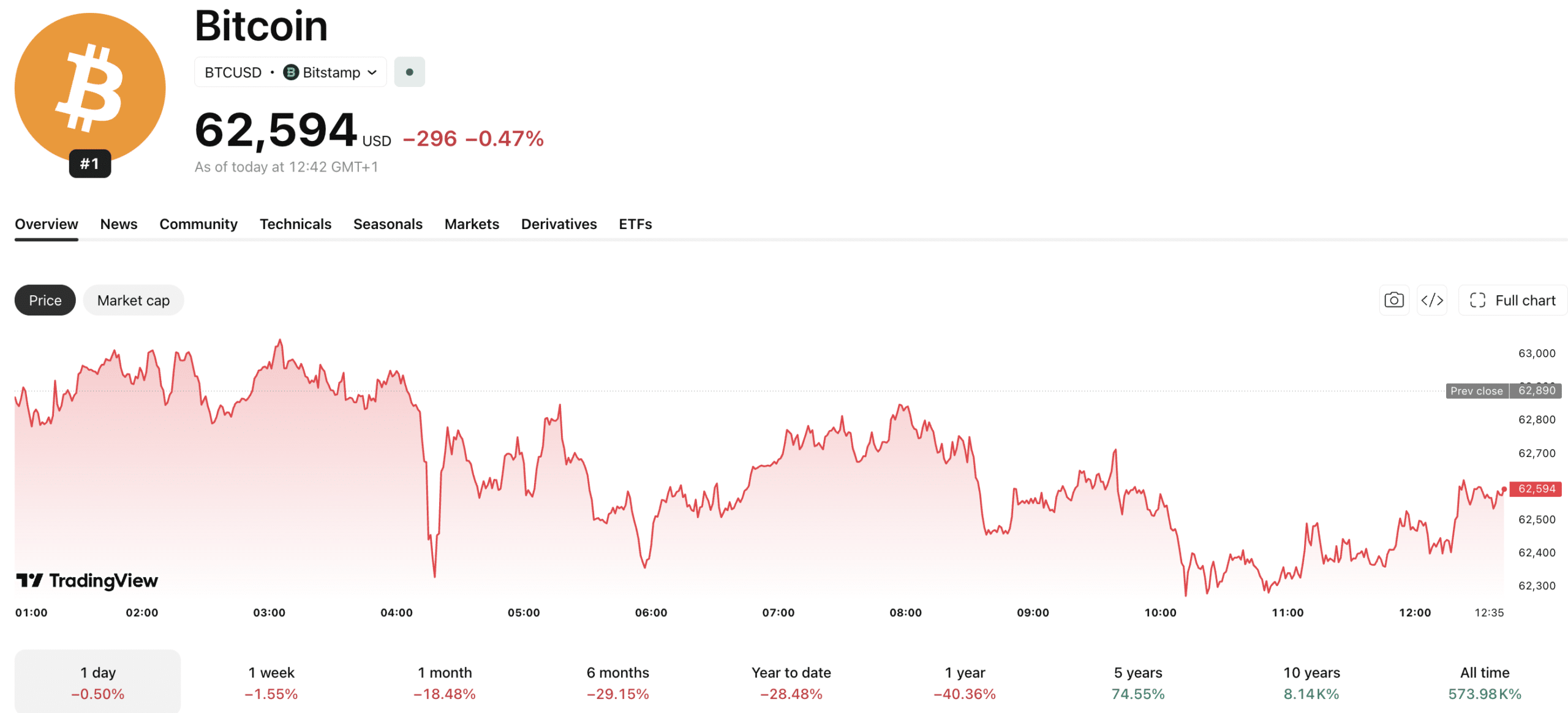
BITA Launched Bitcoin is trading at $62,400 today, down -2.5% on the day as we head into the weekend, which often results in price volatility across the market.
BITA Bitcoin Mechanics: How Covered Call Overlay Actually Works
The mechanism works as follows: BITA maintains exposure to Bitcoin through a combination of direct BTC held at Coinbase and shares of BlackRock’s IBIT, iShares Bitcoin Trust, which launched in January 2024 and has grown to approximately $48-50 billion in assets, according to a BlackRock Nasdaq press release dated June 16, 2026.
BlackRock’s SEC S-1 filing states that the fund “seeks to mirror Bitcoin’s overall price performance while providing premium income through an actively managed strategy of writing call (put) options primarily on IBIT shares.”
Crucially, the substitution is partial – filings and comments indicate that BITA is selling calls on approximately 25-35% of its IBIT exposure, preserving a significant share of the upside compared to fully hedged strategies.
Bitcoin’s higher implied volatility is the direct source of this return, a point made by Jay Jacobs, head of US thematic and active ETFs, when he described BITA as a mechanism for converting BTC’s volatility into cash flow, a framework based on standard Black-Scholes option pricing, where higher implied volatility feeds directly into higher premium income.
Context about how Bitcoin works Implied volatility interacted with macro pressures and Treasury yields In recent months it is directly related to the sustainability of the revenue source across different systems.
discovers: Best coins to buy in 2026
Competitive Positioning: Fee Structure and Goldman Variance
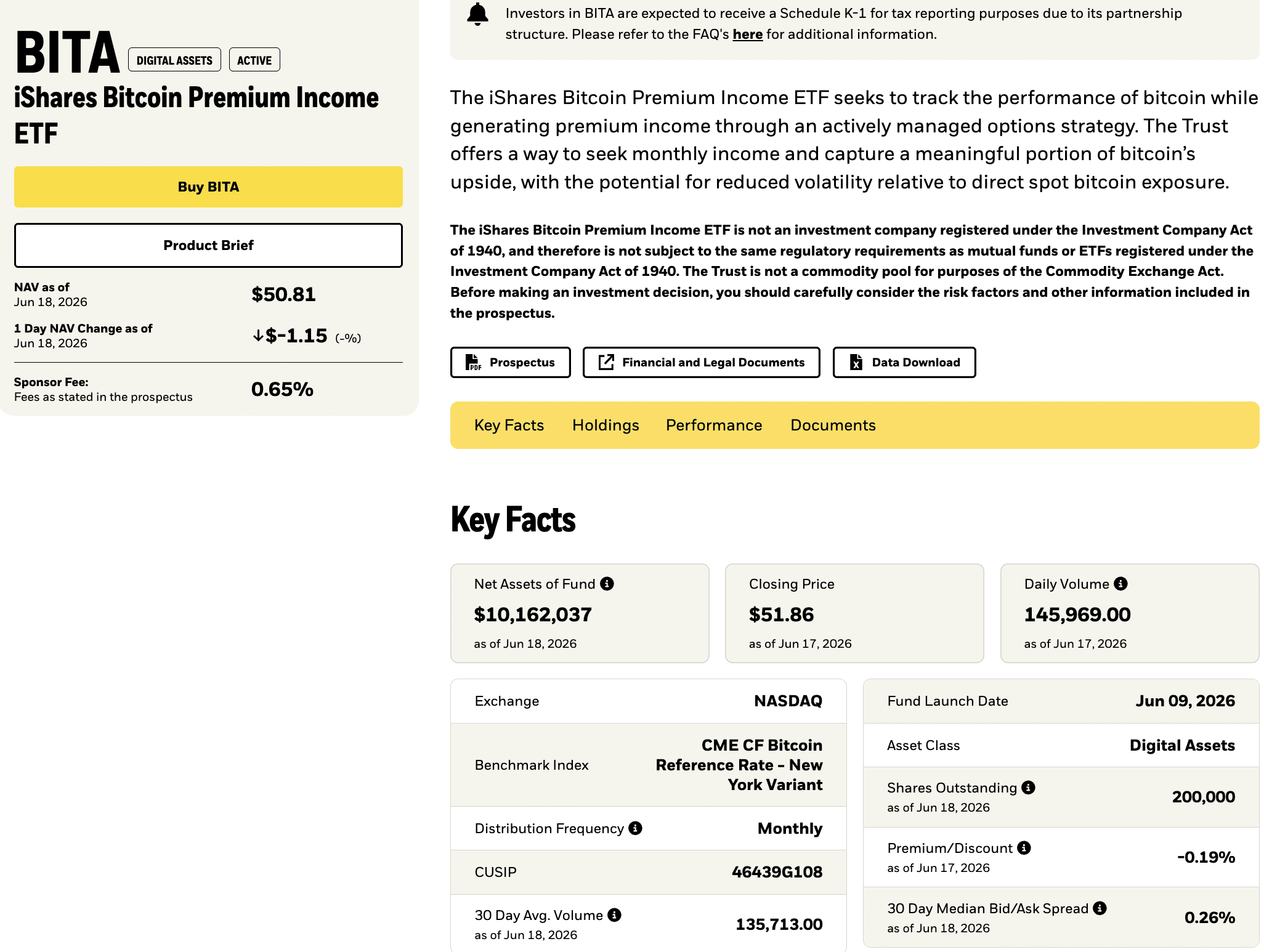
BITA’s 0.65% expense ratio is the most obvious competitive signal in a deposit. NEOS’ Bitcoin Enhanced Income Fund (BTCI), which pulled in more than $650 million in net flows over six months for a 0.99% fee and a 26.7% distribution rate, and Roundhill’s Bitcoin Covered Call Strategy ETF (YBTC), at 0.99%, both sit at the upper end of the 0.95-1.00% range that defined the category.
Grayscale’s comparable covered call bitcoin income fund occupies a similar fee area. BITA undercuts them all while carrying IBIT’s deep liquidity as additional infrastructure for options overlay – a feature that smaller issuers relying on futures exposure cannot replicate.
Goldman’s upcoming product is structurally distinct: it will not hold spot bitcoin directly; Instead, it will gain exposure through other exchange-traded spot Bitcoin products and associated options, with a possible subsidiary structure in Cayman. Goldman’s underwriting process is also more aggressive, with filings indicating call sales of 40-100% bitcoin exposure versus BITA’s partial underwriting.
This approach can generate higher income in sideways markets but will meaningfully limit upside participation compared to BITA in a sustainable BTC rally. Goldman’s final fee level, when revealed, will be the clearest indication of how aggressively it intends to compete on cost.
Eric Balchunas, senior ETF analyst at Bloomberg, confirmed details of the BITA launch and described the competitive dynamic with a two-word post on X: “Game on.” This framing is analytically accurate. The race is less about the income yield itself and more about which issuer secures dominance in model portfolios, wire platforms, and OCIO allocations before the category matures.
discovers: Best Meme Coins to Buy in June
Disclaimer: Coinspeaker is committed to providing unbiased and transparent reporting. This article aims to provide accurate and timely information but should not be considered financial or investment advice. Since market conditions can change rapidly, we encourage you to verify the information yourself and consult with a professional before making any decisions based on this content.

Daniel Francis is a technical writer and Web3 educator specializing in macroeconomics and DeFi mechanics. A crypto native since 2017, Daniel brings his background in cross-chain analytics to author evidence-based reports and detailed guides. It is certified by the Blockchain Council and is dedicated to providing “information gain” that cuts through the market noise to find blockchain’s real-world utility.



