

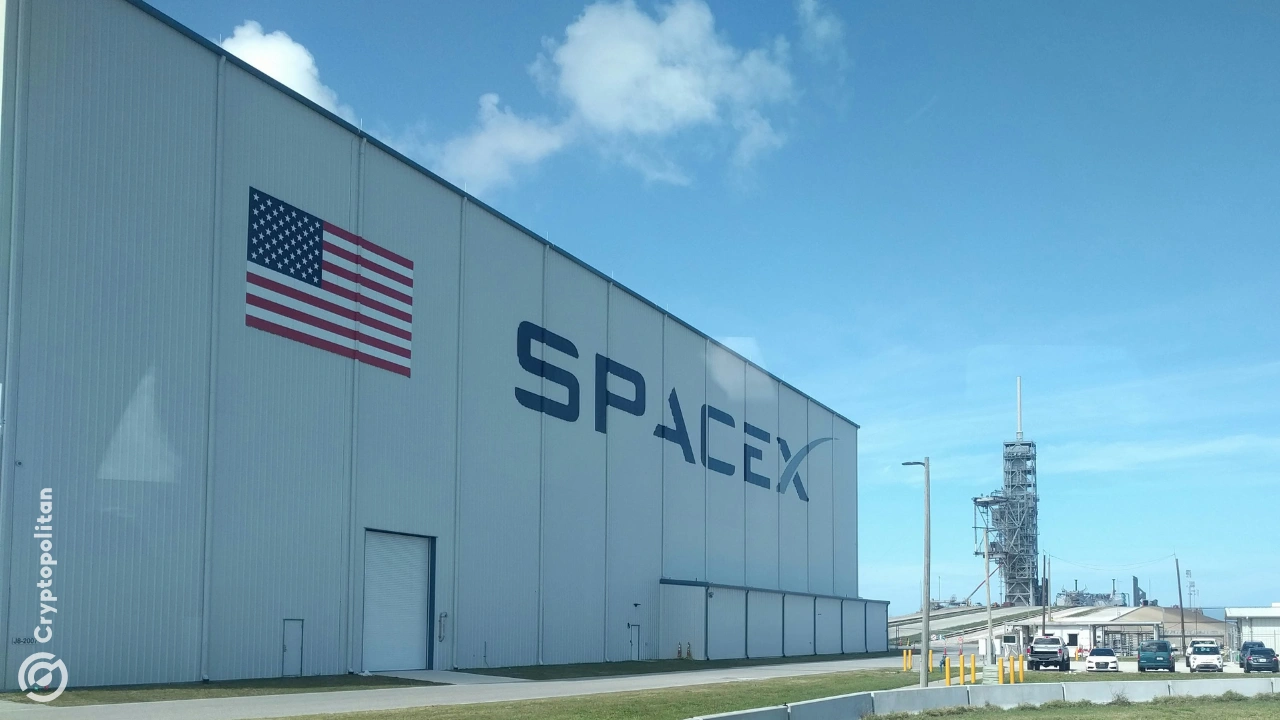
SpaceX is considering a plan to sell its Starlink-branded mobile phone service to people across the United States, a move that would pit Elon Musk’s company against the country’s largest phone companies.
The Financial Times reported on Friday that the company is also considering building its own terrestrial wireless network. President and Chief Operating Officer Gwen Shotwell floated the idea during SpaceX’s recent IPO roadshow, the newspaper said, citing four people who were aware of the talks.
to StarlinkSelling directly to phone customers would be a big change. It is currently working with telecommunications companies such as T-Mobile, using its fleet of satellites to fill in the gaps where regular networks fall short.
The new plan instead calls for SpaceX to sign up customers itself and hand them mobile phone contracts, versus Verizon, AT&T and T-Mobile.
SpaceX first laid out its wireless hopes in its IPO last month, describing Starlink Mobile as a competitor to Verizon, AT&T and others.
Can SpaceX buy T-Mobile?
T-Mobile would be the “obvious choice” for SpaceX if it can’t reach a wholesale network deal, or if Musk’s company prefers to own the wireless business outright, TD Cowen analyst Gregory Williams wrote on Thursday. He pointed out the existing link between the two companies through Starlink. “Another idea is SpaceX acquiring AT&T,” Williams suggested.
SpaceX could cover the cost of the T-Mobile deal by selling more of its stock, Williams said, adding that it could do so without hurting existing shareholders too much.
He also raised the chance of SpaceX buying the cable TV company, noting that both Comcast and Charter Communications have wholesale network agreements with Verizon, which could make them attractive.
The numbers help explain why the emphasis is on communication. Starlink brought in 69% of SpaceX revenue During the first quarter, the telecommunications arm, which includes Starlink Mobile, was the only part of the company to turn a profit. The space unit lost $619 million during that period, and the artificial intelligence arm lost $2.5 billion.
Some observers believe a different deal could come first. Wedbush Securities analyst Dan Ives said his company estimates the odds of a SpaceX-Tesla merger at 80% or higher by 2027, writing that “the foundation (was) already in place for both operations to become one.”
Speaking to CNBC ahead of the start of trading this month, Shotwell said joining forces with SpaceX and Tesla “may make Elon’s life a little easier.” She said there was “no doubt that there is synergy between Tesla and SpaceX in our future,” but added that for now she was “focused on keeping the lights on here.”
In its filing, SpaceX pegged the potential market for Starlink Mobile at $740 billion, and said it was looking to “expand our Starlink Mobile offerings.”
Back in January, when a user on X asked if a “Starlink phone” might appear, Musk said He said “It wasn’t out of the question at some point,” although by February, he said the company wasn’t building one.
The SPCX has been a wild ride
The IPO achieved record numbers. Superior to Amazon And Microsoft by market cap, as Cryptopolitan previously reported. However, The highs were short-lived It faced a 16% pullback before settling into a smaller daily move.
An influx of small investors. SpaceX “embodies many of the qualities that have historically resonated with retail investors,” said Viraj Patel of Vanda, noting its big vision, famous founder and intense media coverage. During the first five sessions, they bought $405 million worth of stock, what Vanda described as the strongest retail IPO in modern history.
Musk, as is his wont, talked about explosive growth, saying on June 14 that the company “may be able to reach nearly” $1 trillion in revenue by 2030.
That’s significantly higher than the $18.7 billion it made in 2025, a year that saw a net loss of $4.9 billion, followed by a loss of $4.28 billion in the first quarter. However, few would bet against it.
The Big Short’s Michael Burry said on June 16 that he holds no position, calling the options too expensive while still questioning the approaching $3 trillion valuation.



