

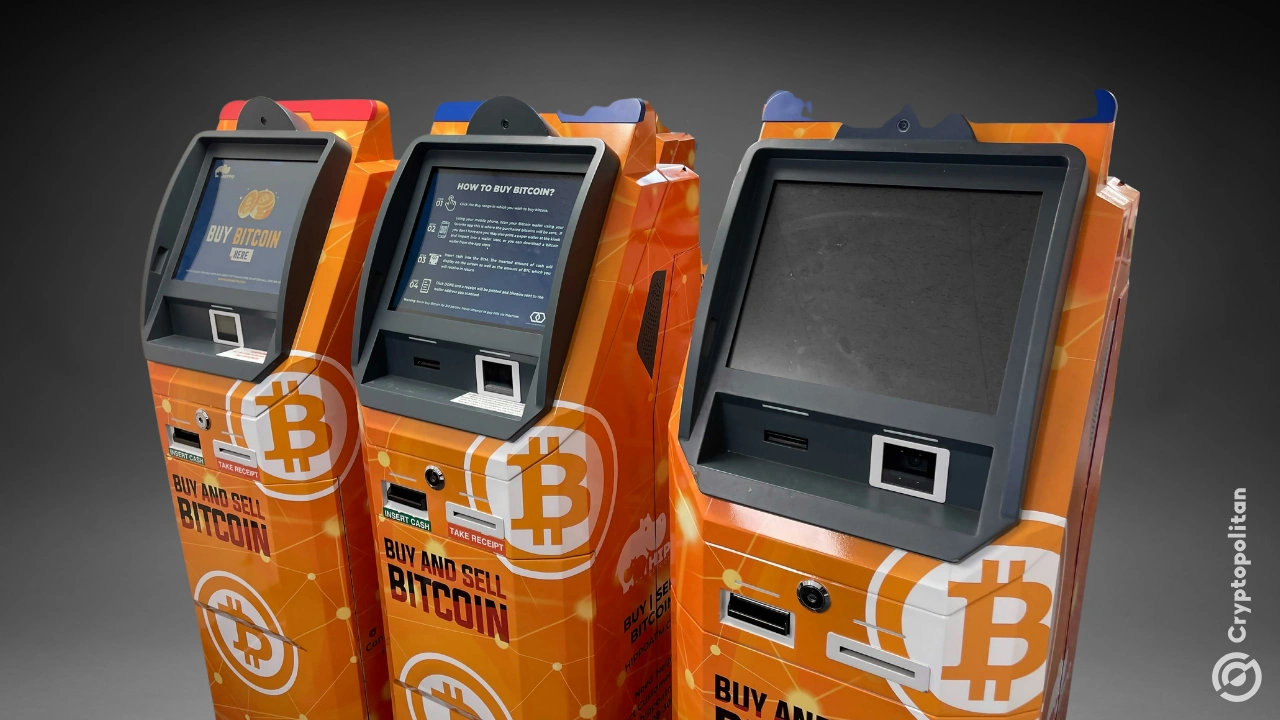
San Antonio has passed an ordinance requiring fraud warning signs to be posted on every cryptocurrency kiosk in the city. The move targets 660 fraud reports and about $39 million in losses recorded by police from January 2024 to April 2026.
The San Antonio Police Department said the scams follow a similar pattern. The caller pretends to be a law enforcement officer, court official, government agency, or utility company and invents an emergency.
They then ask the victim to deposit money into a Bitcoin ATM. The caller says payment will settle the arrest warrant, unpaid fine or overdue bill, according to KENS 5 Preparing reports.
Police say callers keep victims on the phone during the entire transaction. This means that they cannot ask a relative for help, ask a store employee for help, or call 911 before converting and transferring funds into cryptocurrencies.
Bilingual signs arrived at 193 cryptocurrency kiosks on July 1
During the ordinance approval process, SAPD data showed that nearly 38% of identified victims were 66 or older, according to the San Antonio report. The victims were as young as their teens and up to 90 years old. About 88% of cases resulted in losses of less than $50,000. But four individual cases were worth more than $1 million each.
The city has identified the locations of 193 cryptocurrency kiosks in San Antonio. That number beats Dallas, Fort Worth or Austin, according to the San Antonio report.
Operators are required to place warning signs in English and Spanish on each encryption device. Signs must be in 18-point color font and must be positioned so that users standing in the booth can read them directly. The signs will list common cryptocurrency scams and tell anyone who feels pressured to send money to call 911 instead.
SAPD must create and distribute signs and enforce compliance. Failure to publish it will result in the company being subject to a fine of $100 to $500 per violation, and each day that the violation continues is considered a separate crime. The decree goes into effect on July 1.
Texas is pushing for a statewide ban
San Antonio isn’t the only Texas jurisdiction going after cryptocurrency kiosk scams. Smith County Sheriff Larry Smith met with state lawmakers earlier this week to push for a statewide ban on the machines. Sheriff Smith first publicly called for the ban in May after an elderly woman lost $13,000 to an inmate who was running a scam out of a Georgia prison.
Those attending the meeting included the office of State Sen. Brian Hughes, State Rep. Cole Hefner, State Rep. Daniel Alders, and officials from the Texas Financial Crimes Intelligence Center. The report noted that Indiana, Tennessee, and Minnesota have already imposed statewide bans on cryptocurrency ATMs.
Cryptopolitan has done this before I mentioned Bitcoin Depot, which has more than 9,000 cryptocurrency ATMs across North America, filed for Chapter 11 bankruptcy in May after its revenue in the first quarter of 2026 fell nearly 50% year over year. In February, the Massachusetts Attorney General sued the company for tying more than half of the state’s ATM revenue to fraud-related transactions.
Cryptocurrencies move faster than traditional money and are harder to recover once they reach foreign currencies, Laura Bravo, an investigative analyst with the U.S. Secret Service, told KSAT. Bravo noted that encrypted ATMs also isolate victims by stripping away the human interaction a bank teller might provide. This gives the scammers more control, and the victim follows the phone’s instructions on the encryption device.
SAPD’s advice is frank. No government agency or utility company will ask you to pay via a Bitcoin ATM. This is the case even if the caller knows personal details, uses the name of a real officer or spoofs a real phone number. When cash is converted into cryptocurrencies and sent to the scammer’s wallet, the transaction cannot be reversed.



