

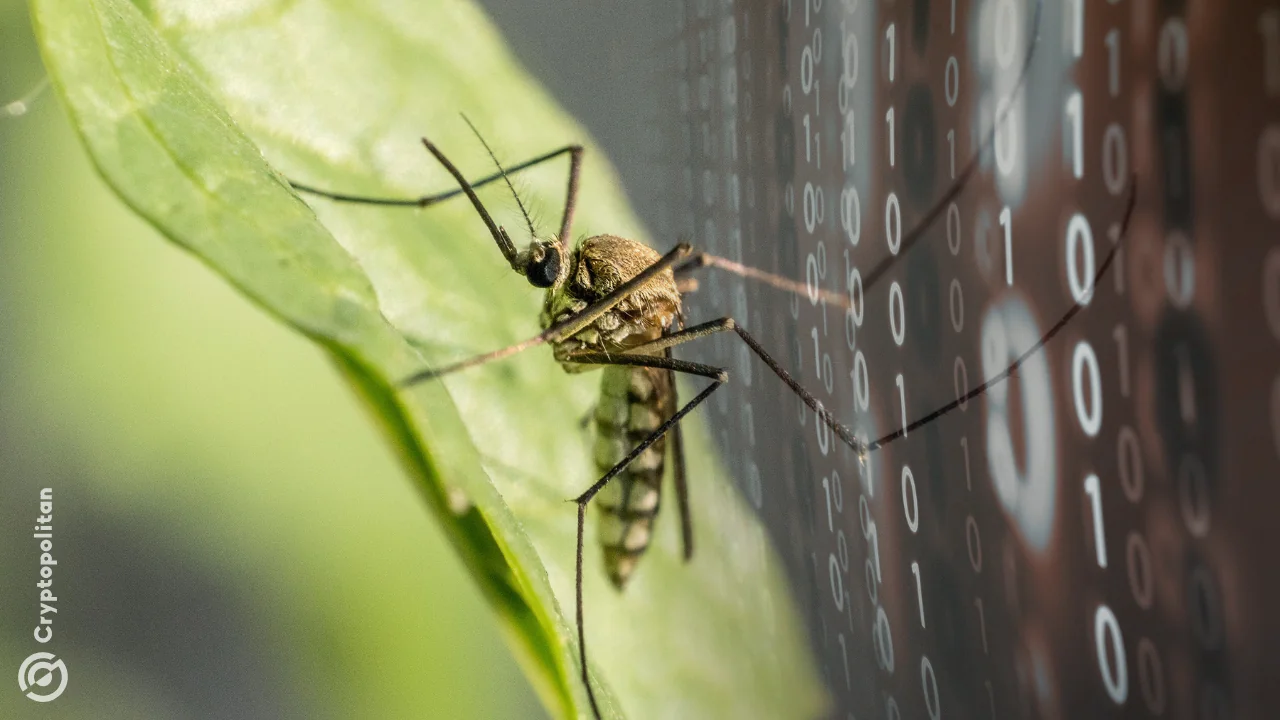
A Chinese startup has raised $2.7 million on Indiegogo for a portable device that detects and kills mosquitoes mid-flight using artificial intelligence and lasers. 4,000 supporters from more than 50 countries donated.
Photon Matrix Laboratory is located in Changzhou, Jiangsu, China. The company has built what it calls a consumer-grade laser defense system against mosquitoes. The device is approximately the size of a smartphone.
The company’s Indiegogo campaign describes the device as a combination of a computer vision unit with lidar technology to find and kill flying insects. Each backer paid about $630 to reserve a unit, according to data from Indiegogo cited by the South China Morning Post.
The campaign initially targeted to raise $20,000. He exceeded that by 130+ times.
The device catches mosquitoes using lidar technology and artificial intelligence
The system distinguishes between the movement of dust particles, the movement of mosquitoes, and sensor industries. Creator Jim Wong says the device can hit insects flying at speeds of up to one meter per second, with body sizes ranging from 2 to 20 millimeters. The company says the device can handle up to 30 mosquitoes per second. This number has not been independently confirmed by anyone.
Sand flies and fruit flies are also within the device’s targeting range.
In April, Li Ran, chief technology officer at Photon Matrix, told China Daily that Chinese manufacturing gave the company an advantage over Western competitors. Li said it takes two weeks to prototype a high-precision fiber laser module in Changzhou, because the suppliers are close by.
“In Silicon Valley, it is difficult to find a supplier who can create a prototype of a high-precision fiber laser module in two weeks,” he told the outlet. “But in Changzhou, the supply chain is right downstairs.”
Chinese companies are repurposing military or industrial technology for consumer products with the help of mature domestic supply chains, cheap lidar, and edge computing, according to SCMP.
Mass production moves to August
Photon Matrix initially promised delivery in early summer 2026. But the company now hopes to begin mass production in August.
This type of delay is common in hardware crowdfunding. Indiegogo Kickstarter campaigns often don’t ship on the original date, and some never ship at all. The Photon Matrix still has to meet Western safety standards for a consumer laser product. This may mean further delays.
Laser mosquito defense technology has been around since 2007. Astrophysicist Lowell Wood proposed the idea in a Bill & Melinda Gates Foundation brainstorming session on eliminating malaria, according to Word. Wikipedia. Wood was an assistant architect of the Strategic Defense Initiative, which was conceived during the Reagan years. He envisioned using missile defense principles against disease-carrying insects.
Since then, a number of teams have attempted to create commercial versions. But none of them can be produced cheaply on a large scale. The Photon Matrix is an expensive device at $630, but it may be the first viable consumer product in this category.
Climate change is expanding the range of mosquito species that carry dengue and Zika into previously temperate regions. In 2024, the European Union saw more than 300 cases of locally acquired dengue. According to ClimaHealth a reportThis is more than the total number of dengue cases in the past 15 years.
Don’t just read cryptocurrency news. Understand that. Subscribe to our newsletter. It’s free.



