



TLDR
- TRX is currently trading at around $0.32 with a market cap of around $30.5 billion
- TRON hosts $89.6 billion worth of stablecoins, USDT making up nearly 98% of it
- The base case price target is $0.65 – $1.00 by 2031
- The bull case puts TRX between $1.50 and $2.25 if stablecoin adoption accelerates
- Bear case sees TRX drop to $0.18-$0.25 in case of increased competition or regulation
TRON has quietly built one of the most widely used blockchains in cryptocurrencies. It’s not the most talked about topic, but it’s hard to ignore the numbers behind it.
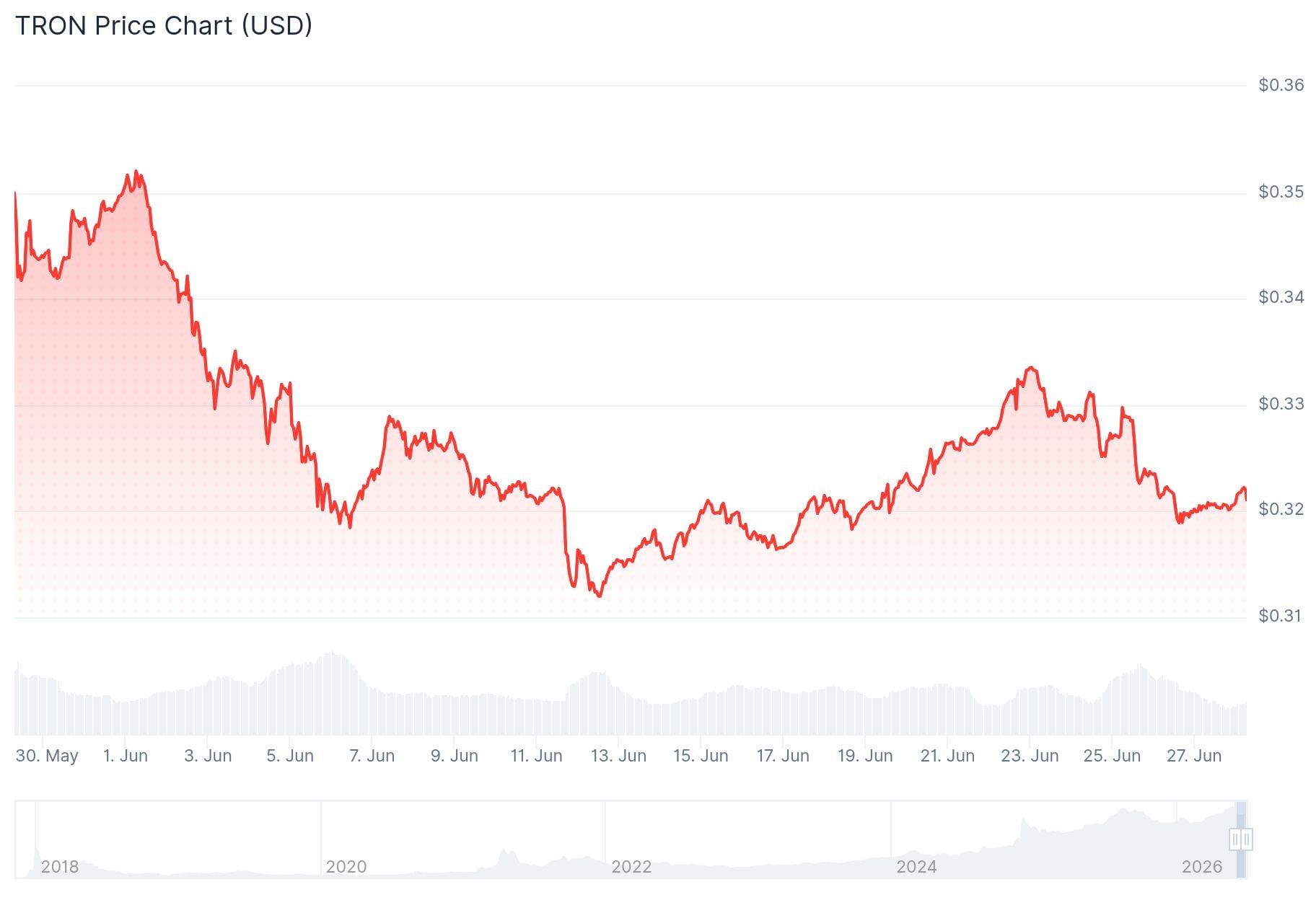
TRX is trading at around $0.32 today, giving TRON a market cap of around $30.5 billion. There are about 95 billion TRX in circulation, making it one of the largest crypto assets in terms of supply.
The network has become a major hub for transferring stablecoins. DeFiLlama data shows that TRON holds about $89.6 billion worth of on-chain stablecoins. USDT represents approximately 98% of this total.
$TRX
The TRX chart was drawn about a month ago, and the chart is still following it.You can’t tell me this is just luck, it’s also skill with little preference from market makers.
What you want to see for TRON is a breakdown below $0.3186 and we will see this chart… https://t.co/fih3fSIOvr pic.twitter.com/LxtdEB4JoO
– Umair Orakzai (@Umairorkz) June 26, 2026
Stablecoins are used for cross-border payments, remittances, trading and settlement. TRON offers low fees and fast transactions, which is why it has become the network of choice for USDT activity.
This gives TRX a true utility status that many tier 1 blockchains do not have.
Base case: $0.65 to $1
Assume the base case You see It maintains its position as a leading stablecoin network. If cryptocurrency adoption grows steadily and TRON remains competitive on fees, the price could range from $0.65 to $1 by 2031.

This would put TRON’s market cap somewhere between $62 billion and $95 billion.
TRX is also used for storage, governance, bandwidth and power on the network. Transaction activity can contribute to TRX burn, reducing supply over time.
The weighted price target based on the three scenarios is around $0.88 by 2031.
Bull and bear issues
A bullish case puts TRX between $1.50 and $2.25. This requires TRON to become a major means of payment across emerging markets, fintech platforms and remittance networks. A market cap of between $140 billion and $215 billion would be needed to support those prices.
The bear case is at $0.18 to $0.25. TRON’s biggest weakness is concentration. Almost all stablecoin activity is tied to USDT. If Tether moves to other chains, or if regulators crack down on stablecoin flows, the core use case for TRON will weaken.
Ethereum Layer 2s, Solana, and BNB Chain are all competing for stablecoin market share.
TRON’s five-year forecast depends on one thing: whether stablecoin usage continues to grow and whether TRON remains one of the main networks handling this activity.
The network currently registers millions of active addresses and generates meaningful daily chain revenue.



