

Ripple announced on June 29 that developers can begin testing the XRPL lending protocol in a custom environment, developing a dual upgrade that includes a technical specification, XLS-65 and XLS-66, that will deliver a native fixed-term credit infrastructure directly on the XRP Ledger.
This is pending approval by the network validator appointed under the XRPL amendment process, which requires continuous support of more than 80% of trusted validators for two consecutive weeks.
This is not just another DeFi yield layer grafted onto the blockchain. It is a structural effort to create an XRP Ledger as a regulated line of credit for institutional participants.
This will require off-chain underwriting authority, first-loss capital protection, and fixed-rate loan terms that align with the risk frameworks of banks and asset managers rather than automated liquidation logic governing permissionless protocols.
@ripple Just published the full explanation of the credit infrastructure of the XRPL Lending Protocol, which exists natively on-chain.
Individual asset vaults. Consolidated loan origination. The payment logic and default logic are enforced at the protocol layer.
Subscription remains off-chain. Implementation movements… pic.twitter.com/YbZmliXLhx
— 𝗕𝗮𝗽𝗲XRP (@BankXRP) June 29, 2026
XRPL Lending Protocol: How the double upgrade is structured
The mechanism works as follows: XLS-65 creates a Single Asset Vault, a standardized pooling format that allows liquidity providers to deposit a single asset type, such as XRP or RLUSD, and earn a return.
The XLS-66 lending protocol layer governs loan terms, repayment schedules, interest calculations, and default terms, all of which are enforced at the protocol level and not through external smart contracts.
The loans are by design fixed-term and unsecured, a deliberate departure from collateral-based models such as ghost. Creditworthiness assessment remains off-chain, maintaining institutional control over lending decisions while on-chain logic handles lifecycle events once the loan is originated.
Losses from default are absorbed first by pool managers and insurers – a loss-first capital structure that mirrors credit tranches in traditional finance.
Ripple said the design choice reflects intentional architecture rather than constraints. “This separation reflects the real financial infrastructure,” the company stated. “By maintaining this distinction, XRPL can support a broader range of credit structures over time, rather than codifying a single lending model in a single application.”
RippleX developer Edward Hennis described the target as “real credit, not a DeFi gambling aggregator,” describing the system as a regulatory-friendly institutional DeFi with loan terms typically ranging from 30 to 180 days at fixed rates.
All you have to do is spot and calm down.
As we move into the second half of 2026, we will likely see more historical oversold signals emerge. $XRPsuch as the Relative Strength Index 2W reaching its lowest levels at 34
Higher lows or lower lows under lower highs: all led to eventual big breakouts 🚀 pic.twitter.com/6N7WSYUwcp
— 🇬🇧 ChartNerd 📊 (@ChartNerdTA) June 30, 2026
discovers: Best Meme Coins You Can Buy for July
On-chain credit context: RWAs, RLUSD, and the Ondo precedent
Ripple is framing the lending protocol as a functional complement to the RWA token activity already occurring on XRPL. In May 2026, Ondo Finance carried out the first cross-border, cross-bank redemption of ledger-tokenized US Treasuries, a milestone that Ripple described as proof that moving assets across the chain is only half the infrastructure problem.
The XRPL lending protocol, if activated, would allow those same token assets to act as working capital rather than fixed inventory, providing payment providers with short-term liquidity and enabling treasury teams to generate revenue by lending digital assets under pre-determined terms.
RLUSD, Ripple’s stablecoin, is positioned as an underlying vault asset within this credit structure. according to Queen GekkoRLUSD has reached a market cap of $1.5 billion since its debut in late 2024, giving lending treasuries a liquid underlying dollar-denominated asset with meaningful current supply. Activating the protocol will deepen RLUSD’s on-chain interest beyond payments and into on-chain credit markets.
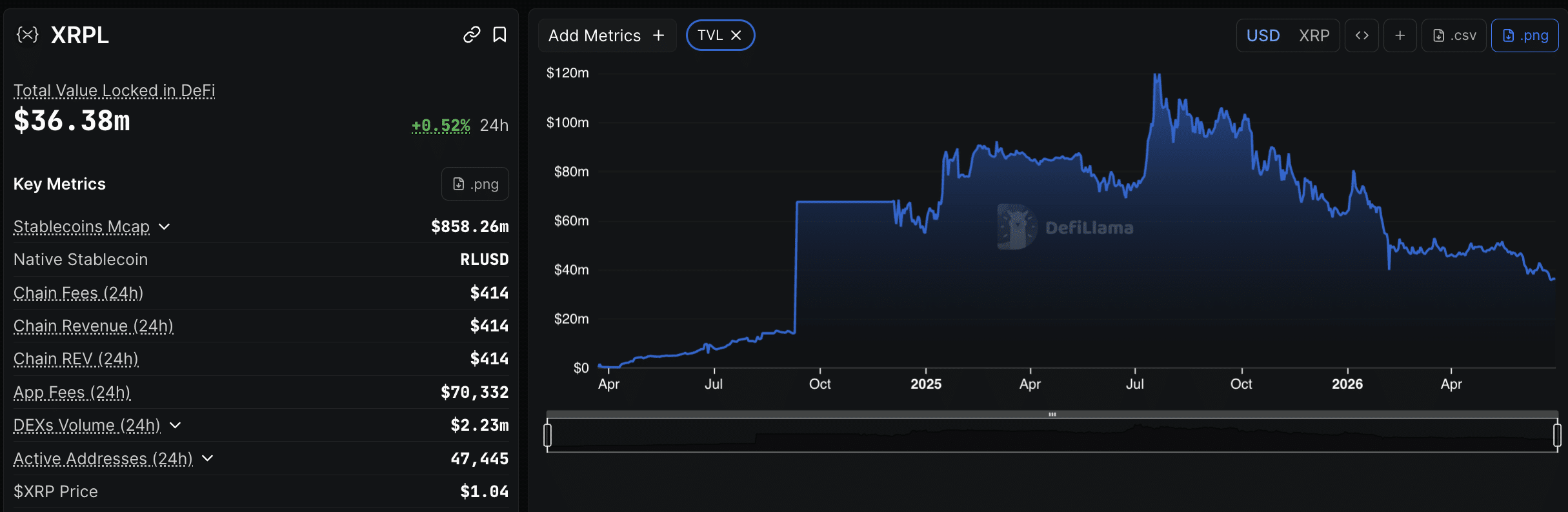
Validator vote and Ripple price at the time of announcement
The modification entered validator voting after the release of XRPL v3.1.0 in January 2026, according to multiple reports. As of the June 29 announcement, voting had not ended.
RippleX has implemented formal verification on the XLS-65/66 code and is offering up to $200,000 in security rewards to researchers who can identify flaws in the design or implementation of the lending protocol before any mainnet activation.
XRP was trading at around $1.05 at the time of the announcement, down -8% compared to the previous week. The token fell to its lowest level since President Donald Trump’s re-election the previous Thursday, briefly approaching $0.99 in sympathy with the Bitcoin movement.
The analytical question is no longer whether XRPL can move assets across the chain; Rather, it is whether the group of auditors will certify the credit infrastructure needed to operate those assets.
explores: Best coins to buy in 2026
Disclaimer: Coinspeaker is committed to providing unbiased and transparent reporting. This article aims to provide accurate and timely information but should not be considered financial or investment advice. Since market conditions can change rapidly, we encourage you to verify the information yourself and consult with a professional before making any decisions based on this content.

Daniel Francis is a technical writer and Web3 educator specializing in macroeconomics and DeFi mechanics. A crypto native since 2017, Daniel brings his background in cross-chain analytics to author evidence-based reports and detailed guides. It is certified by the Blockchain Council and is dedicated to providing “information gain” that cuts through the market noise to find blockchain’s real-world utility.



