

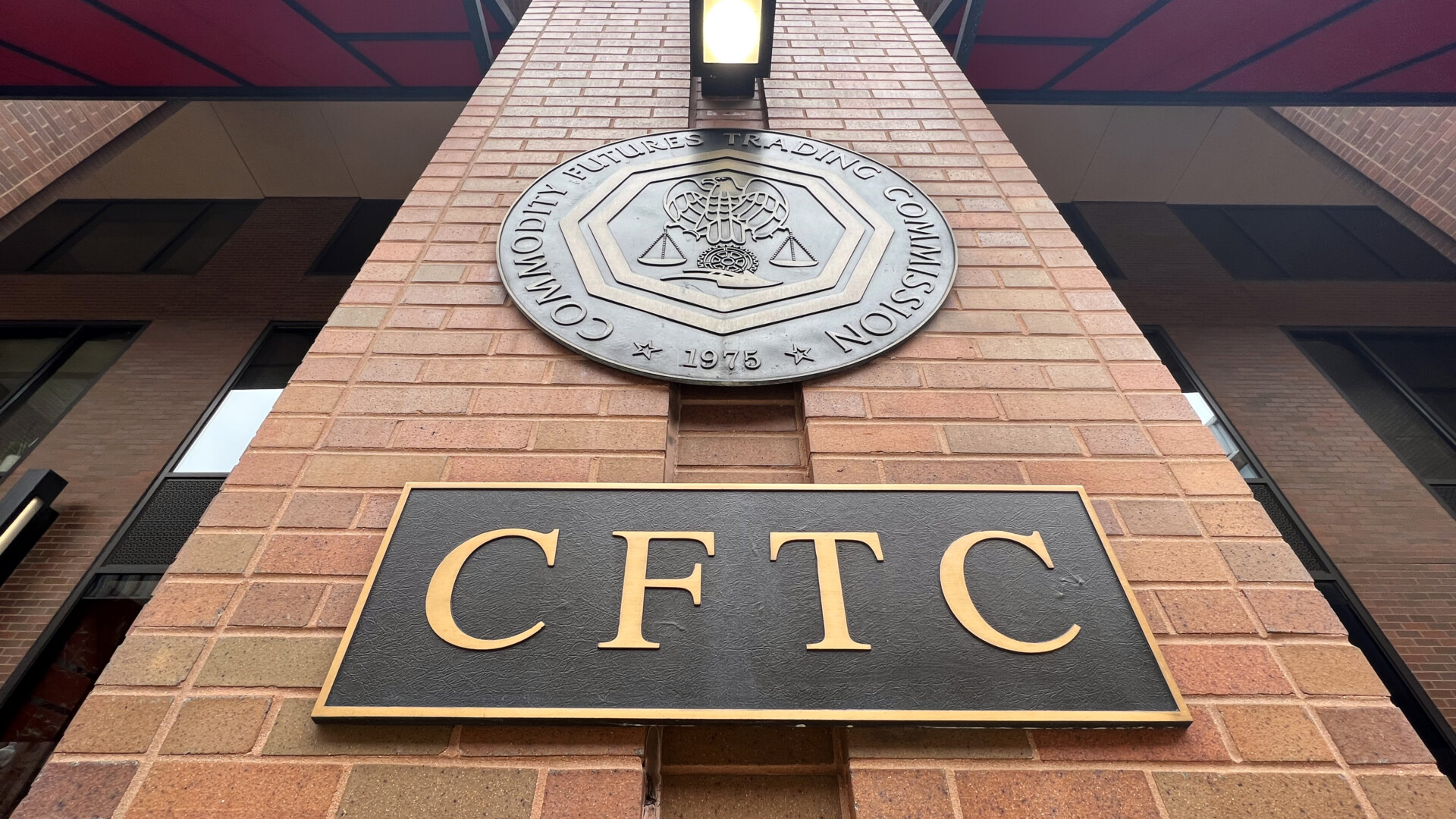
A staff shortage at the Commodity Futures Trading Commission (CFTC) has stalled Senate efforts regarding the Clarity Act, a delay that supporters fear will allow the rest of the world to dictate rules for the roughly $2.2 trillion cryptocurrency industry.
In the case of cryptocurrency trading companies with presence in different jurisdictions, the issue is related to governance. The Clarity Act indicates that the Commodity Futures Trading Commission (CFTC) will oversee spot trading in digital commodities. However, while this agency’s role is supposed to regulate this market, it currently has only one commissioner instead of five – Michael Selig, a Republican. The debate took place between Democrats in the White House and the Senate on Thursday, as they exchanged blame for keeping the other four seats vacant.
Selig has been frank about the risks involved. In a recent interview with Fox Business, Selig stated that if Congress does not take action, there is a possibility that regulators will end up “writing all the rules” for cryptocurrencies. This is what the legislation was intended to avoid: a US market run by regulatory improvisation rather than legislative rules while other countries implement their own rules.
Blame game on CFTC benches
White House officials wrote to Senate Majority Leader John Thune and Senate Minority Leader Charles Schumer on Thursday, saying they wanted to “set the record straight” after Democrats accused the Trump administration of refusing to nominate commissioners for independent agencies, including the Securities and Exchange Commission (SEC) and the Commodity Futures Trading Commission (CFTC).
The administration rejected these accusations. Her argument is that Senate Democrats have blocked “every civilian nominee” from being successfully nominated by President Donald Trump, who, in effect, continues to nominate Democrats to other independent bodies, such as the International Trade Commission or the National Labor Relations Board. The letter, signed by Presidential Personnel Director Dan Scavino and Legislative Affairs Director James Braid, said the White House had asked Democratic leaders to recommend nominees for Democratic seats on the Securities and Exchange Commission and the Commodity Futures Trading Commission (CFTC) but had received no response.
Officials also noted Recent Supreme Court decision in Trump is against slaughterAlleging that Democrats’ criticism of the administration’s appointments was “answered by a recent Supreme Court ruling,” which expanded the president’s power to fire the leaders of several independent federal agencies.
White House records prove that the administration Withdrawal of Brian Quintenz’s nomination to chair the CFTC in September 2025, after which Michael Selig was nominated for the position in October. The official list of nominations and withdrawals submitted by the White House to the Senate contains data on these actions, allowing one to see the sequence of events related to the CFTC leadership changes.
Why does the half-empty commission matter to the market?
according to Previous reportsThe CFTC is a relatively small organization of only about 543 employees compared to the size of the SEC, which has about 4,200 employees. In addition, the agency appears to have lost 21% of its staff. However, lawmakers on both sides of the political spectrum have raised the question of whether a single commissioner leading an agency with such a small staff would be able to adequately oversee such a large, 24/7 market.
The problem is not only related to the amount of capacity. Rules imposed by one person may become easier to challenge in court, Glenn Thompson and Angie Craig, leaders of the House Agriculture Committee, said in a letter to Trump in May. Thus, the full five-member committee has “more sustainable rules.” Standing rules are crucial for global companies making decisions about where they operate.
Senator Cynthia Lummis made her concerns about the timing quite clear. legislation The law of clarity This will likely be our last chance to get real digital asset legislation before 2030 It was announced in X this week. If Congress doesn’t do so, she added, “we guarantee that another country will write the rules for digital assets and we will spend the next decade playing catch-up.”
What still stands in the way?
The Senate is scheduled to reconvene on July 14 and is likely to continue voting. However, there are three important items that can slow down the voting process. The first clause provides protection to blockchain developers who do not have custody of cryptocurrencies. The second is Section 604, which would exempt some developers and service providers from having to comply with money transfer regulations, which critics say could weaken anti-money laundering tools. In contrast, the third clause concerns the actions of platforms like Coinbase that can still pay out “rewards” on stablecoin holdings, a practice that the GENIUS Act prohibits issuers from offering directly.
The last match indicates the highest market number that works with the invoice. According to forecasts of analysts from Standard Chartered, in 2028 provide return stablecoins It will bring about $1 trillion in deposits away from traditional banks. That’s why the American Bankers Association rejected the White House’s language compromise proposal in March.
The broader market did not react strongly to the confrontation on Thursday. the The total value of the encryption It rose about 1% to approximately $2.2 trillion, with the price of Bitcoin reaching about $63,773, thanks to stable oil prices. The extent of that calm may change with decisions the Senate makes after July 14, and whether Trump fills vacancies that lawmakers say are necessary for the CFTC to begin doing its work.



