
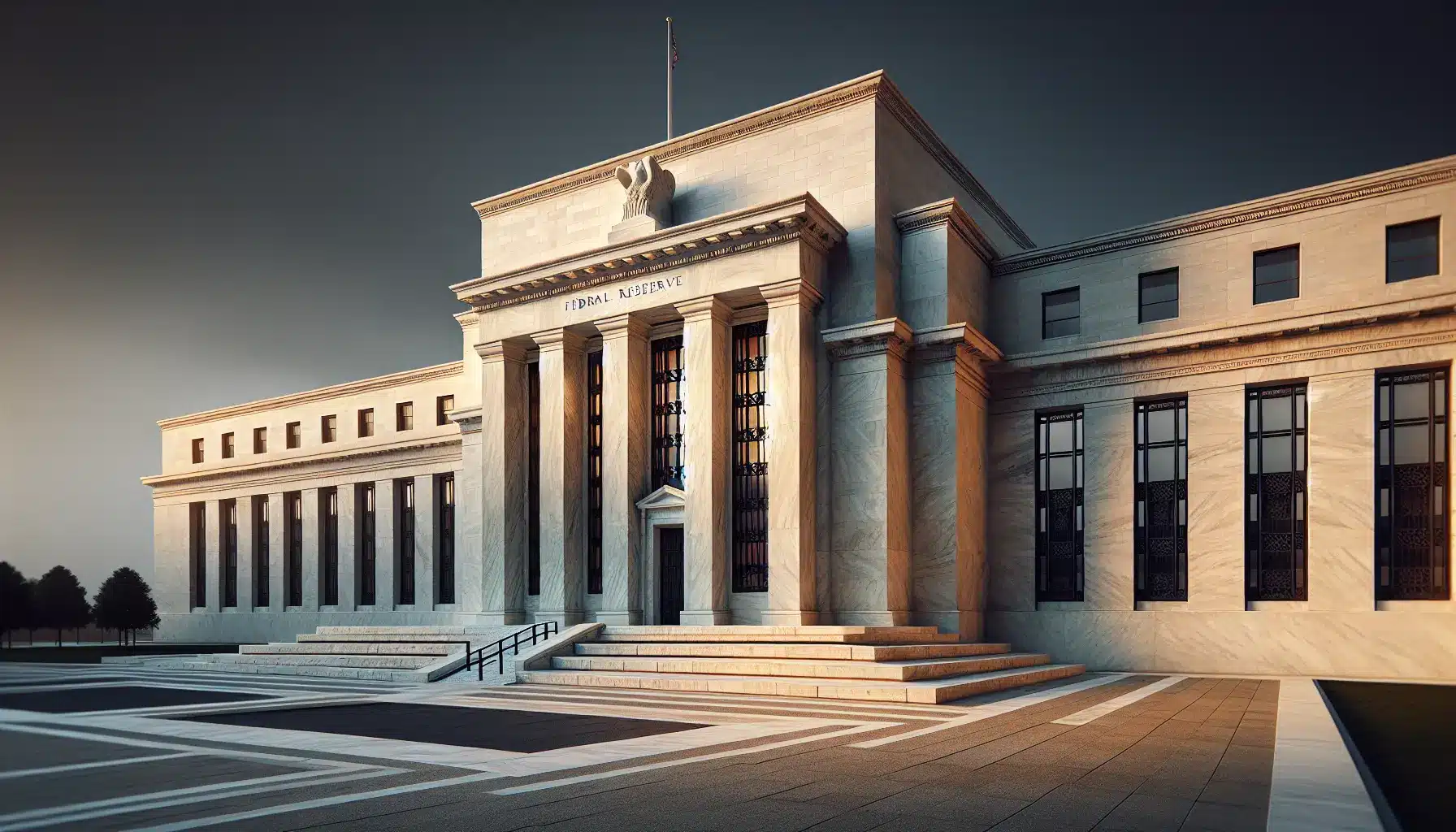
The Senate Banking Committee is reportedly planning to hold a confirmation hearing for Federal Reserve Chairman nominee Kevin Warsh as soon as the week of April 13, 2026, according to a report. Sunday report from Punchbowl News Quoting two sources familiar with the committee’s agenda.
The timing remains contingent on Kevin Warsh completing and submitting all required disclosure paperwork to the committee — a key procedural requirement that sources described as the key variable keeping the date smooth. The White House formally transmitted Warsh’s dual nominations — Fed Chairman for a four-year term and Fed Governor for a 14-year term beginning on February 1, 2026 — to the Senate on March 30, 2026, setting up the confirmation process against the hard May 15, 2026, expiration deadline of incumbent Chairman Jerome Powell.
We believe the goal of the mid-April hearing is less a matter of scheduling convenience than a deliberate compression of the confirmation timeline, designed to leave minimal procedural light between committee approval and Powell’s departure—reducing the window during which political opposition can gather and market uncertainty about the Fed’s leadership can worsen.
BREAKING: Fed’s Kevin Warsh’s confirmation stalls as Powell investigation continues
Kevin Warsh’s nomination is stuck in limbo as Senator Thom Tillis blocks progress until the Justice Department’s investigation into Jerome Powell is resolved.
• The investigation is related to the Fed’s $2.5 billion replenishment
• Telles refuses to come forward… pic.twitter.com/pOoiBvvVSn— MSB Intel (@MSBIntel) March 27, 2026
The unclear outcome is structural: The compressed confirmation timeline limits the scope of discovery in the Senate, potentially reducing the depth of scrutiny applied to Warsh’s stated intention to pursue what he called a “regime change” in the Fed’s interest rate policy and balance sheet — specifically the policy variables to which cryptocurrency markets are most sensitive.
explores: Trump Presses Fed on Interest Rate Cuts: Fallout from Bitcoin and Cryptocurrencies
Kevin Warsh: Background to the nomination and Senate confirmation timeline
Kevin Warsh, 55, is a graduate of Stanford and Harvard Law School and served as an executive at Morgan Stanley before joining the Bush administration as a senior economic adviser.
President George W. Bush nominated him to be Governor of the Federal Reserve in 2006, making him at the time the youngest person ever to serve on the Federal Reserve Board of Governors. His 2006-2011 tenure included the acute phase of the 2008 financial crisis, which gave him direct institutional experience in dealing with emergency liquidity facilities, balance sheet expansion, and interagency coordination that characterized the response to the crisis – a resume that the White House pointed to when it described him as “extremely well prepared” for the top job.
President Trump announced Warsh’s nomination on January 30, 2026, after months of public speculation about a hawkish successor to Powell, whose relationship with the administration has clearly soured over the pace of interest rate normalization.
The White House’s March 30 request to the Senate activated the Banking Committee’s jurisdiction under the Federal Reserve Act, which requires Senate approval to appoint the chairman and all board members. The committee hearing is the first formal public step; Committee approval is followed by a full Senate vote, a process that in recent sessions has taken between two and six weeks, depending on floor scheduling priorities and any detention mechanisms invoked by individual senators.
BREAKING: Sen. Elizabeth Warren is investigating Trump’s Fed nominee Kevin Warsh over Epstein connections.
Warsh’s name reportedly appeared on a 2010 St. Barts guest list linked to Epstein’s circle, raising questions about his past relationships.
Warren is now demanding a full investigation and… pic.twitter.com/WEijngzUIO
– Bull Theory (@BullTheoryio) March 19, 2026
Two senators indicated resistance. Senator Elizabeth Warren has publicly opposed the nomination on the grounds of central bank independence, while Senator Thom Tillis has pledged to withhold support for any Fed nominee until the Justice Department concludes its investigation into Powell — an investigation the Justice Department opened in January 2026 into expenditures related to a multi-year renovation project at the Fed’s office buildings.
Tillis’s procedural position is particularly important because he operates independently of Warren’s ideological opposition, creating an obstructionist dynamic between the two parties that complicates the vote count for Senate Republican leadership. A majority of the Senate Banking Committee is required to advance the nomination. A simple majority in the Senate confirms this.
explores: Cryptocurrency hack alerts this week
Fed Leadership and Liquidity Conditions: Cryptocurrency Transfer Mechanism
The cryptocurrency market’s interest in Warsh’s assertion is not accidental — it derives directly from the mechanism by which the Fed’s leadership shapes the liquidity environment that has historically governed Bitcoin’s price path over the medium term.
The transmission chain works as follows: The Fed Chairman sets the institutional tone for future guidance, which anchors price expectations, which sets the real yield on short-term Treasuries, which in turn sets the opportunity cost of holding non-yielding assets, including Bitcoin.
Soon, Kevin Warsh will be the first pro-Bitcoin Chairman of the Federal Reserve.pic.twitter.com/afEBrBFeWX
-Michael Saylor (@saylor) January 30, 2026
When real yields are compressed, whether through interest rate cuts, relaxing forward guidance, or balance sheet expansion, capital flows toward riskier, non-yielding assets, with the book cost of holding them lower relative to cash equivalents.
Warsh’s public statements indicate a materially different policy orientation than Powell’s. In a July 2025 appearance on CNBC’s “Squawk Box,” Warsh stated that the Fed’s “reluctance to cut interest rates” was “a sign absolutely against them,” a description that makes him more amenable to easing than the incumbent president — or at least, more willing to frame the current situation as a policy failure.
His stated ambition for “regime change” in balance sheet management introduces further uncertainty: if interpreted as a preference for the resumption of quantitative easing or a slower path to quantitative tightening, the implications for dollar liquidity are expansionary, which is historically associated with Bitcoin’s outperformance.
The dollar dimension multiplies the effect. The Fed, which is seen as moving toward an easier policy under political pressures – a reasonable inference from Trump’s constant commentary on interest rates – tends to weaken the dollar index (DXY), which has an established inverse relationship with Bitcoin pricing. Markets don’t wait for confirmation; CME FedWatch data in recent sessions have already reflected an increasing likelihood of a 2026 rate cut, partly in anticipation of the Warsh-led Fed adopting a more flexible stance. The hearing itself may act as a pricing trigger regardless of its outcome.
discovers: Meme Coin Supercycle: Best performer this week
Disclaimer: Coinspeaker is committed to providing unbiased and transparent reporting. This article aims to provide accurate and timely information but should not be considered financial or investment advice. Since market conditions can change rapidly, we encourage you to verify the information yourself and consult with a professional before making any decisions based on this content.

Daniel Francis is a technical writer and Web3 educator specializing in macroeconomics and DeFi mechanics. A crypto native since 2017, Daniel brings his background in cross-chain analytics to author evidence-based reports and detailed guides. It is certified by the Blockchain Council and is dedicated to providing “information gain” that cuts through the market noise to find blockchain’s real-world utility.



