

Drift Protocol, a Solana-based perpetual exchange, suffered a drain of nearly $270 million in assets from its primary vault address on April 1, 2026, according to on-chain data from Arkham Intelligence.
The vault balance collapsed from $309 million to nearly $41 million via a rapid series of transactions spanning more than 15 distinct token types. Security researchers have not yet published an independent analysis confirming the exact exploit vector, and Drift has described the situation as an active investigation.
A protocol that loses nearly half its total value when it is caught in a single wave of outflows faces an immediate solvency issue for depositors – not a theoretical one. With Drift’s TVL of about $550 million per Devillama At the time the transfers were reported, the size of the virtual exchange placed this event among Solana’s most significant DeFi exploits to date.
The drift protocol is under active attack. Deposits and withdrawals have been suspended. We are coordinating with several security companies, bridges and stock exchanges to contain the incident. This is not an April Fool’s joke. We will provide additional updates from this account as… https://t.co/03SRPq4fHj
– Drift (@DriftProtocol) April 1, 2026
discovers: Meme Coin Supercycle: Best performer this week
Drift Protocol Vault Exploitation: What the on-chain history shows
The transfers originate from an address that Arkham calls “Drift Protocol: Vault (JCNCM)”, which corresponds to the vault address listed in Drift Protocol’s own documentation. The first and largest movement – approximately 41 million JLP tokens worth approximately $155 million – was directed to a single receiving address, hkGz4Kwhich does not bear the mark of a known entity in Arkham.
This title was funded with just 1 SOL about one week ago and received a test transfer of $2.52 from the Drift vault in late March – a reconnaissance pattern that we believe indicates deliberate pre-organization of the attack rather than an opportunistic hack.
The depleted assets spanned stablecoins, wrapped Bitcoin variants, and liquid mortgage tokens including MSOL, BSOL, INF, JitoSOL, Jupiter’s JLP vault token, and USDT across multiple transactions totaling approximately $5.65 million, 23.366 million FARTCOIN valued at $4.11 million, and 2.865 million SYRUP USDC valued at $3.32 million. A separate transfer of 125,000 WSOL — roughly $10.45 million — was directed to a second, unnamed address. The breadth of asset types corresponds to a comprehensive survey of all deposited collateral rather than a targeted withdrawal of a single asset.
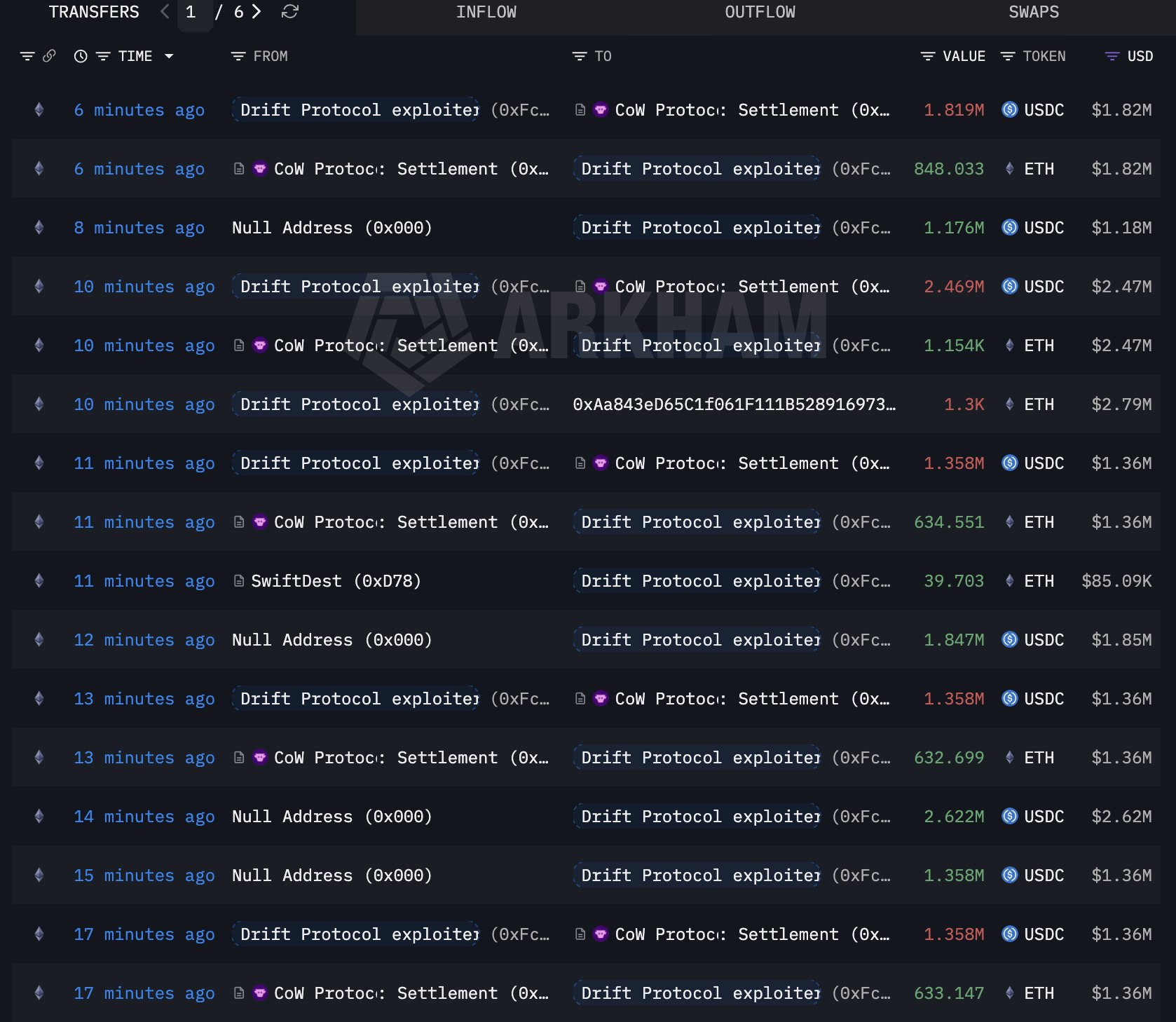
source: Loconchine
Blockchain analyst Loconchine It was reported that the suspected exploiter began swapping depleted assets into ETH, a common laundering vector after major DeFi thefts. PeckShield founder Jiang Xuxian said the attack was likely based on compromised management keys — “The management keys behind Drift were definitely leaked or compromised” — making the incident a key management failure due to human error rather than a smart contract vulnerability.
explores: Cryptocurrency hack alerts this week
Protocol exposure and ecosystem infection risk
The Drift Protocol operates as a non-custodial perpetual exchange where user collateral is pooled into a drained vault address – meaning the $270 million figure represents users’ deposited funds, not the protocol’s vault assets. A protocol that loses depositor collateral of this magnitude cannot honor open positions or withdrawal requests until the shortfall is resolved, creating immediate insolvency pressure on active traders with leveraged exposure.
The DRIFT token immediately reversed this, falling 28% to nearly US$0.049 on April 1 – a price now 98% below its November 2024 all-time high of US$2.60, according to market data – while South Korea’s Upbit exchange suspended all DRIFT trading in response.
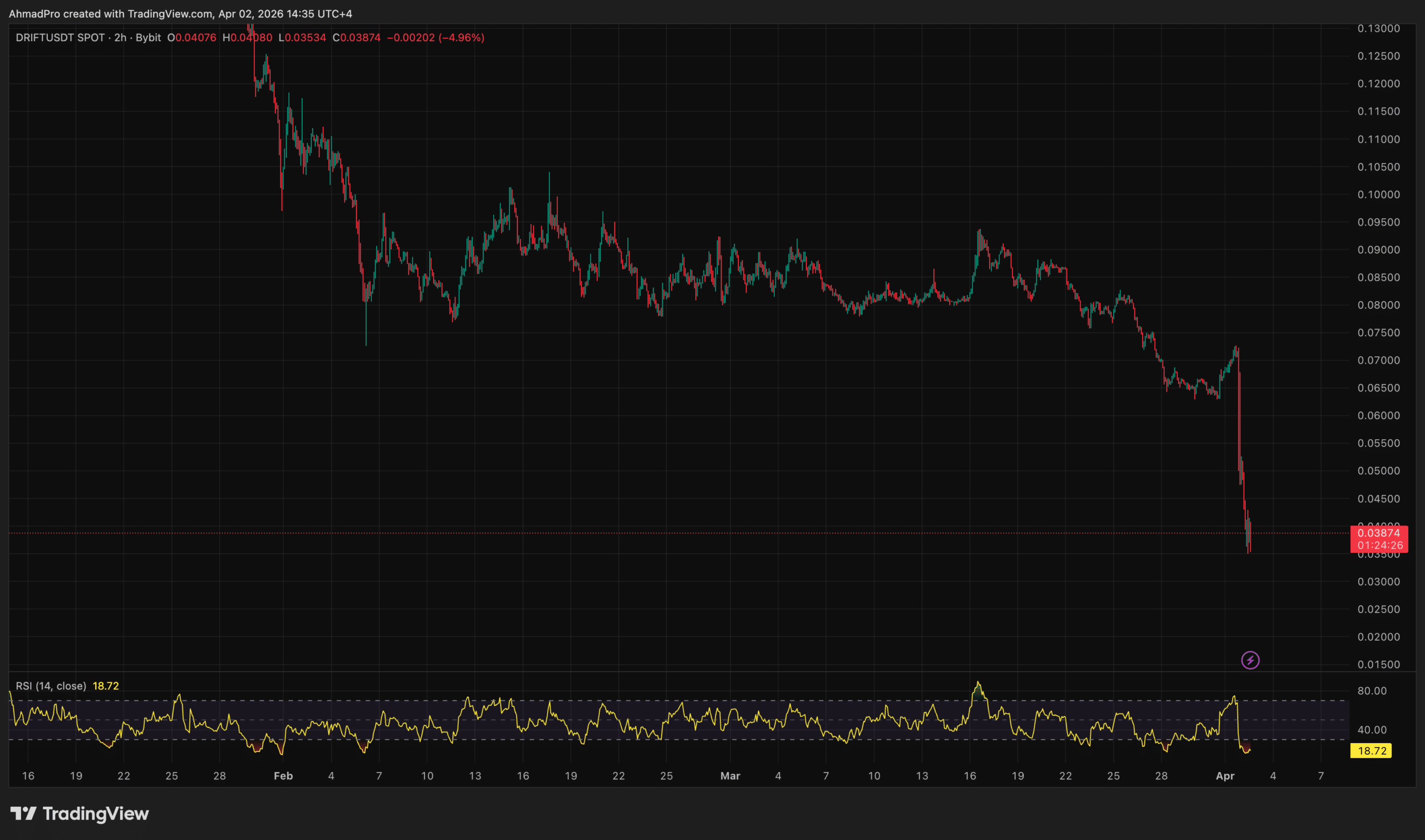
source: Tradingview
The risk of infection extends beyond Drift’s user base. Solana’s DeFi ecosystem is closely connected through shared liquidity venues and cross-protocol collateral arrangements; Jupiter’s JLP token was among the largest single asset classes drained, and wallet provider Phantom issued active warnings to users trying to access Drift during its investigation.
Mert Mumtaz, Solana developer and CEO of Helius, cited “high potential for a potentially significant exploit” on X, a signal that carries weight at the infrastructure level given Helius’ role as the network’s primary RPC provider. We believe the incident will accelerate the audit of administrative keykeeping practices across the native Solana protocols – a systemic gap that smart contract audits do not address.
discovers: Best Memecoins to Buy This Month!
Disclaimer: Coinspeaker is committed to providing unbiased and transparent reporting. This article aims to provide accurate and timely information but should not be considered financial or investment advice. Since market conditions can change rapidly, we encourage you to verify the information yourself and consult with a professional before making any decisions based on this content.

Daniel Francis is a technical writer and Web3 educator specializing in macroeconomics and DeFi mechanics. A crypto native since 2017, Daniel brings his background in cross-chain analytics to author evidence-based reports and detailed guides. It is certified by the Blockchain Council and is dedicated to providing “information gain” that cuts through the market noise to find blockchain’s real-world utility.



