

This article will cover it Anti-MEV (Maximum Extract Value) Protect retail investors by defending investors from unfair manipulation of transactions in blockchain networks.
Anti-MEV protection protects traders from bots/miners requesting transactions to make a profit. This protection provides individual investors with greater security and transparency environment For trade.
Maximum extractable value (MEV) refers to the profits that can be obtained by miners, validators, or bots by strategically arranging transactions in a block of the blockchain.
They can rearrange or even delete some transactions (deals) to gain an advantage. Those who mine MEV may benefit financially, but in the process, they negatively impact the average user.

This effect is particularly targeted at retail traders because it can increase slippage, inflation, and bias against execution.
Retail users end up losing value in daily transactions in decentralized finance (DeFi) systems, often without any awareness of it.
Protection mechanisms against MEV
Confidentiality of transactions
- Flashbots Protection (Ethereum): It sends transactions through private relays so they remain hidden from the global memory pool.
- Geto (Solana) Packages: It enables users to send transactions to validators directly so they can bypass MEV bots.
Intelligent guidance and execution
MEVX (Multi-Chain Tool): Provides counter-sandwich attacks, fast execution, and smart aiming to minimize exposure.
Price manipulation: Ensures trades are executed at the optimal price available to avoid price manipulation.
Limit Orders and DCA (Dollar Cost Average)
By using limit orders or splitting trades, retail users reduce the predictability of their trades, making it more difficult for robots to exploit their trades.
How does MEV protection work?
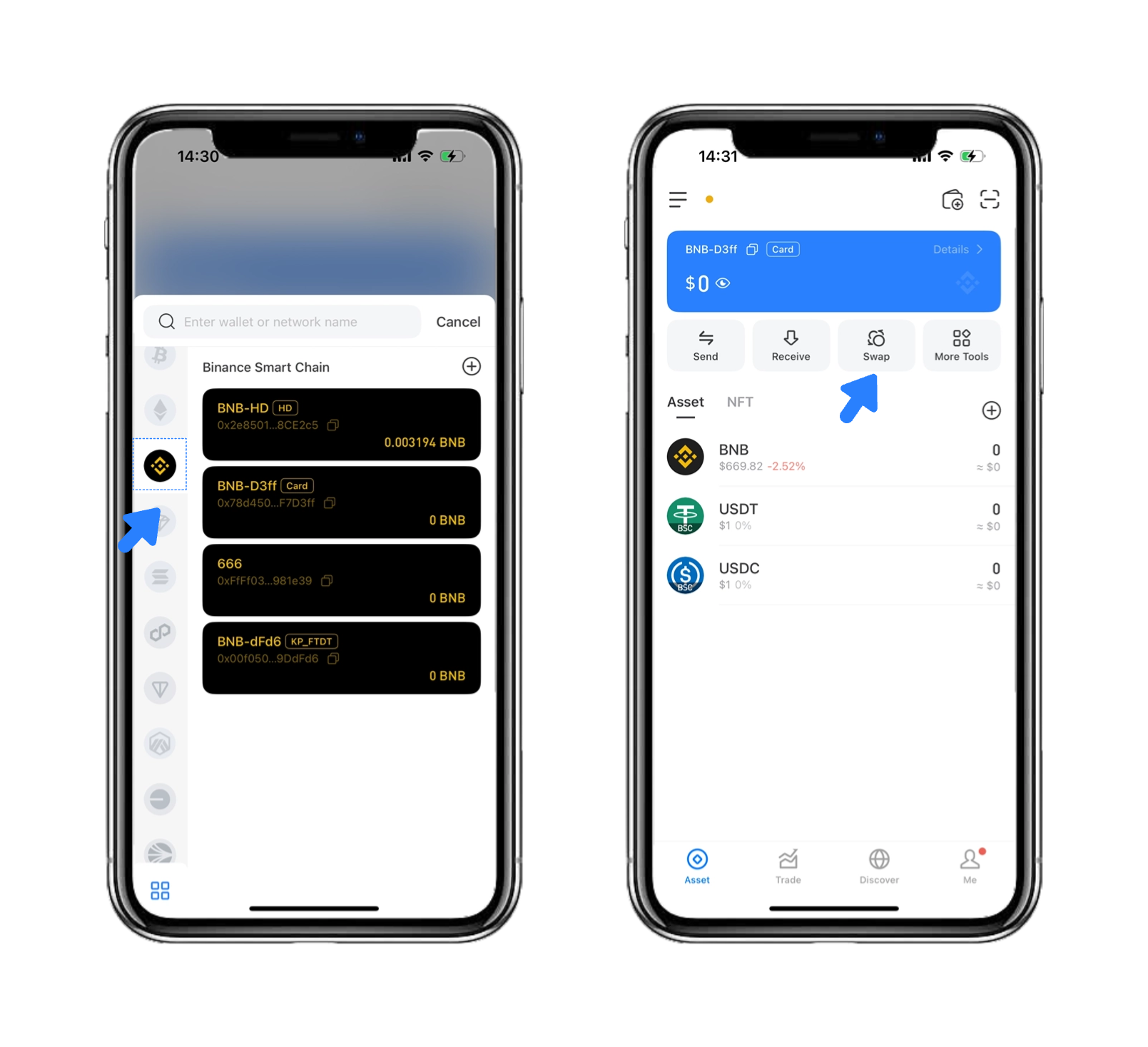
MEV protection uses several important methods to ensure the integrity of transactions.
Trade details are protected until they are included in a block, preventing others from manipulating the situation to their advantage.
In a fair system, the original sequence of transactions is preserved so that trades can be executed in the desired manner.
Decentralized ordering involves several different agents, making it unlikely that a single agent can control the system.
Finally, pre-run protection allows trades to be executed without being placed behind a potentially better pricing trade.
The main anti-MEV protection in retail
Private transactions/RPC: Services like Flashbots Protect or MEV Blocker move transactions to constructors instead of the global memory pool.
Wallet level protection: Protection mechanisms for user swaps are built into several wallets (MetaMask, Rabby, Ledger Live, Binance Web3 Wallet) to make staying protected during swaps as simple as possible.
Direct execution protection: Some decentralized exchanges use payments Auction Or swap mechanisms to avoid sandwich trading by consolidating individual transactions.
Determine slip tolerance: In DEX settings, the attackers’ profit potential is reduced, making sandwich attacks less economically interesting, through the simple maneuver of reducing slippage.
Why are retailers vulnerable?
Retailers are often at a disadvantage when it comes to technological resources and sophisticated MEV robots.

In contrast, more sophisticated players have to rely on a publicly available interface, as well as methods for submitting transactions, creating a clear path (and opportunity) for them to be exploited by MEV bots.
Furthermore, retailers tend to:
- Use the wallet without MEV protection by default
- Set skid targets that are abnormally high (and therefore targeted by MEV robots)
- Trade Sometimes the network is crowded
All of these factors combine to form a situation where the MEV extractor preys mostly on small fish.
Basic concepts of protection against MEV
With the advent of mid-range electric vehicles, the industry has come up with a range of potential solutions. the The essence of these solutions seeks to ensure that MEV practices do not come to fruition by diluting the clarity of transactions, fairness of transaction execution, etc.
Directing private transactions
Private routing does not allow public broadcasting of their transactions to the public memory pool, and instead sends these transactions to validators directly or to an exclusive set of networks. Before the transaction is confirmed, the transaction will not be seen or exploited by any bots.
Some examples of this include private RPC endpoints and transaction relays that give up the public memory pool for private relaying.
MEV- Resistance to DEXs
Some decentralized exchanges are MEV-resistant through the use of pooled auctions and standardized clearing rates that ensure all trades in the block are executed uniformly and are therefore fair.
Due to the way transactions are arranged, bulk transactions eliminate any order advantage, making frontal and sandwich attacks impossible.
Slip control
To enhance the resistance of the transaction to MEV attacks, tighter slip control is ideal. Although this may increase the chances of a transaction falling through, it negates the chances of bots profiting from large price fluctuations.
For retail traders, balancing slippage is recommended based on prevailing market conditions.
Transaction simulation
Some tools allow mitigation of MEV effects by simulating transactions, allow analysis of price impact, and sandwich potential. These tools evaluate the potential MEV on a transaction before executing the transaction.
Such tools help in evaluating the likely behavior of a transaction based on real conditions before execution.
MEV blockers and wallet integration
Newer integrations on web browsers and wallets have begun to include security features that protect users from MEV attacks. These tools cover their transactions by routing them through special routes or by blocking known patterns of MEV attacks.
In addition to integrated MEV protection features, some wallets will alert users to transactions that are potentially subject to a MEV attack.
Why does retail need protection?
Sandwich attacks: Attackers artificially create losses by placing user orders to manipulate their prices before and after the user’s order.
Front running: Bots detect previously large value transactions and pay increased gas fees to push their transactions to the forefront.
Price manipulation: In the absence of protection, users take much worse execution prices for their tokens.
| Tool/protocol | Supported strings | Main features | Retail benefit |
|---|---|---|---|
| Flashbots protection | Ethereum | Track private transactions | Forward operation is prohibited |
| ghetto packs | Solana | Provide the direct auditor | Stops sandwich attacks |
| MIFEX | Ethereum, Solana, EVM chains | Intelligent routing, anti-sandwich, and limit requests | Comprehensive retail protection |
Risks and trade-offs
Added fees: Some MEV control services will charge a fee small Protection fees.
Speed of execution: Your transaction may execute more slowly on private relays than on the public memory pool.
Limited awareness: A large portion of retailers do not understand the risks of MEV, which leaves them vulnerable.
The future of MEV and retail protection
Although MEV is not inherently malicious, it is the result of completely transparent systems. However, without easing controls, it poses a risk to trust and fairness in decentralized markets.
There is increasing recognition of the need for a consumer-first approach. With MEV protection integrated into wallets, exchanges and protocols, retail traders will be able to trade in a more balanced and secure way.
Ultimately, a combination of changes on the protocol side and tools on the user side will be needed. Developers, researchers, and the community will need to work together to make this happen.
Cocknelsion
In conclusion, the importance of protection against MEV for retail traders working in DeFi is clear. It reduces the risk of unfair losses, gives better prices, and increases overall trading safety.
Although there are obstacles such as complexity and inaccessibility, the increasing adoption of security tools makes trading safer.
Anti-MEV solutions will continue to innovate and contribute significantly to shaping a transparent and fair decentralized ecosystem.
Instructions
MEV can cause higher slippage, worse trade prices and hidden losses.
Tools and strategies to prevent MEV exploitation in retail transactions.
By hiding transactions, routing them privately, or using MEV-resistant protocols.
Sometimes, private routing or aggregation may delay execution a bit.



