
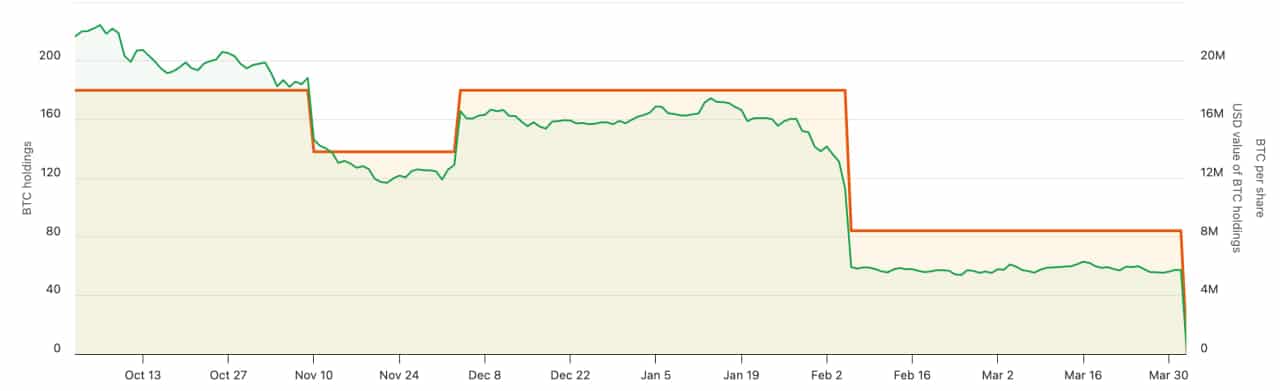
Genius Group (GNS) has liquidated its entire bitcoin treasury — 84 BTC worth roughly $5.7 million as of March 2026 — to retire $8.5 million in debt, a complete disposition that confirms that the company’s balance sheet has reached a point where no alternative capital source is available to service the obligation.
The sale was revealed alongside the company’s Q1 2026 earnings release and represents a complete reversal of the Bitcoin accumulation stance the company publicly committed to just eighteen months ago.
The liquidation is particularly notable given Genius Group’s “Bitcoin First” strategy, which was announced in November 2024 and pledged to allocate 90% or more of current and future reserves to Bitcoin. That the company exited its entire position to pay off $8.5 million in debt – a figure below the peak Treasury valuation – is evidence of a financing model that lacked the structural redundancy needed to survive sustained drawdowns without forced asset sales.
Genius Group sells all Bitcoin reserves to pay off $8.5 million debt. 👀
They plan to return later under favorable circumstances. 🤦♂️ pic.twitter.com/JCZdECkfSH
– CryptoCrib (@Crypto_Crib_) April 1, 2026
discovers: Meme Coin Supercycle: Best performer this week
Genius Bitcoin Group Sale: What the Full Liquidation Reveals
By the time Genius Group entered the first quarter of 2026, its holdings had already shrunk sharply from peak levels. The company accumulated 440 bitcoins at a total cost of about $42 million — with an average acquisition price of about $95,519 per bitcoin — according to disclosures made in early 2025.
The remaining 84 BTC at the time of complete liquidation indicates that the company had sold approximately 356 BTC over the previous 12 months, largely under operational and legal pressure rather than as a deliberate strategic exit.
Source: Genius Bitcoin Holdings Group / Bitcoin bonds
With a market capitalization of $5.7 million for 84 BTC, the implied exit price on the final tranche was around $67,857 per coin – well below the average cost of $95,519 for a full position. This spread represents a meaningful realized loss for at least a portion of the portfolio acquired near peak prices, although Genius Group did not disclose an exact basis for the tranche cost or execution location for the Q1 2026 sale.
The company’s press release attributed the proceeds to the full repayment of its $8.5 million debt obligations, with Genius Group simultaneously restructuring the broader debt agreement framework alongside the divestment.
The $8.5 million debt figure is itself a diagnostic data point. At Genius Group’s current metric — Q1 2026 revenue of $3.3 million, up 171% year over year — the liability represents more than two full quarters of revenue, leaving the company without a reliable path to servicing debt organically without liquidating assets. The Bitcoin treasury, originally positioned as a strategic reserve, was in fact acting as a lender of last resort.
explores: Cryptocurrency hack alerts this week
Balance sheet pressure and what liquidation reveals about small treasury operators
The structural failure mode here is straightforward: Genius Group attempted to replicate a Bitcoin treasury strategy designed for companies with access to equity markets and deep capital, without the balance sheet size or market capitalization to absorb a sustained decline in BTC prices.
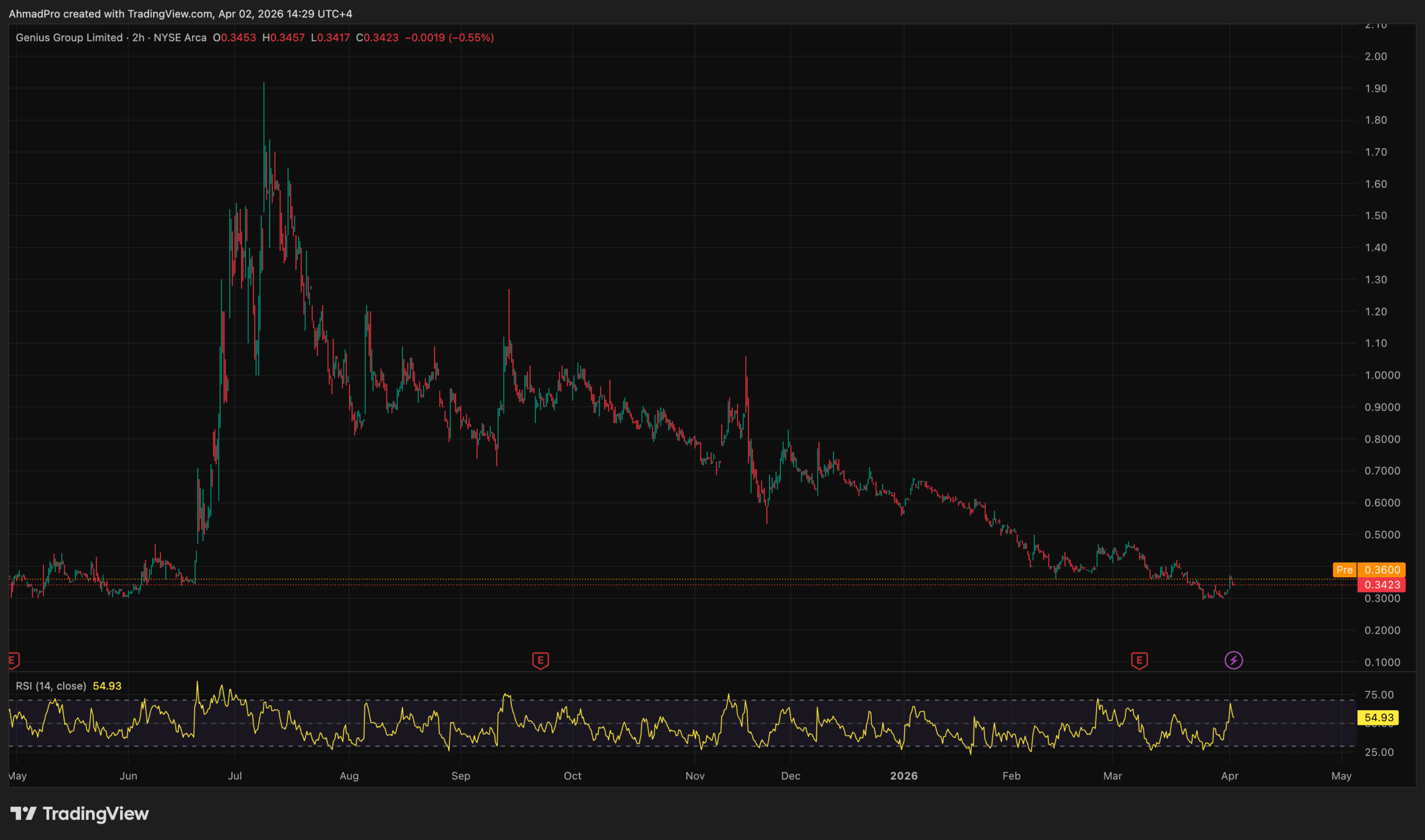
At its peak in early 2025, the company’s 440 Bitcoin position was worth about $46 million against a market capitalization of $33.1 million — a leverage ratio that left no margin for withdrawal once stock premiums collapsed and a legal order from the U.S. District Court for the Southern District of New York blocked capital raisings and Bitcoin purchases in April 2025.
This court order — a temporary restraining order and preliminary injunction preventing Genius Group from selling stock or using investor funds to purchase Bitcoin — is the direct cause of the decline in the value of the treasury, forcing the company to withdraw its holdings to fund operations rather than accumulate during the decline.
The stock price fell 53% within six weeks of the injunction, squeezing the equity premium that small Bitcoin treasuries rely on to fund acquisition cycles. Without this premium, the accumulative flywheel stops.
source: Tradingview
GameStop maintained its full position of 4,710 BTC Through similar market pressures the difference is illustrated: companies with unencumbered cash reserves and no exposure to covenants can hold up passively; And companies suffering from a lack of liquidity cannot do this.
The contradiction with Michael Saylor’s strategy — which continued to accrue through the same bear market conditions that pressured Genius Group toward complete liquidation — is not merely anecdotal. It’s structural. The strategy model is designed around constant access to capital; The Genius Group was not, and the gap between these two designs became the whole story.
Genius Group said it intends to rebuild its Bitcoin treasury “when it believes market conditions are more favourable.” The next physical test of this commitment will arrive with Q2 2026 earnings — specifically, whether the company, now debt-free, will begin returning capital to Bitcoin or whether the operational constraints that produced the liquidation are more sustainable than the strategy that preceded it.
discovers: Best Memecoins to Buy This Month!
Disclaimer: Coinspeaker is committed to providing unbiased and transparent reporting. This article aims to provide accurate and timely information but should not be considered financial or investment advice. Since market conditions can change rapidly, we encourage you to verify the information yourself and consult with a professional before making any decisions based on this content.

Daniel Francis is a technical writer and Web3 educator specializing in macroeconomics and DeFi mechanics. A crypto native since 2017, Daniel brings his background in cross-chain analytics to author evidence-based reports and detailed guides. It is certified by the Blockchain Council and is dedicated to providing “information gain” that cuts through the market noise to find blockchain’s real-world utility.