

Iran has established what amounts to a formal toll system in the Strait of Hormuz, accepting the Chinese yuan and cryptocurrencies — specifically stablecoins pegged to fiat currencies — as payment for naval escort through the waterway, according to a Bloomberg report published April 1.
The system, which is managed through an intermediary linked to the IRGC, assigns each country a friendliness rating from one to five and requires ship operators to submit documents for geopolitical vetting before receiving a VHF broadcast passcode and an IRGC naval escort. At least two ships have already paid in yuan, with tanker fees reportedly starting at $1 per barrel.
An Iranian lawmaker said on Thursday that a draft proposal has been prepared to allow Iran to collect transit fees in the Strait of Hormuz, and will be sent to the parliament’s research center next week for legal review.
Mohammad Reza Rezaei Kochi said that he prepared the draft in collaboration with…
— International English of Iran (@IranIntl_En) March 26, 2026
We believe this represents something structurally different from the informal blockade imposition that characterized Iran’s previous stance in the Strait of Hormuz: The parliamentary approval of the transit toll bill – reported by the semi-official Fars News Agency, citing lawmaker Mohammad Reza Rezaei Kochi, who stated “We provide its security, and it is normal for ships and oil tankers to pay such tolls” – indicates that Iran is institutionalizing the settlement of cryptocurrencies and the yuan as a permanent mechanism to extract revenue from the sanctions-restricted chokepoint, not Improvisation under battlefield pressure.
discovers: Meme Coin Supercycle: Best performer this week
Cryptocurrency fees in Hormuz and Iran: How the payment mechanism works, according to reports
According to a Bloomberg report, ship operators seeking a Hormuz transit permit must submit ship ownership records, flag registration, shipping data, ports of destination, crew lists, and Automatic Identification System tracking data to an intermediary linked to the IRGC.
The IRGC Navy’s Hormozgan Provincial Command then conducts sanctions and geopolitical scrutiny, verifying ownership or shipping relationships with the United States, Israel, or countries designated as adversaries under Iran’s classification system. Clearance, when granted, arrives in the form of a pass code broadcast over a VHF radio, followed by a sea escort through the strait.
The currency structure is intentional. The yuan settles outside the entirely SWIFT-based dollar clearing system, while stablecoins — if denominated in USDT or USDC — technically reference the value of the dollar but are converted on blockchain paths that bypass correspondent banking.
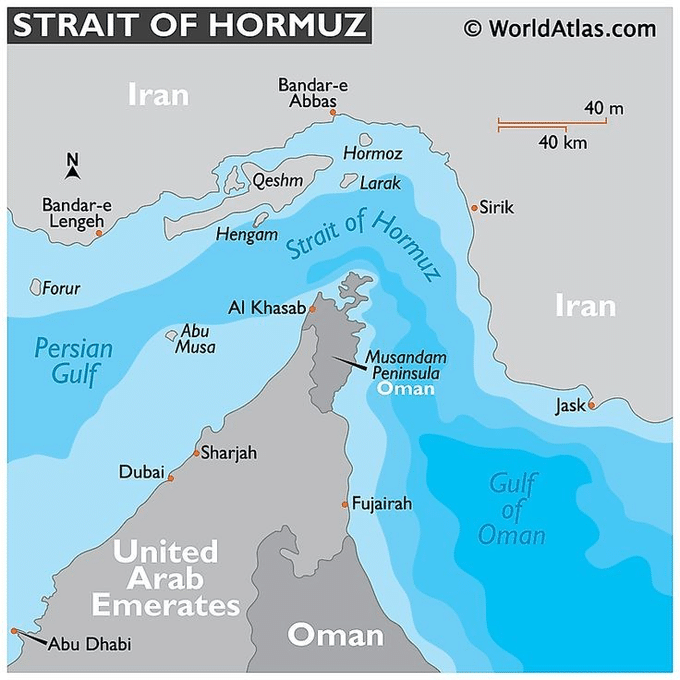
Bloomberg I mentioned At least two ships have completed yuan-denominated payments, with oil tankers being the priority shipping category. The opening price of $1 per barrel in oil tanker negotiations indicates that a single massive crude oil tanker carrying 2 million barrels could generate losses of $2 million – a figure that is rapidly rising across the roughly 20% of the oil and gas traded globally that typically transits the strait.
We suspect that preferring a stablecoin, rather than Bitcoin or Ethereum, is operationally rational: stablecoins eliminate price fluctuations between invoice and settlement, making them functionally equivalent to dollar wire transfers on the receiving end while nominally remaining outside the dollar clearing system.
This is exactly the structure that OFAC is trying to shut down by squeezing stablecoin issuers — and it’s precisely why the Hormuz toll mechanism, if it expands, would create direct enforcement pressure on Tether and Circle.
explores: Cryptocurrency hack alerts this week
Disclaimer: Coinspeaker is committed to providing unbiased and transparent reporting. This article aims to provide accurate and timely information but should not be considered financial or investment advice. Since market conditions can change rapidly, we encourage you to verify the information yourself and consult with a professional before making any decisions based on this content.

Daniel Francis is a technical writer and Web3 educator specializing in macroeconomics and DeFi mechanics. A crypto native since 2017, Daniel brings his background in cross-chain analytics to author evidence-based reports and detailed guides. It is certified by the Blockchain Council and is dedicated to providing “information gain” that cuts through the market noise to find blockchain’s real-world utility.



