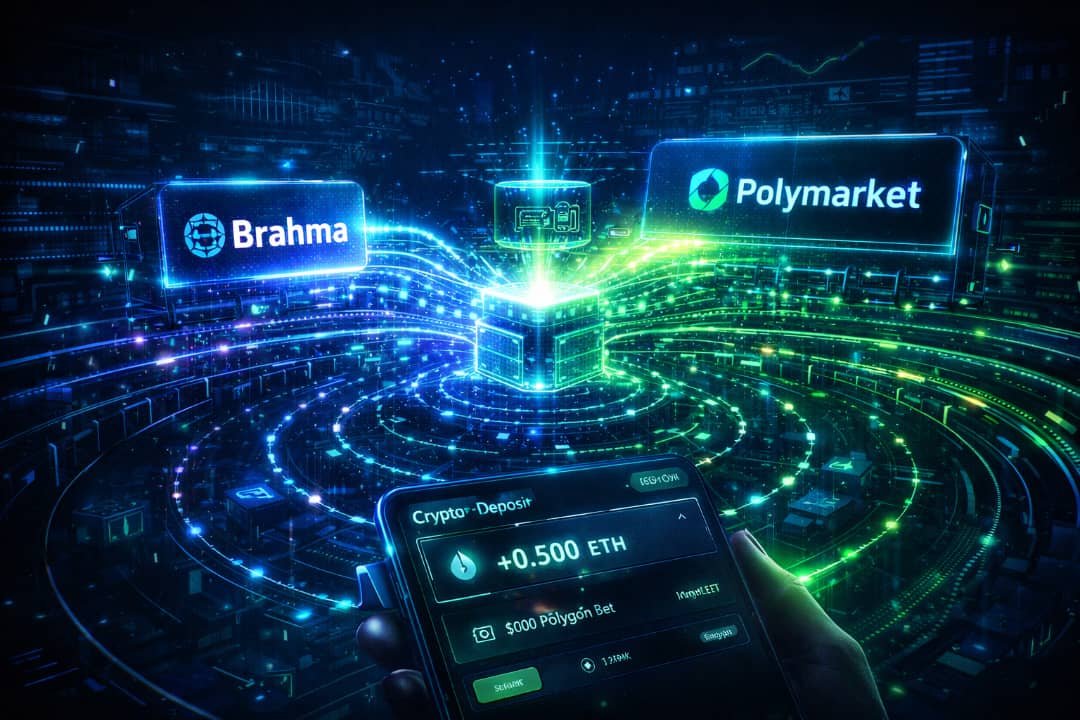
Prediction market platform Polymarket is taking another step to deepen its roots in the cryptocurrency space, announcing the acquisition of DeFi startup Brahma in a deal aimed at improving its underlying infrastructure.
The company did not disclose how much it paid for the acquisition, but the intent is pretty clear, as Polymarket wants to make its platform smoother, faster, and more scalable as it continues to grow.
Prediction market platform Polymarket has announced the acquisition of Brahma, a startup focused on cryptocurrency infrastructure and decentralized finance (DeFi). The exact transaction amount was not disclosed. Founded in 2021, Brahma provides DeFi infrastructure services… pic.twitter.com/Q6Nqq26DX3
— Wu Blockchain (@WuBlockchain) March 18, 2026
For a platform that already relies heavily on blockchain rails, this isn’t just an expansion. It’s like doubling down on what you think gives you an advantage.
A deal that focuses on infrastructure, not hype
Brahma, founded in 2021, is not exactly a direct-to-consumer brand. It works behind the scenes, providing DeFi infrastructure to both institutions and individual users.
Over time, the startup has processed more than $1 billion in transaction volume, which gives some weight to its technology.
With the acquisition, Brahma will scale back its standalone operations and instead focus on helping scale Polymarket’s internal systems, particularly with regard to wallets and deposits.
This may not sound flashy, but there is actually a lot of friction in cryptocurrency platforms. If deposits are slow or wallets feel heavy, users will notice it immediately.
Polymarket seems to be targeting exactly that.
Co-founder Shane Coplan has hinted at this trend, stressing that the company is not looking for shortcuts when it comes to building on blockchain infrastructure.
Polymarket remains committed to Blockchain Rails
One thing that stands out here is how committed Polymarket is to native crypto infrastructure.
Unlike its main competitor Kalshi, which largely operates using paper-based systems, Polymarket has always leaned towards blockchain from the beginning.
This decision wasn’t always the easiest path. Crypto paths can get complicated, and things like wallet setup, gas fees, and transaction delays can be a barrier for new users.
But Polymarket’s approach seems to be: keep the benefits of blockchain, and hide the complexity.
This acquisition fits perfectly with that idea. By integrating Brahma’s backend systems, the platform is trying to make the experience simpler without actually moving away from cryptocurrencies.
In other words, users may not notice the technology much, but that’s the point.
A growing company with bigger ambitions
Polymarket has expanded steadily, and the company is now reportedly valued at around $200 million.
At the same time, it is also making a series of acquisitions, including previous deals such as Dome and Launch, suggesting a broader strategy is taking shape.
The focus seems to be on building a more complete ecosystem rather than relying on third-party infrastructure.
And there is a reason for that.
Prediction markets rely heavily on liquidity and efficiency. The easier it is for users to enter and exit positions, the more active the market becomes.
Polymarket has already demonstrated its ability to attract users in niche areas, even unusual ones such as local or very specific betting markets. But scaling up this activity requires stronger infrastructure.
This is where Brahma comes into play.
Potential upside: better liquidity and new market structures
If the integration goes well, there are some clear positives.
First, improving wallet flows and deposits could attract more users, especially those who are currently put off by cryptocurrency friction.
There is also the potential to increase market liquidity, which is crucial for forecasting platforms. More liquidity generally means better prices, tighter spreads, and more activity overall.
Some observers also point to a more interesting angle, which is the idea that Brahma’s coordination tools could eventually support things like “decentralized, autonomous, event-based organizations.”
These will be automated systems where prediction markets can hedge or manage risks dynamically.
It’s still a bit speculative, but if something like this takes off, it could open the door to entirely new types of markets.
If Polymarket is early in this direction, it could give the platform an advantage that is not immediately apparent.
Risks remain around the integration and volatility of cryptocurrencies
Of course, not everything is upside down.
Integrating a DeFi infrastructure company into a live platform comes with its own challenges. Even small issues in back-end systems can impact the user experience in noticeable ways.
There is also a broader concern about DeFi security. The space has seen its fair share of vulnerabilities over the years, and any new integration adds another layer of risk that must be carefully managed.
Then there is the usual cryptocurrency backdrop of volatility and regulatory uncertainty.
Prediction markets already fall into somewhat of a gray area in many jurisdictions, and adding deeper cryptocurrency integration could attract more scrutiny, not less.
There is also the possibility that even with better infrastructure, some niche markets may have difficulty maintaining liquidity, especially during quieter periods.
A bet on the long-term growth of local cryptocurrencies
Ultimately, this move says a lot about how Polymarket sees its future.
Instead of simplifying by moving towards traditional systems, the company is doing the opposite, investing more in cryptocurrency infrastructure while trying to make it invisible to the user.
It’s a kind of balance.
If done correctly, users will get the benefits of blockchain (such as transparency and global access) without dealing with the usual hassles. If poorly implemented, complexity still appears.
For now, Polymarket appears willing to take this risk.
With Brahma’s technology now in-house and a growing user base, the platform is clearly positioning itself for the next phase of growth, one where infrastructure may be as important as the markets themselves.
If prediction markets continue to gain more interest, this type of backend upgrade may become more important than it first appears.
Disclosure: This is not trading or investment advice. Always do your research before purchasing any cryptocurrency or investing in any services.
Follow us on Twitter @themerklehash To stay up to date on the latest Crypto, NFT, AI, Cybersecurity, and Metaverse news!