
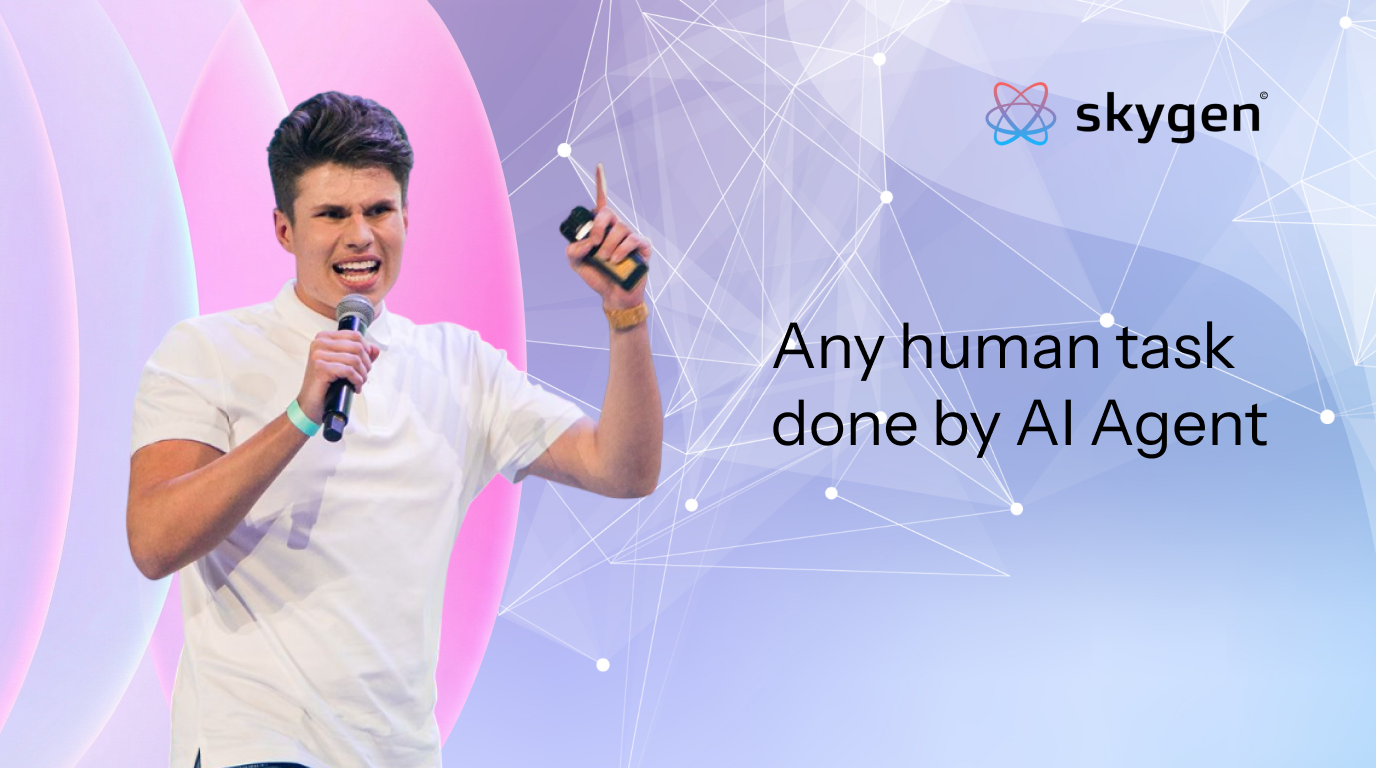

The dream of a truly independent digital workforce has moved from white papers to production. While the cryptocurrency world has been buzzing with AI agents in theory, Skygen.AI has officially released the infrastructure that allows these agents to actually be implemented in practice.
Today’s launch of Skygen marks the beginning of the PC era – where AI doesn’t just chat, it operates a computer with human-like precision: seeing screens, navigating complex interfaces, and executing workflows in real time. For modern technology founders, Skygen acts as an AI-powered second computer – a digital partner you can collaborate with, not just delegate.
While the industry hypes OpenClaw, it comes with critical limitations: security concerns, complex setup requirements, and reliance on fragile API tools.
Break the bottleneck in hardware
In an industry obsessed with efficiency, the industry has hit a “hardware wall.” Many teams have tried to build local AI setups using clusters of Mac Minis, which is a costly and clunky approach.
Skygen flips the script. By offering an autonomous execution environment that requires no new hardware, Skygen provides founders and developers with a “sandbox”: a completely isolated virtual environment where the AI runs autonomously, providing enterprise-level performance without compromising the security or resources of your local machine. It’s like having a second AI-enabled computer, but you can actively work alongside it, switching tabs to monitor progress and intervene when needed.
Beyond Chatbots: Implementation Logic
Most AI tools are “boxed” within their own APIs. If a website updates its UI, the automation process will be interrupted. Skygen is different. Because it “sees” the screen like a human, it can run anything — from modern DeFi dashboards and DEXs to legacy enterprise systems that haven’t been updated in years.
For the modern technology founder, Skygen acts as a digital partner:
-
Sandbox: What Mike Shperling calls “the most secure OpenClaw” – a one-click setup where your data stays locked in an isolated environment.
-
Live Supervision: The agent works in his own virtual machine. You can switch tabs, watch it execute in real time, and “hold the mouse” if you encounter a complex captcha or edge case.
Skygen in action: high-speed use cases
Skygen’s goal is not just about saving time, but also about scaling implementation in the high-risk digital economy.
Alpha for hunting and deep searching
“Skygen, analyze 50 new DeFi protocols, compare their roadmaps, and create a comparison sheet in Excel, highlighting the unique features.”
The agent navigates directly between sites, scrolls, and parses content – even in the absence of APIs.
Megagrants and ecosystem automation
“Identify over 500 relevant Web3 grant programs and automatically submit applications using My Project data.”
Skygen doesn’t just search, it fills out the forms and hits submit.
Scalable processes and talent sourcing
“Find top 10 Rust developers that match my requirements. Connect with them personally on LinkedIn/X and schedule interviews based on my calendar availability.”
Skygen handles the entire conversion path: from discovery to curation.
Cross-chain interaction and the web
“Watch this dashboard interface. Once the ‘Prompt’ button appears, click on it and confirm the transaction via the browser extension.”
Since Skygen “sees” the screen, it can interact with decentralized applications and wallets just like a human user.
The 19-year-old architect behind the infrastructure
While others chased the hype generated by LLM covers, Mike Sperling, the 19-year-old visionary behind Skygen.AI, focused on plumbing. He realized that for AI to be truly useful, it needed a “body” – an environment in which it could act. The market agreed: Skygen raised $7 million in seed funding from MLVentures to scale this infrastructure globally.
After 30 days of integration, Skygen maps your digital workflows, identifies inefficiencies, and begins delivering standalone solutions. It is the “external shell” of your digital life. Real cases circulating online show that Skygen actually helped users generate revenue.
Adaptation or stagnation
As we approach 2026, the line between “software” and “staff” is blurring. The release of Skygen.AI proves that the future belongs to those who can automate execution, not just thinking. For founders looking to scale significantly without increasing headcount or purchasing unnecessary hardware, the era of the independent agent has arrived.
Disclaimer: This article is provided for informational purposes only. It is not provided or intended to be used as legal, tax, investment, financial or other advice.



