


TLDR
- Goldman Sachs CEO David Solomon says oil could reach $80 to $100 a barrel within three to six months.
- Solomon warned that a very escalating conflict with Iran could push oil to $170 a barrel
- Brent crude fell 0.5% to $94.95, and West Texas Intermediate crude fell 1.8% to $88.04 on Tuesday.
- Iran has kept the Strait of Hormuz largely closed since the war began in late February
- Saudi Arabia and the UAE are rerouting oil shipments, with combined loading rising to 6.5 million barrels per day
Goldman Sachs CEO David Solomon said on Tuesday that oil prices could reach $80 to $100 per barrel in the next three to six months. He made these comments at the Bali Centre.
Solomon added that if the conflict with Iran escalates sharply, the price of oil could rise to $170 per barrel. He said the risks of a recession in the United States were not appreciably high at the moment, but warned that the situation was “just one tweet away” from changing.
Oil prices Dollar futures prices fell on Tuesday as markets followed mixed signals about the US-Iran talks. The temporary ceasefire is scheduled to expire later this week, and a specific deadline has not been announced.
Brent crude futures fell 0.5 percent to $94.95 per barrel. US West Texas Intermediate crude fell 1.8% to $88.04 per barrel.
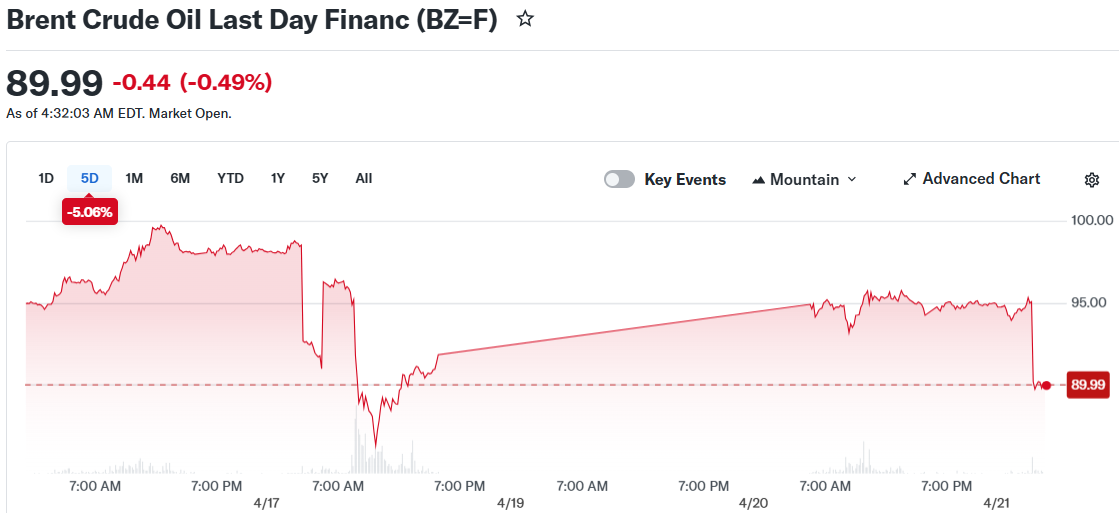
Prices rose sharply in the previous session, after tensions escalated over the weekend. The United States seized an Iranian-flagged cargo ship, and Iran responded with threats of retaliation.
Iran also closed the Strait of Hormuz again, although it reopened on Friday. The country pointed to the ongoing US blockade of Iranian ports and coasts.
Ceasefire talks are in doubt
President Trump He said on Monday that the naval blockade would remain in place until a peace agreement was reached. He added that new talks are expected to be held with Iran this week, as a delegation will head to Pakistan on Tuesday or Wednesday.

But Iranian officials have publicly refused to hold further talks. Iranian Parliament Speaker and chief negotiator Mohammad Bagher Qalibaf said that Iran will not negotiate “in light of threats” from Washington.
Several Iranian official media reports supported this position. However, separate reports said that Iran had secretly told regional mediators that it would send a delegation to Pakistan this week.
“Ongoing uncertainty continues to overshadow any peace deal, with Iran still reluctant to attend the second round of talks in Pakistan,” ANZ analysts wrote.
Trump announced a two-week ceasefire on April 7 at 6:32 PM ET.
Hormuz unrest continues
The Strait of Hormuz carries nearly a fifth of the world’s oil supplies. The crossing has remained largely closed since the war began in late February.
While the initial rise in prices has subsided somewhat, crude oil remains well above pre-war levels.
Saudi Arabia and the United Arab Emirates are redirecting shipments to avoid the Strait of Hormuz. They use the Yanbu terminal in the Red Sea and the Fujairah terminal in the Gulf of Oman.
ANZ Bank said the combined loading at these two facilities had risen to 6.5 million barrels per day, up from 5 million barrels per day before the war began.
Iran ceasefire deadline approaches with no confirmed agreement.
🚨 Our April stock picks are now available!
A new month means new opportunities. Our analysts have just released their top stock picks for April, highlighting companies with strong momentum that rank highly in our KO Score algorithm. We also now share trading ideas for both long and short term investors, giving you more ways to discover potential market opportunities.
Sign up for Knockout Stocks today And get a 50% discount to open the full list and see the discounted stocks.
Use coupon code Special50 To get your exclusive discount!



