

Hedera (HBAR) may be ready for a short-term rebound despite a classic bearish signal emerging.
The HBAR death cross may lead to an opposite trend bounce
Hedera is approaching a death cross on the weekly chart, a setup where the short-term moving average, typically the 50-week moving average (red) is slipping below the longer-term moving average, such as the 200-week moving average (blue).
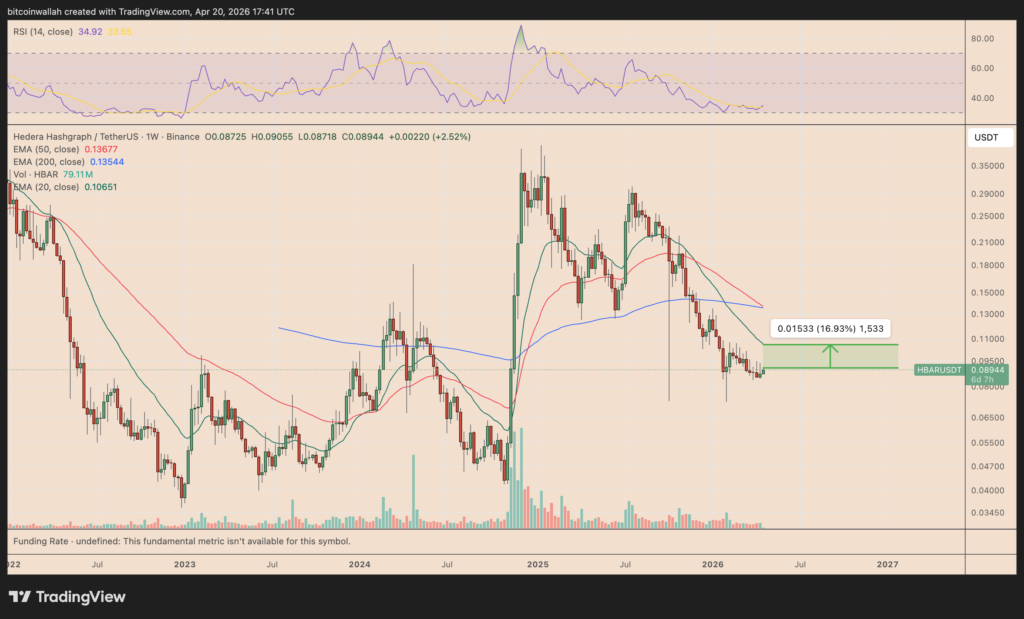
For beginners, this pattern is usually seen as bearish because it confirms that recent prices are weaker than the long-term trend. But here’s the problem: death crosses are lagging indicators. By the time it appears, much of the selling may have already occurred. This is why markets often react differently than expected.
In some cases, a death cross can actually lead to a short-term rally, as sellers feel exhausted and buyers step in. HBAR appears to be following this scenario.
After a long downtrend, the token is stabilizing near the $0.085-$0.09 area, showing signs of accumulation. If momentum increases, the next logical upside target is the 20-week EMA (green) at around $0.106, roughly 15-17% above current price levels.
Wall Street shows no love for HBAR ETFs
Institutional interest in Hedera-related investment products has slowed, according to ETF flow data previously provided SoSoValue.
After brief periods of strong inflows earlier this year, HBAR ETFs are now seeing near-zero daily net inflows, indicating a pause in new capital entering the market.
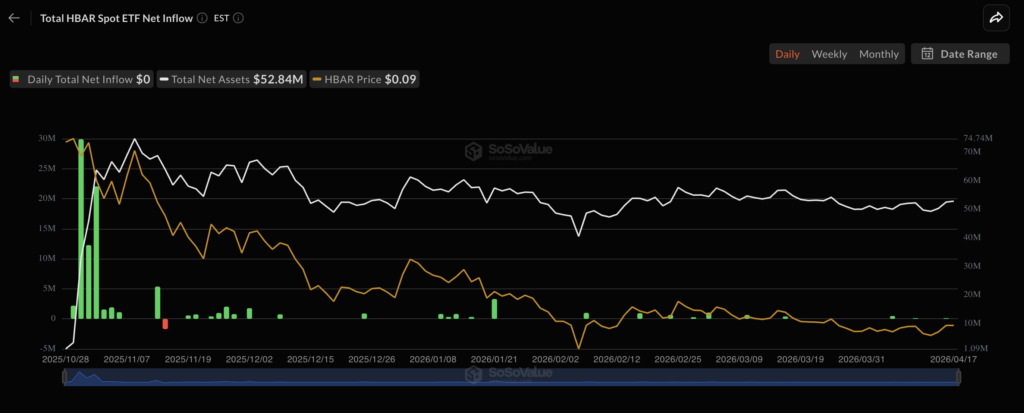
This shift indicates that investors are holding their existing positions rather than actively accumulating, which is consistent with HBAR’s recent price consolidation. Since ETF inflows translate directly into immediate buying pressure, the slowdown has removed a key support driver.
However, the absence of outflows suggests there is no significant institutional exit, keeping the downside relatively contained for now.
The liquidation set at HBAR indicates a decline towards $0.085
HBAR’s liquidation heat map shows a dense cluster of long liquidations around the $0.083-$0.085 range, forming what traders call the magnet zone. These areas often attract price because they represent pockets of leveraged positions that can be forcefully closed, adding momentum in the trend.
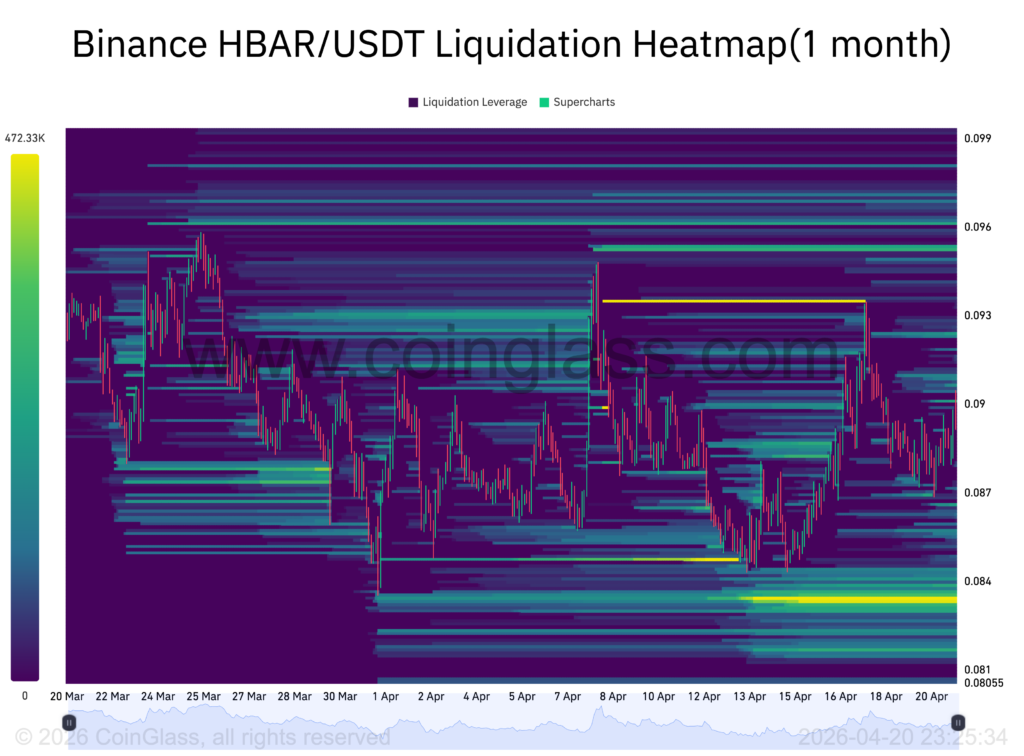
In simple terms, if the price starts moving down, it can trigger these liquidations, creating a cascading effect that accelerates the decline.
If the ongoing death relief rally fails to gain momentum, this combination increases the likelihood of a pullback towards the $0.08 area, where liquidity is highly concentrated, and downward pressure may intensify.



