
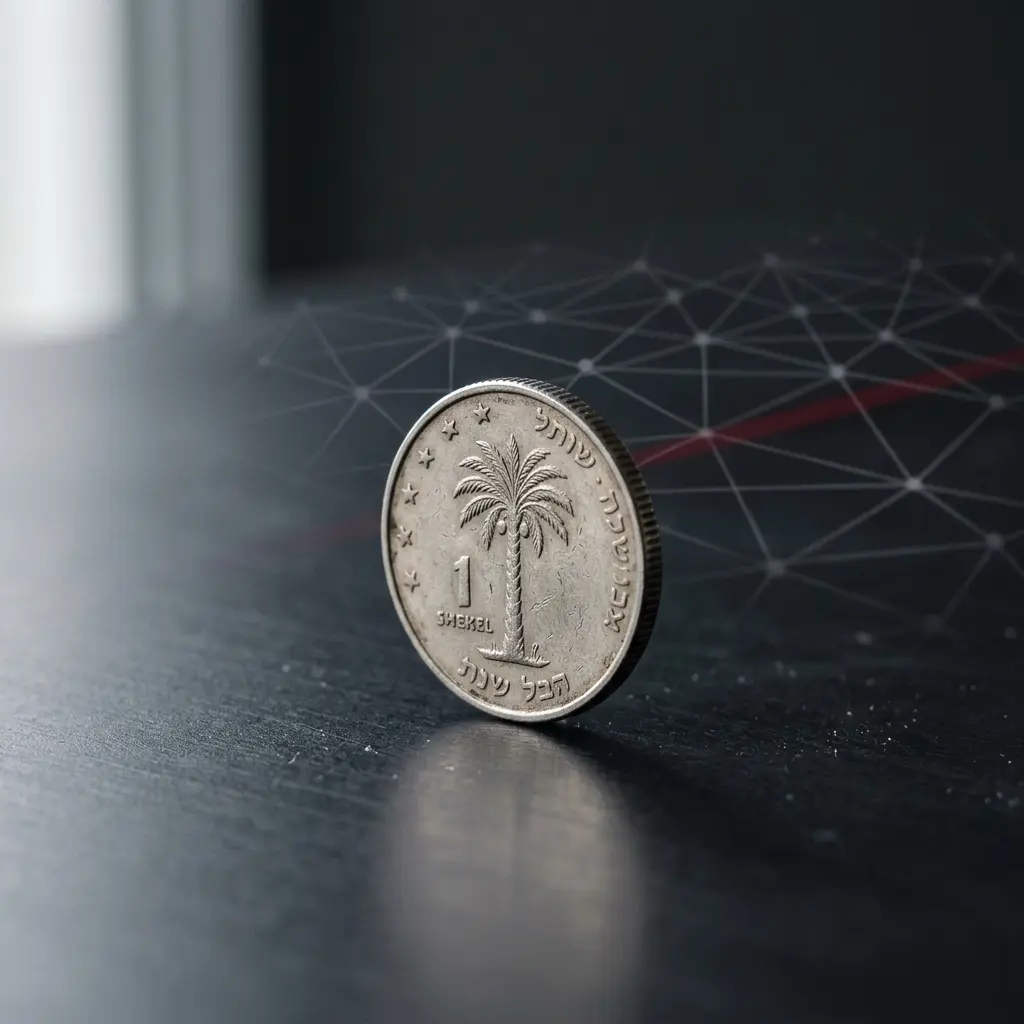
Israel Money market and the Insurance and Savings Authority CMISA has granted full regulatory approval to BILS, a shekel-pegged stablecoin developed by Bits of Gold – an Israeli-licensed cryptocurrency broker and custodian – after a two-year trial conducted on the Solana blockchain under the regulator’s sandbox, marking the conclusion of a process that officially began with the Bank of Israel’s 2023 discussion paper on stablecoin principles.
This isn’t just a launch of a useful payment code locally. It is evidence of a deliberate structural pattern – jurisdictions with mature financial regulatory bodies are now moving to anchor the issuance of local currency stablecoins, and create compatible alternatives to dollar-denominated tokens before the network effects of USD-pegged instruments become structurally irreversible.

source: ICM
We believe that the timing of CMISA approval is not accidental. With the global stablecoin market cap exceeding $320 billion at the time of approval – which is heavily concentrated in USDT and USDC – regulators in smaller reserve currency jurisdictions face a narrow window to establish local currency stablecoin infrastructure before dollar-denominated settlement becomes the de facto standard for cross-chain commerce. In this sense, Israel’s approval is as much a calculated, proactive move as it is a domestic fintech milestone.
discovers: Best cryptocurrencies to buy now
BILS and CMISA: How approval of a shekel-pegged stablecoin actually works
The mechanism works as follows: Bits of Gold develops BILS under the CMISA regulatory sandbox starting in March 2024, and operates the token on the Solana blockchain throughout the trial period in close coordination with the Israel Tax Authority and the Ministry of Finance.
The two-year supervised pilot program is explicitly designed to test reserve management, custodial arrangements and on-chain operational compliance prior to any large-scale public release.
Under the conditions set by CMISA, Belz Bank reserves must be held in segregated accounts in Israeli banks – foreign custody is excluded – a requirement that operationally ensures that the regulator maintains direct access to audit and oversight of legal support at all times.
The Bank of Israel’s 2023 Discussion Paper, which established non-binding principles that distinguish fiat-backed stablecoins from algorithmic instruments, specifically recommended that the CMISA serve as the primary licensing authority for NIS-related issuers, with the possibility of transferring supervision to the Bank of Israel itself if the Bank of Israel itself achieves systemically significant payment system volume under rules similar to the Israel Payment Services Law.
Yuval Rawash, founder and CEO of Bits of Gold, described BILS as “a direct bridge between the Israeli shekel and the global digital asset economy, enabling real-time payments, cross-chain trading, and programmable financial applications based on a regulated local currency.”
The announced use cases – instant payments, shekel-denominated cross-chain trading, and programmable financial applications – are structurally consistent with the design goals that CMISA prioritized throughout the testing period, and the domestic reserve mandate materially limits the systemic risks that have historically been associated with stablecoin reserves stored offshore.
discovers: The next cryptocurrencies that will explode in 2026
Disclaimer: Coinspeaker is committed to providing unbiased and transparent reporting. This article aims to provide accurate and timely information but should not be considered financial or investment advice. Since market conditions can change rapidly, we encourage you to verify the information yourself and consult with a professional before making any decisions based on this content.

Daniel Francis is a technical writer and Web3 educator specializing in macroeconomics and DeFi mechanics. A crypto native since 2017, Daniel brings his background in cross-chain analytics to author evidence-based reports and detailed guides. It is certified by the Blockchain Council and is dedicated to providing “information gain” that cuts through the market noise to find blockchain’s real-world utility.



