

Trader status in OKX wallet It was supposed to be just another false promise, so I went in search of the inevitable catch.
Having tested the Countess’s “self-trading” offerings, only to find that custody had quietly moved to a place it shouldn’t have been, I expected to uncover this just as quickly.
The moment that changed my mind was when I realized that my key never left the hardware area that OKX itself claims it can’t read, even when the wallet was placing limit orders and running stop loss on my behalf. These are not small engineering details. This is the entire promise of self-protection tested against the one feature that usually violates it.
Trader Mode It is OKX’s attempt to combine professional automated trading tools typically reserved for centralized exchanges with the actual custody guarantees of a self-hosted wallet. The mechanism behind this is a Trusted Execution Environment, which is a secure and isolated section of hardware designed to protect sensitive data even from the device’s operating system. Your private key is encrypted and stored inside this enclave, which OKX itself says it cannot view, copy, or extract. I’ll admit that this claim made me skeptical at first, but the design behind it is at least consistent with how TEEs are supposed to work across the industry.
What you can actually do with it
The feature set is more significant than I expected. Market orders are executed instantly at the best available price, which is standard enough. Limit orders come in two forms, one triggered by a specified USD rate and the other triggered by a guaranteed swap rate, both of which are automatically executed once a condition is met. Automated selling strategies allow you to set take profit and stop loss limits at the same time as you are buying into the market, both of which are calculated in USD from your entry price. There is also copy trading, allowing you to automatically reverse the trades of high-performing addresses.
Some features are still in the pipeline and not yet deployed: automatically selling when a token creator sells their own holdings, sniping tokens immediately after a migration event, dollar cost averaging to distribute trades over time, and trailing stops that adjust dynamically as the market moves. I think the current lineup already covers most of what a serious retail trader would actually get to day to day, and the roadmap suggests that OKX is not treating this as a finished product.
How to set up OKX Trader Mode
Getting started requires having a standard seed phrase wallet first, since Trader Mode It is not a separate account type, but rather an enabled status that is placed directly on your existing wallet.
To turn it on, go to your wallet homepage and navigate to it Settingsand select Portfolio management. You’ll see Trader Mode there, ready to be enabled for any of your imported wallets.
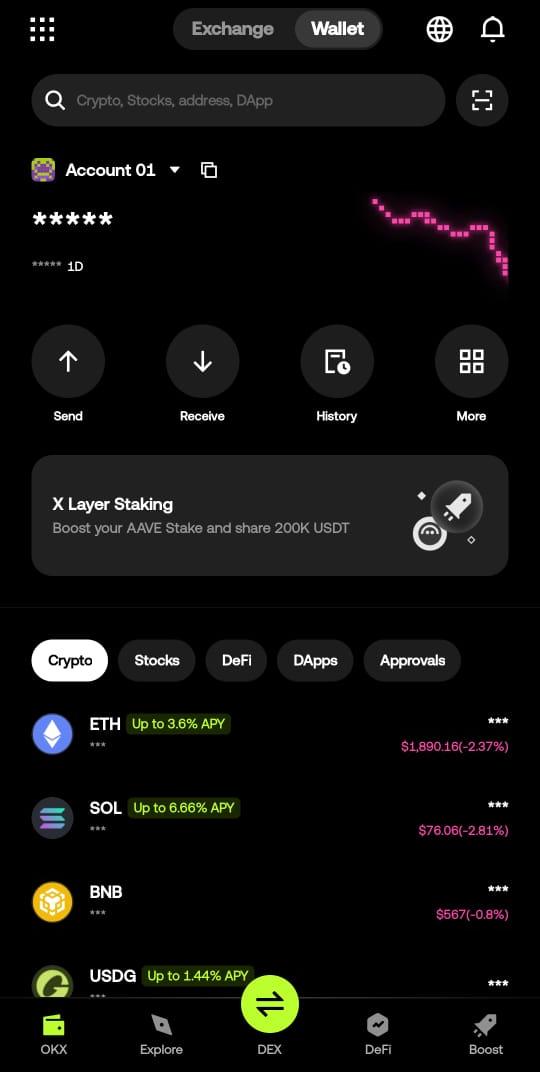
Step 1: Open Settings from the wallet home page
Start on your portfolio home page. Look at the lower right corner of the navigation bar, and then click Settings Icon to access your preferences.
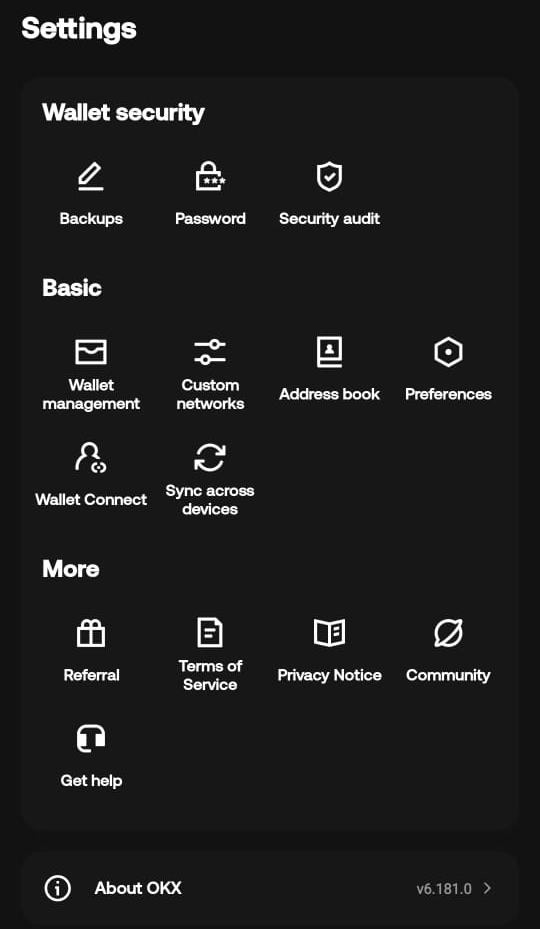
Step 2: Go to Manage Wallet
inside Settings List, scroll down until you see Portfolio management. Click on it to show the full list of your imported wallets.
Step 3: Select your wallet and switch trader mode
Find the specific wallet you want to trade and click on it. Right on the wallet configuration screen, you will discover an icon Trader Mode Clearly visible toggle near the top. Switch to it on.
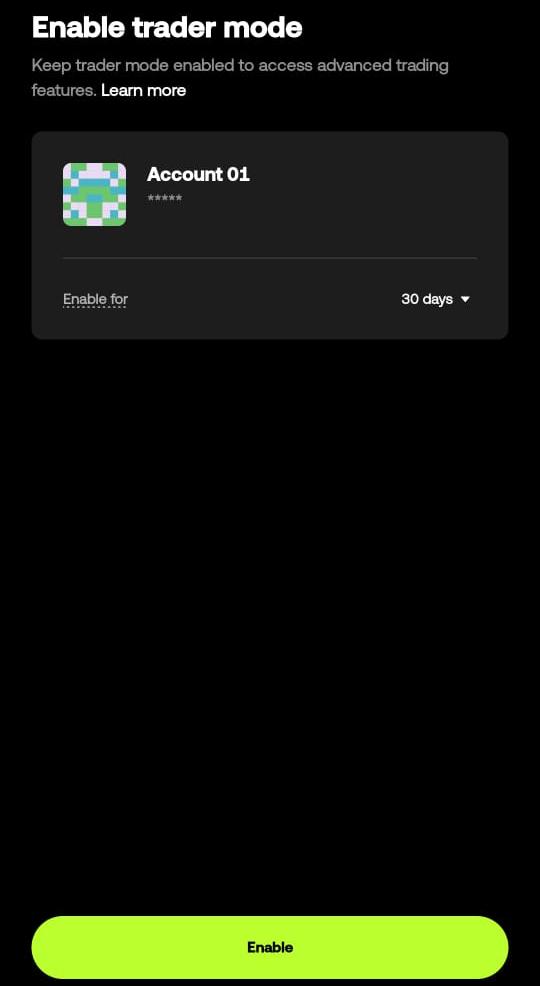
Step 4: Set your enablement period
Once you launch it, a message will appear asking you to select your option Enable period. Choose the duration (in days) that best suits your trading schedule, confirm your selection, and you’re good to go!
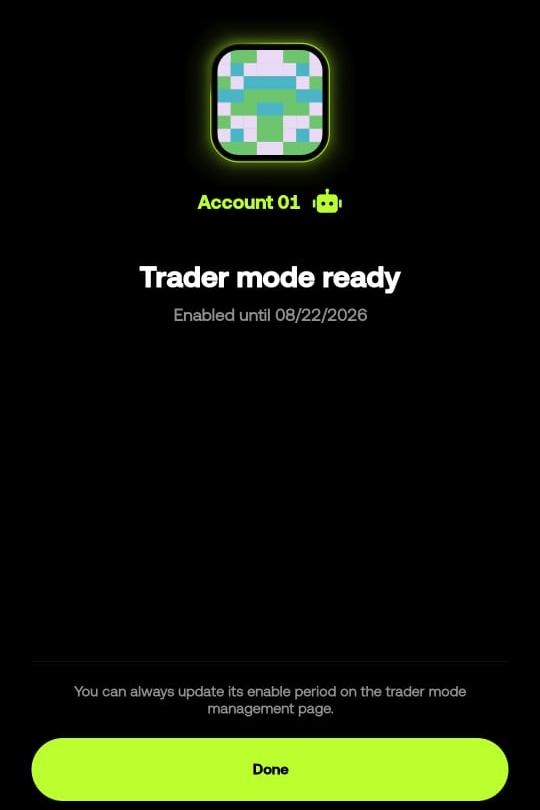
Why are authentication and automatic pausing more important than they seem?
One design choice I think deserves more attention than it usually gets: Viewing your open orders requires signing a verification message first. Without this step, it is likely that someone could see your pending stop loss or take profit levels and either pre-trigger your execution or intentionally push the market towards your trigger price. Requiring a signature to even display that information closes a gap that most trading interfaces don’t bother to address.
Likewise, if a trader’s position expires or needs to be upgraded, all open strategy orders will be automatically paused rather than left to fail silently on-chain. I think this is the correct default. A command run without valid signing authority behind it will only waste power and go nowhere, so pausing everything until it can be manually resumed or re-enabled makes much more sense than leaving broken commands active.
Where I land in rolling mode
I don’t think Trader Mode removes all the risks that come with automated trading, and OKX is upfront that the wallet itself has no control over the third-party platforms you interact with. But on the specific question of whether you can have centralized exchange-level automation without giving up self-custodial, I think this is one of the more credible attempts I’ve seen. The key never leaves your control in any sense, the enablement period prevents unused keys from remaining in the area, and the request authentication step closes a front-end gap that’s really easy to overlook. OKX has also committed to publishing an independent audit and opening the code once that review is complete, which I believe is the right sequence, tightening first, transparency next, not the other way around.
If you’re already comfortable managing a self-custodial portfolio and are looking for centralized exchange features like copy trading or automated stop losses without wanting to move funds to a custodial exchange to obtain them, I think Trader Mode is worth checking out.
Disclosure: This is not trading or investment advice. Always do your research before purchasing any cryptocurrency or investing in any services.
Follow us on Twitter @themerklehash To stay up to date on the latest Crypto, NFT, AI, Cybersecurity, and Metaverse news!



