
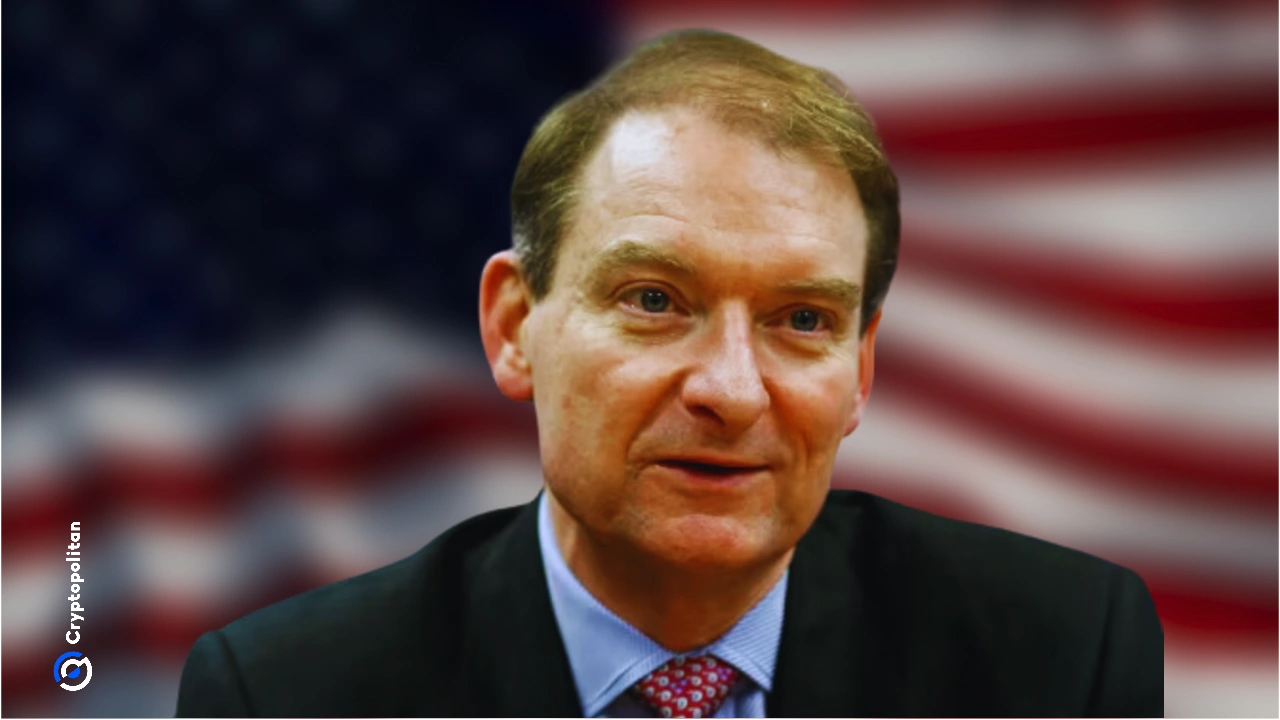
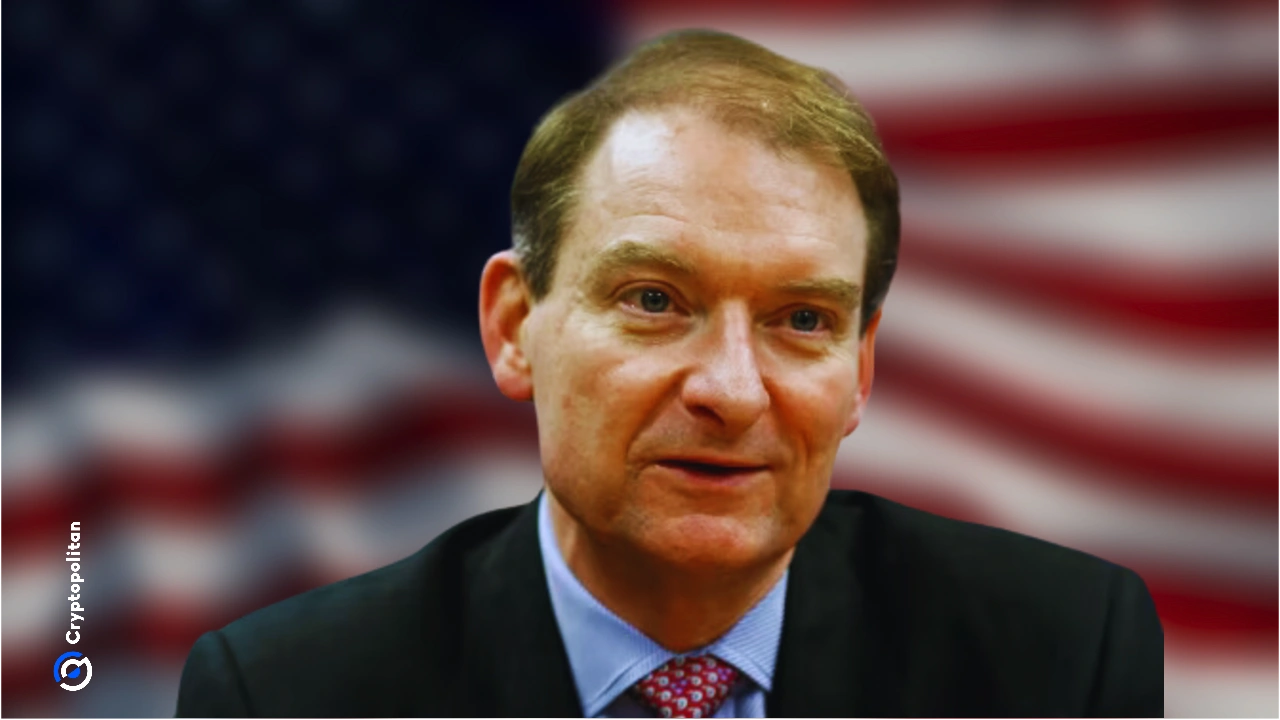
The US Securities and Exchange Commission may be preparing for the biggest shift in cryptocurrency policy in years after its Chairman Paul Atkins called for formal rules targeting decentralized finance platforms and blockchain-based trading systems.
Speaking Friday at the AI+ Expo in Washington, Atkins said current securities rules are written for traditional financial intermediaries and no longer clearly apply to modern on-chain systems that can execute trading, settlement, liquidity routing and collateral management through software.
“Software applications today don’t always organize themselves elegantly along these categorical lines,” Atkins says He said In statements published by the Securities and Exchange Commission.
Atkins said the SEC should reconsider how legal definitions such as “exchange,” “broker,” and “clearing agency” apply to blockchain protocols through a formal notice and comment process.
These statements are seen across the cryptocurrency industry as a significant departure from the SEC’s approach under former Chairman Gary Gensler, whose tenure was largely defined by… Enforcement actions Against token issuers, exchanges and DeFi projects.
Rather than saying that existing rules already cover almost all cryptocurrency activity, Atkins seems to suggest that some parts of DeFi may require entirely new regulatory treatment.
He also identified cryptocurrency vaults, on-chain applications that allow users to earn a passive return, as another area where the agency intends to provide more clarity.
Atkins said the committee should use the exemption power “where necessary and prudent” while opening the process to participation by “innovators, investors and the public alike.”
Why do global markets care?
Although the proposals come from Washington, their impact could extend beyond the United States.
Many of the largest cryptocurrency exchanges and decentralized protocols rely heavily on US dollar liquidity, US project funding, institutional counterparties, or access to US-linked banking infrastructure. As a result, SEC guidance often becomes an informal global standard, even for ventures headquartered abroad.
This pattern was already evident earlier this year when the SEC and CFTC introduced a common framework for classifying digital assets into groups such as digital commodities, stablecoins, digital collectibles, and digital securities.
Reuters reported that the framework came after years of pressure from the cryptocurrency sector for clearer rules.
Regulators in Europe, Singapore, and the United Arab Emirates have also moved toward more regulated monitoring of cryptocurrencies, although in different ways. The European Union’s MiCA framework separates digital assets into multiple regulatory categories, while Singapore and Dubai have created dedicated licensing regimes for cryptocurrency trading, custody and token issuance.
The SEC’s final definitions of cross-chain trading systems could impact how global platforms structure products, user access, and compliance processes moving forward, lawyers and compliance consultants say.
This is especially important for DeFi protocols, many of which process billions of dollars in trading activity each week while serving users across multiple jurisdictions simultaneously.
Atkins compared the current moment to the emergence of electronic trading systems in the late 1990s. He pointed to the ATS regulation, which allowed alternative electronic trading venues to operate without registering as full-fledged national securities exchanges.
“The SEC will continue to move forward with its work to accommodate markets moving across the chain,” Atkins said, according to Bankless.
Industry reaction is turning positive
The response from cryptocurrency industry groups has been largely supportive, reflecting growing optimism that the SEC may be moving toward a more cooperative relationship with digital asset companies.
The DeFi Education Fund described Atkins’ comments as “powerful” in a post on X.
Strong statement from @SECPaulSAtkins today. In his remarks, the Chairman explains that “our current framework” does not always “accurately” regulate today’s onchain markets. It is committed to providing a forward-looking framework to illustrate how current regulatory definitions… pic.twitter.com/MBWOPsnAc4
– DeFi Education Fund (@fund_defi) May 8, 2026
Excessive Liquidity Policy Centre He said She welcomed a president who is “willing to map these systems to existing legal frameworks on their own terms, rather than force them into archaic categories designed for legacy architecture.”
The comments also come on the heels of a recent SEC staff statement indicating that DeFi wallet interfaces in general will not be treated as intermediaries, a move widely seen as reducing regulatory pressure on developers building decentralized applications and trading interfaces.
Meanwhile, Congress remains divided over broader cryptocurrency legislation, including the proposed CLARITY Act. This legislative gridlock may position the SEC’s rulemaking process as the fastest path toward a workable regulatory framework for decentralized markets.
The agency has not announced a timeline for issuing the proposed rules. However, Atkins previously told Reuters that the SEC plans to release a crypto safe harbor proposal for public comment “in the coming weeks” starting in March 2026.



