

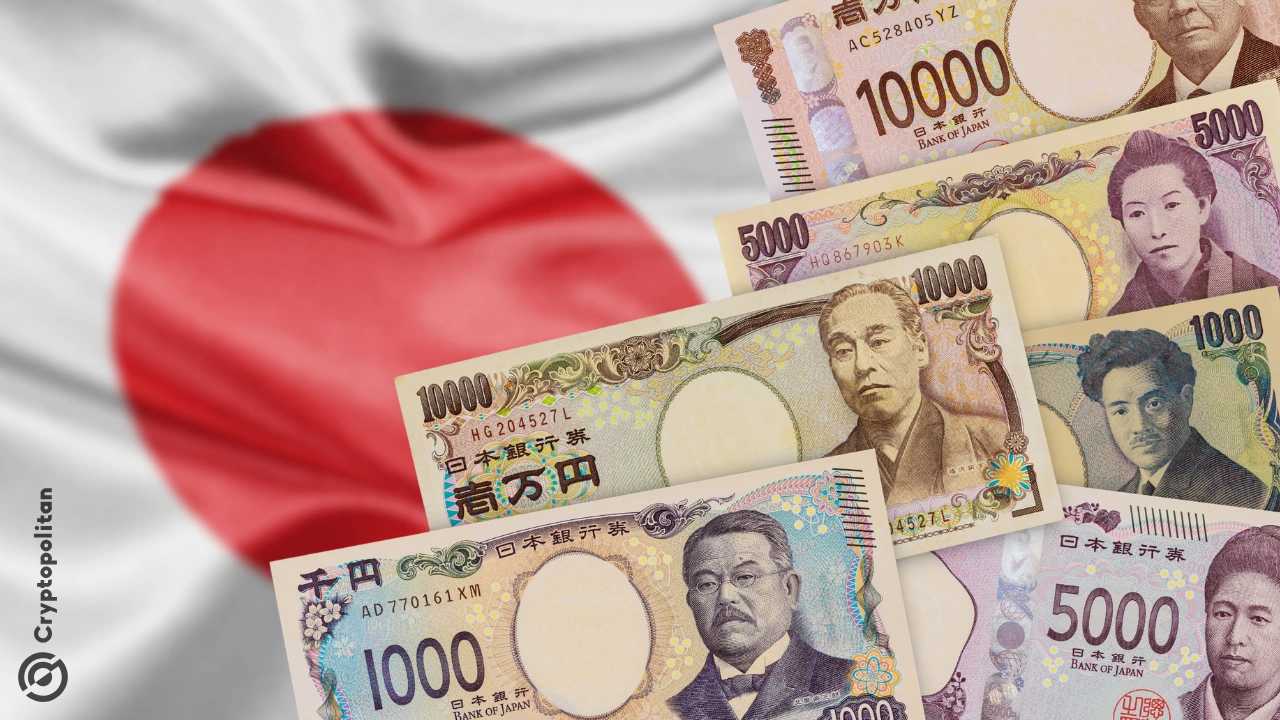
The Bank of Japan (BOJ) is expected to raise interest rates to a level not seen since 1995 at its next policy meeting scheduled for June 15-16.
The increase in interest rates would represent an acceleration in the country’s monetary policy shift, adding pressure on yen-denominated cryptocurrency trading volumes amid rising borrowing costs around the world’s fourth-largest economy.
For decades, Japan has been among the world’s most active cryptocurrency markets, with the change in monetary policy direction from ultra-loose to anti-inflation signaling a turning point in the movement of funds across the country’s exchanges.
The proposed increase in interest rates from 0.75% to 1% is now clear With a probability of 93%, according to Reuters On a swap market basis, it would mark another milestone in the tightening process that began in 2024 after a decade of massive stimulus.
The BTC/JPY pair is still one of the most active cryptocurrency pairs in the whole world, which means that a country’s monetary policy becomes very important when talking about cryptocurrency trading.
In fact, with the Bank of Japan increasing interest rates, speculative trading based on the cheap yen may lose some of its appeal for traders, which could impact activity across regulated cryptocurrency exchanges in the country.
according to A recent review of cryptocurrency exchanges in JapanbitFlyer, one of the most regulated and reliable exchanges in the world, was responsible for approximately 38% of all cryptocurrency transactions made in Japan. This highlights the size of the yen-denominated cryptocurrency markets.
Ueda’s absence adds uncertainty at a critical moment
Bank of Japan Governor Kazuo Ueda, 74, was taken to hospital on June 10 to treat an infected liver cyst and will miss the two-day monetary policy meeting.
Deputy Governor Ryuzo Himeno will chair the meeting. Deputy Governor Shinichi Uchida, who was recently diagnosed with leukemia, will hold a press conference after the meeting, according to NBC. Reuters.
The decision seems pretty certain. In a recent Reuters poll conducted June 2-8, 66 out of 70 economists (94%) expected the rate to reach 1% by the end of June, up from 65% in the May poll. Polymarket’s probability as of June 11 was 98%, As reported by BlockBeats.
But communicating future increases is where things get complicated. Mari Iwashita, executive pricing strategist at Nomura Securities, He told Reuters The Bank of Japan may avoid sending clear signals about the future interest rate path given the uncertainty over the recovery timeline at Ueda. “It has also become unclear whether the Bank of Japan will raise interest rates again this year,” she said.
Years of monetary policy reversal is in the making
The Japanese central bank spent A decade of keeping interest rates at or below zero While the markets are flooded with bond buying. The era of a cheap yen and negative real interest rates has made Japan a favorable environment for cryptocurrency speculation and stock exchange activity.
A prolonged period of near-zero interest rates in Japan also helped support global carry trading activity, as investors borrowed cheap yen to finance purchases of higher-yielding assets. As interest rates rise, the economics of those deals become less attractive.
Analysts have noticed Further BOJ tightening could contribute to deleveraging across risk assets, including cryptocurrencies, especially if a stronger yen reduces the attractiveness of borrowing in Japan to fund speculative positions elsewhere.
I mentioned Cryptopolitan previously About how Japan’s monetary policy is taking a completely different direction. The Bank of Japan exited its massive stimulus program in 2024 and has raised interest rates several times since then, driven by a 4.9% year-on-year rise in wholesale prices in April and inflation expectations that economists expect to push well above the 2% target later this year, according to Reuters.
The forces driving this transformation are intensifying. Reuters reported that the yen’s weakness exceeded 160 yen against the dollar, a level that has led to an estimated 11.7 trillion yen ($73 billion) of intervention in the currency since late April.
The war with Iran led to high energy costs for Japan, which depends on imports. The expected hawkish stance of the US Federal Reserve under Chairman Kevin Warsh has widened the spread between interest rates between Tokyo and Washington. “I interpret the upcoming interest rate hike as a defensive measure aimed at preventing further depreciation of the yen,” Shigeto Nagai, head of Japan economics at Oxford Economics, told Reuters.
What happens next is more important than June
According to a Reuters survey, more than 75% of those surveyed expect another rate hike to 1.25% in the fourth quarter, and two-thirds expect a rate hike to 1.5% by mid-2027.
Arihiro NagataThe Bank of Japan must set a clear path for normalization to stabilize bond markets, where 10-year bond yields have already reached 30-year highs, said Sumitomo Mitsui Financial Group’s head of global markets.
But political risks loom. Prime Minister Sanae Takaishi, a proponent of loose fiscal and monetary policy, has influence over future appointments to the Bank of Japan’s board.
Two hardline board members see their terms expiring in July 2027, giving Takaishi a chance to reshape the board’s balance. “A personnel change next year could fix the balance within the board.” Tsuyoshi Ueno saidchief economist at the NLI Research Institute. “The Bank of Japan may find it difficult to do anything that could anger the government.”
As far as players in the cryptocurrency market are concerned, it is no longer a question of whether the Bank of Japan will tighten its measures in June, but to what extent the process will go.
Japan remains one of the largest regulated cryptocurrency markets, and changes in local liquidity conditions may impact BTC/JPY and retail traders’ movements and leveraged trades.
If pressured to ease tightening through policy, the Bank of Japan will remain committed to maintaining a very negative real interest rate scenario, thus continuing to foster an environment in which the yen remains artificially cheap.
On the other hand, a move towards 1.5% means higher costs of funds for the country’s leveraged positions. This would represent the first truly restrictive political scenario the country has witnessed in decades.



