
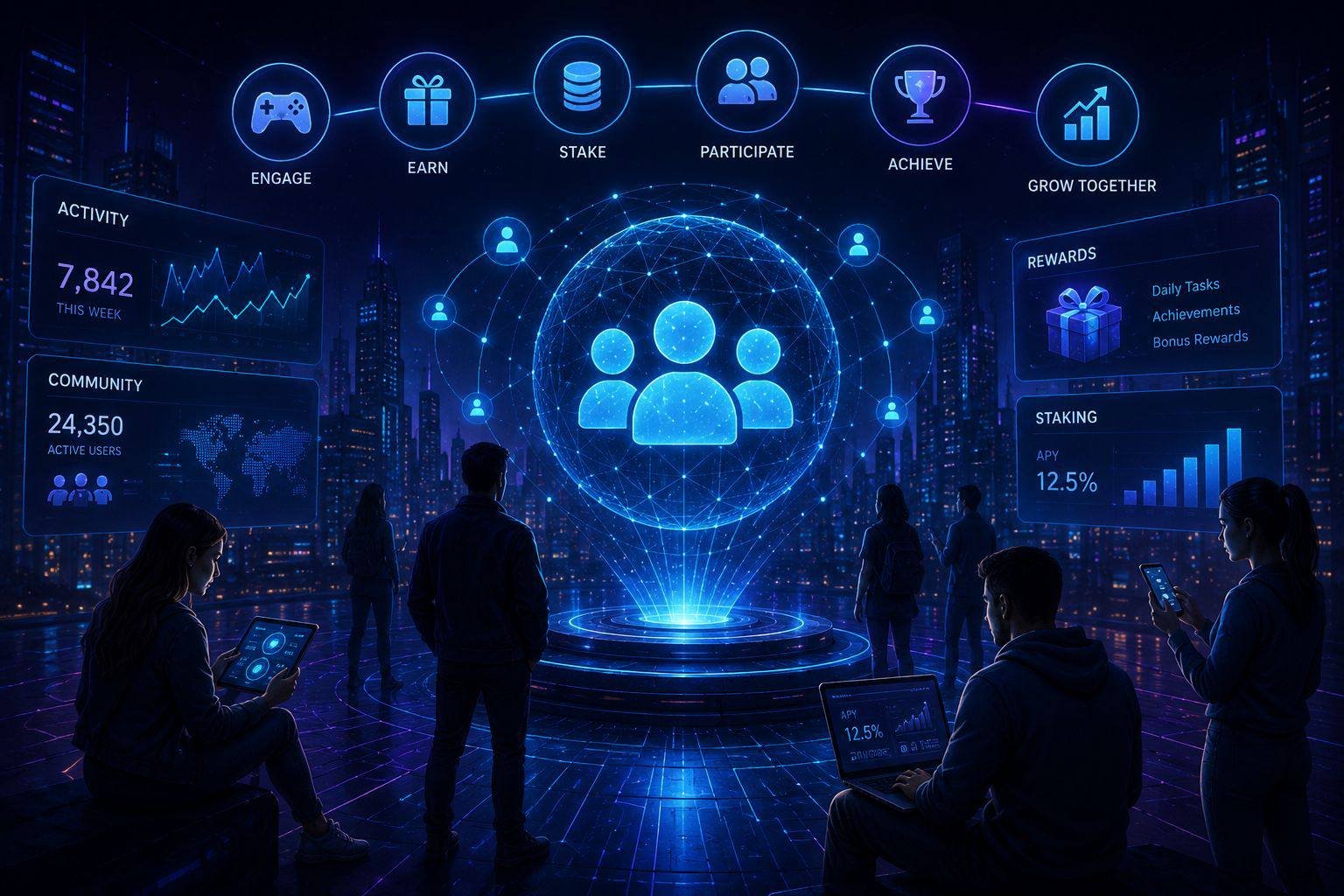
For many years, much of the cryptocurrency industry has been built around one core force: attention.
Projects competed for visibility through cycles of hype, speculative momentum, viral narratives, and short-term market excitement. In many cases, community growth has relied heavily on price movement rather than long-term participation in the ecosystem.
While this model has helped accelerate the growth of the broader cryptocurrency market, it has also created one of Web3’s biggest long-term challenges: retention.
Today, a growing number of blockchain ecosystems are discovering that attracting users is much easier than keeping them engaged.
As the industry matures, the future of Web3 may depend less on hype-driven interest and more on the ability to build ecosystems to which users actively return over time.
Retention issue in Web3
Many blockchain projects experience strong streams of activity during launch phases, token listings, or major market movements. However, once speculative momentum slows, large portions of users often disappear from the ecosystem entirely. This has led to a growing realization in the industry: user acquisition alone is not enough.
Long-term ecosystems require:
- Frequent interaction
- Engagement rings
- Digital utility
- Community participation
- Meaningful user experiences
- Incentives go beyond speculation
In many ways, Web3 is beginning to face the same retention challenges that gaming platforms, fintech apps, and digital communities once faced. The ecosystems most likely to survive over the long term may not necessarily be those with the highest levels of commercialization, but those capable of creating sustainable engagement.
Why interaction with the ecosystem matters
Modern Internet users are very familiar with participatory digital experiences. Social platforms, gaming systems, rewards apps, and fintech ecosystems rely heavily on frequent user interaction. Web3 is now beginning to adopt many of these same mechanisms. Rather than positioning users as passive token holders, newer ecosystems are increasingly encouraging participation by:
- Achievements
- Reward systems
- Staking
- Ecosystem tasks
- Playful interaction
- Referrals
- Community participation
- Digital recording systems
This creates stronger behavioral retention while also helping ecosystems maintain activity beyond pure trading cycles. The result is a gradual shift from speculative societies towards sharing economies.
Tokens alone are no longer enough
One of the biggest changes happening across Web3 is that the tokens themselves are no longer always the center of the ecosystem. Increasingly, ecosystem experience is becoming equally important. This includes:
- User interface
- Participation mechanisms
- Digital rewards
- Staking systems
- Playing
- Community interaction
- Transparency
- FinTech integration
- Ease of use of the ecosystem
Projects that build long-term engagement are often those that create environments that users actively interact with on a recurring basis. This development is slowly pushing Web3 towards platform-based ecosystems rather than isolated speculative assets.
The convergence of Fintech and Web3
Another major trend impacting user retention is the increasing convergence between fintech infrastructure and blockchain engagement. Instead of working separately, many newer ecosystems are starting to integrate:
- Digital rewards
- Business participation
- Staking
- Educational systems
- Playing
- Platform interaction
- Community incentives in standardized participation models.

One project that explores this broader trend is ViFox Coin. The ecosystem combines Web3 engagement systems, game-based engagement, staking, fintech integrations, reward structures, and community-driven engagement. Instead of relying solely on speculation, the ecosystem offers multiple recurring participation layers, including:
- Ecosystem tasks
- Achievements
- Participation registration
- Staking systems
- Spin Wheel Rewards
- Mystery boxes
- Referral mechanics
- Facilities at Fox Mall
- Ecosystem classifications
- Reward-based interaction
The broader goal is to encourage recurring participation in the ecosystem rather than one-off speculative activity. The ecosystem also includes integrations linked to partner infrastructure such as Aron Groups and iX Broker, creating additional interaction paths associated with trading engagement and fintech activity.
Building communities that last
One of the most important lessons emerging across Web3 is that strong communities are not built solely by high symbolic prices. It is built by:
- interaction
- sharing
- Feasibility
- Transparency
- Ecosystem design
- Recurring user value
Projects increasingly need to think less like isolated cryptocurrency launches and more like long-term digital platforms. This involves creating environments where users keep coming back because the ecosystem itself remains useful, interactive, and useful over time.
The next stage of Web3
The cryptocurrency industry is still at an early stage, and many ecosystem models are still experimental. However, one trend is becoming increasingly clear: the next generation of successful Web3 ecosystems may rely less on temporary hype and more on long-term user retention. Projects capable of combining:
- correlation
- Fintech infrastructure
- Staking
- Rewards
- sharing
- Transparency
- Digital utility
- Community interaction
They may ultimately build stronger and more sustainable ecosystems than purely speculative models.
As Web3 continues to evolve, the projects that last over the long term may not simply be the ones that users buy – but the ones that users keep coming back to.
Disclaimer: This article is provided for informational purposes only. It is not provided or intended to be used as legal, tax, investment, financial or other advice.



