
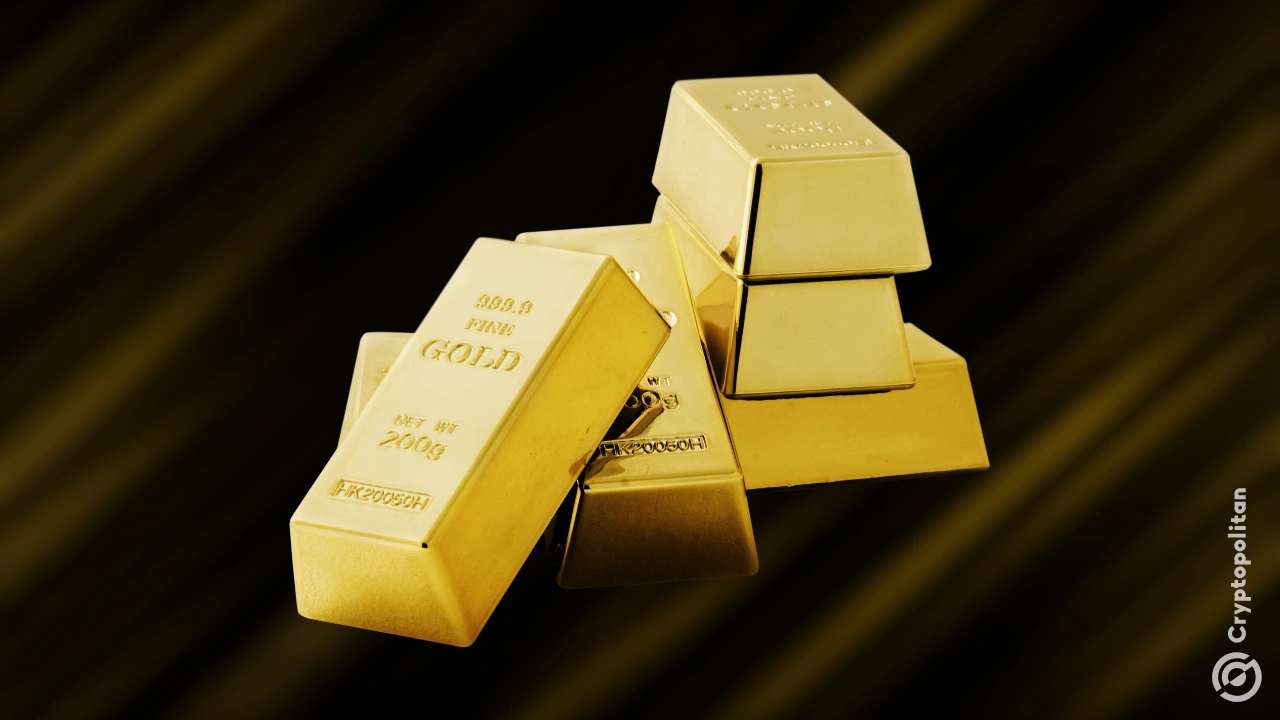
Gold no longer gets the same support from central banks that helped keep prices strong over the past few years.
Of course, the reason is Trump’s war in Iran, because as you know, war costs money, high oil prices hurt countries that depend on imports, local currencies are under pressure, and some central banks need quick access to cash.
Instead, gold fell. Spot gold is currently trading at about $4,838 per ounce, down about 10% from its high in late January, which puts it in correction territory, even according to TradingView data.
Silver fell 0.2% to $79.40 an ounce, platinum rose 0.8% to $2,119.52, while palladium fell 1.1% to $1,570.10.
Türkiye leads the central bank’s gold sales
Turkey’s official gold holdings fell by 131 tons in March through swaps and direct sales as authorities tried to stabilize the lira, Metals Focus said in a report published last Thursday. Since the start of the war on Iran, the Turkish lira has fallen by about 1.7% against the US dollar and slid to its lowest levels ever.
Putin’s Russia has also reduced its gold holdings in recent months, with the cuts likely linked to budget shortfalls. Ghana also sold its reserves to increase foreign currency liquidity. Poland’s central bank governor briefly considered selling part of the country’s gold stock to help pay for defense spending. This attracted attention because Poland was the largest buyer of gold from the central bank in 2024 and 2025.
Currently, oil is more expensive, the US dollar is stronger, and borrowing costs are higher. All three factors make life more difficult for countries that already deal with weak currencies. When exchange rates come under pressure, central banks often intervene in the market to support them. This requires money. Gold is one of the few reserve assets they can quickly deploy when pressures worsen.
The World Gold Council said that from 2022 to 2024, central banks bought more than 1,000 tons of gold annually. 2022 was the largest year ever for annual gold demand from the central bank. In 2025, this pace slowed to 863 tons as price fluctuations became more violent.
The major reserve holders, the Reserve Bank of India, the People’s Bank of China, and the German Bundesbank, have not reported much on recent activity, so the entire reserves… image It’s still hard to see.
Investors are watching gold prices fall as concerns about interest rates and weak demand reach the market
At the same time, retail investors are also withdrawing money from gold positions, meaning two major sources of demand for bullion are weakening at the same time.
Some in the market say the sale does not mean central banks have gotten rid of gold. “This really underscores why central banks are holding gold… it is a liquid asset that typically performs well during periods of uncertainty, so they can deploy it if necessary,” said Shaocai Fan, global head of central banking at the World Gold Council.
China has also intervened during price declines in the past, keeping traders alert for new purchases if prices fall further.
The Fed may have to wait until 2027 to cut interest rates if high oil prices stemming from the Iran war continue to slow progress toward its 2% inflation target, Chicago Fed President Austan Goolsbee said Tuesday.
The market now sees a 32% chance of a cut in US interest rates this year. In ECONS 101, you learn that high interest rates tend to hurt gold because it does not yield a return, so investors lose more by holding it rather than interest-bearing assets.



