
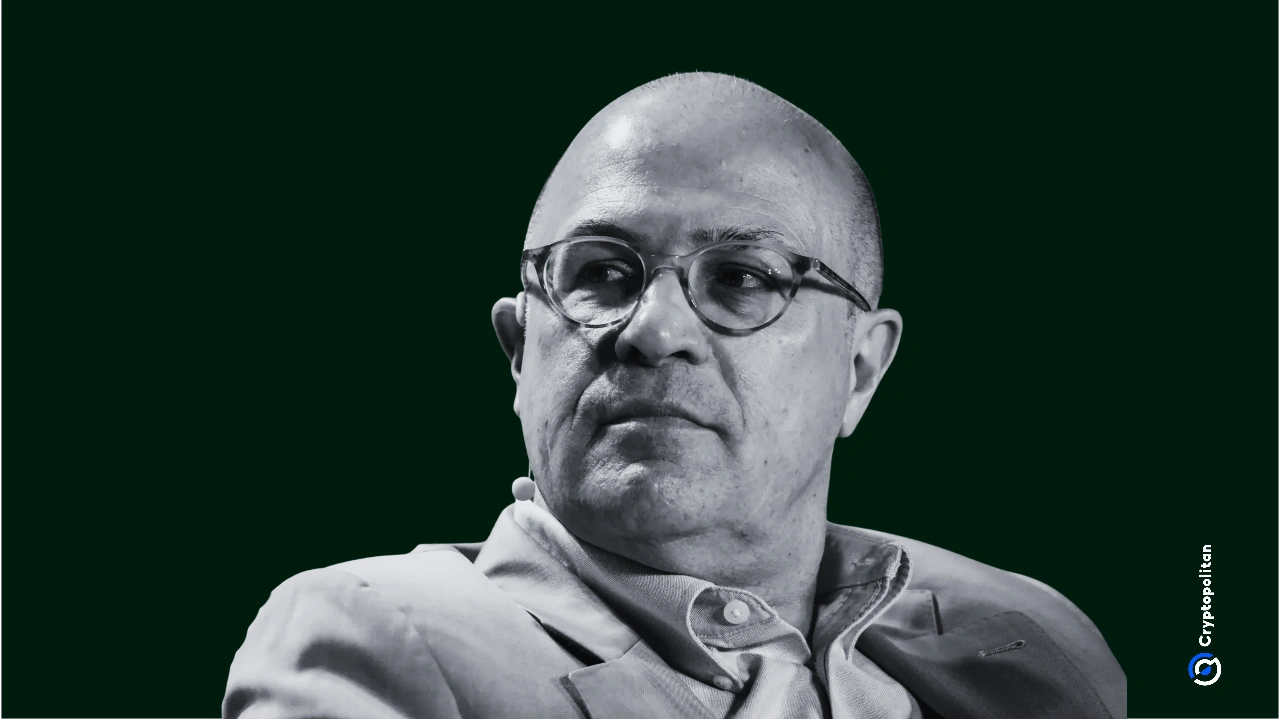

Former US Commodity Futures Trading Commission (CFTC) Commissioner Christopher Giancarlo has announced his decision to leave the legal profession to work full-time as a cryptocurrency and technology advisor to companies. This action has even begun when the SEC recently unveiled a new policy that exempts some DeFi platforms from major registration requirements.
In Post
At this point, it is worth noting that the former head of the CFTC headed this independent US government agency from 2017 to 2019. His positive stance on cryptocurrency regulation was recognized at a time when federal officials were often indifferent or skeptical towards the sector.
Giancarlo has proven to be a strong supporter of the cryptocurrency ecosystem
Some of Achievements During his tenure as head of the Commodity Futures Trading Commission (CFTC), Giancarlo presided over the introduction of the first federally regulated Bitcoin futures markets. The move allowed CME Group and Cboe Futures Exchange to self-certify Bitcoin derivatives. Another accomplishment is the creation of LabCFTC, the CFTC’s FinTech Innovation Center that serves as a bridge between the regulatory agency and the digital asset and emerging technology sectors.
Initially, Giancarlo became a member of the Commodity Futures Trading Commission (CFTC) in 2014. At that moment, he served as a commissioner after being appointed by Barack Obama, who was president at the time. Since then, reports have highlighted that he was calling for a “digital dollar” to be issued by the Federal Reserve to serve as a digital version of the US currency.
Meanwhile, as co-founder and CEO of the Digital Dollar Project, sources reported Giancarlo’s partnership with his former CFTC colleague Daniel Gurvin.
Additionally, analysts conducted research and found that the former head of the CFTC was a strong advocate for prediction markets. To support this claim, they point out that he helped draft a legal brief in support of Crypto.com against gaming regulators in Nevada. Furthermore, he took on an advisory role in Polymarket In 2022.
In response to these findings, sources such as the ABA Banking Journal have acknowledged that Giancarlo’s work with the Digital Dollar Project has made him a leading voice for a US central bank digital currency. In his view, a well-regulated digital dollar would advance American principles of privacy and free enterprise, and would serve as a vital counterweight to state-backed digital currencies from countries like China.
However, banking institutions and policymakers had earlier raised criticism against Giancarlo’s claim that the banking sector would be the main beneficiary of cryptocurrency regulations. Based on their argument, strict regulations such as those applied to yield-yielding stablecoins could lead to mass withdrawals, potentially destabilizing traditional financial systems.
However, reports have claimed that some Trump allies view him as a “crypto czar,” citing his efforts to set clear rules for stablecoins and improve federal oversight of digital assets.
Meanwhile, sources familiar with the situation anonymously revealed that Giancarlo has decided to break from the big law to pursue investing, policy research and writing, seeking to influence the future as a consultant and storyteller, working outside traditional roles.
The Securities and Exchange Commission (SEC) has initiated an important step in the cryptocurrency industry
Regarding the recent policy of the Securities and Exchange Commission, reports confirmed that herebye new guidelinesDeFi user interfaces do not need to register as broker-dealers, provided they meet the necessary criteria. At this point, analysts noted that the agency is classifying user interfaces as services developed by cryptocurrency companies that help wallet holders carry out cross-chain transactions.
Initially, the SEC asserted jurisdiction over DeFi interfaces, classifying them as regulated connections between cryptocurrency companies and DeFi users to markets, a position that changed after Donald Trump took office. However, many cryptocurrency industry leaders argue that these interfaces are different from traditional Wall Street brokers like Charles Schwab, and should not be regulated in the same way.
In response to the situation, Hester Peirce, a US attorney who serves as SEC commissioner, issued a statement noting that “cryptocurrencies are pushing the Commission to confront its own challenges that have led it to expand its interpretation of the securities laws,” adding that “recent events demonstrate a combination of no-action rhetoric and enforcement actions that have distorted the meaning of ‘intermediary’ beyond recognition.”



